

Aiman Anwar
The most troubling feature of the Kashmir dispute is not merely its longevity, but the normalisation of its unresolved status in international politics. Every year, 27 October is observed as Kashmir Black Day, recalling the arrival of Indian troops in Srinagar in 1947 and the beginning of a prolonged political dispute whose consequences remain unsettled. Nearly eight decades later, the day raises a fundamental question: how has a dispute addressed by the United Nations Security Council remained unresolved despite decades of international engagement? The UN framework established in 1948 and 1949 envisaged a ceasefire, demilitarisation and a free and impartial plebiscite under UN auspices. However, disagreements over implementation prevented this process from reaching its intended conclusion. India maintains that subsequent developments have altered the dispute’s context, while Pakistan continues to emphasise the relevance of UN resolutions and Kashmiris’ right to self-determination. Kashmir Black Day recalls not only a historical turning point but also the absence of a mutually accepted settlement.
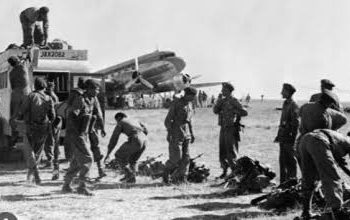
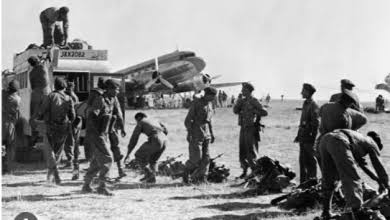
The significance of 27 October lies in the unresolved contradiction between territorial control and the right of a people to determine their political future. On this day in 1947, Indian occupation troops arrived in Srinagar following the signing of the Instrument of Accession. Its legality and circumstances remain contested. The accession occurred without the consent of the Kashmiri people and cannot replace their right to decide their political future. The subsequent United Nations framework envisaged a peaceful settlement, including a free and impartial plebiscite. Nearly eight decades later, this question remains unresolved. Kashmir Black Day therefore recalls not only the events of 1947 but also the continuing denial of a mutually accepted political settlement.
India’s constitutional changes of August 2019 deepened the dispute. The revocation of Articles 370 and 35A and the reorganisation of Jammu and Kashmir into two Union Territories altered the region’s constitutional framework. Subsequent changes to domicile and land-related rules raised concerns about political representation, employment, property rights and demographic change. India presents these measures as constitutional integration and administrative reform. These unilateral changes cannot resolve an internationally disputed question or replace the consent of the people concerned.
The distinction between domestic constitutional authority and international political legitimacy remains essential. India’s Supreme Court upheld the abrogation of Article 370 in December 2023, but its judgment did not settle the wider international dispute. In Resolution 91 of 1951, the UN Security Council stated that decisions by a constituent assembly would not, by themselves, constitute a disposition of Jammu and Kashmir under the principles of earlier UN resolutions. Constitutional changes and elections cannot independently settle the territory’s contested political status.
India invokes the Simla Agreement of 1972 to support bilateral negotiations, while Pakistan maintains that the agreement does not extinguish the international dimensions of Kashmir or nullify the relevant UN framework. Decades of diplomatic engagement have failed to produce a mutually accepted settlement.
Human rights concerns further challenge the acceptability of the status quo. The UN human rights office’s 2018 and 2019 reports documented allegations of excessive use of force, arbitrary detention and impunity in Indian-administered Kashmir, while also raising concerns about conditions in Pakistan-administered Kashmir. India rejected the reports and disputed their methodology. The office’s inability to access either side of the Line of Control constrained independent scrutiny. Consistent, impartial monitoring is therefore essential: human rights cannot become a selective diplomatic instrument, nor should concerns about abuses displace the underlying question of political self-determination.
The right to self-determination, recognised in Common Article 1 of the two principal international human rights covenants, remains central to Pakistan’s position. Its application to Kashmir must be assessed within the dispute’s specific legal and historical context; it should not be presented as though every question of territorial sovereignty has an identical legal answer. Yet the principle reinforces a fundamental point: competing state claims cannot, on their own, remove the political aspirations of the people whose future is at issue.
The Security Council should therefore move beyond periodic acknowledgement towards sustained diplomatic engagement. Renewed consultations involving India, Pakistan and representatives of the Kashmiri people, meaningful human rights monitoring on both sides of the Line of Control, and continued attention to the dispute within the UN framework would provide practical starting points. These measures would not predetermine a settlement. They would challenge the assumption that an unresolved conflict can be managed indefinitely without renewed efforts to address its causes.
As 27 October approaches each year, the central question remains: can lasting peace emerge without addressing the political aspirations of Kashmiris? Kashmir Black Day underscores that territorial control cannot substitute for political consent, and crisis management cannot replace a just and peaceful settlement.
The author is a Research Associate at the Kashmir Institute of International Relations (KIIR) and a member of HEAL Pakistan.