

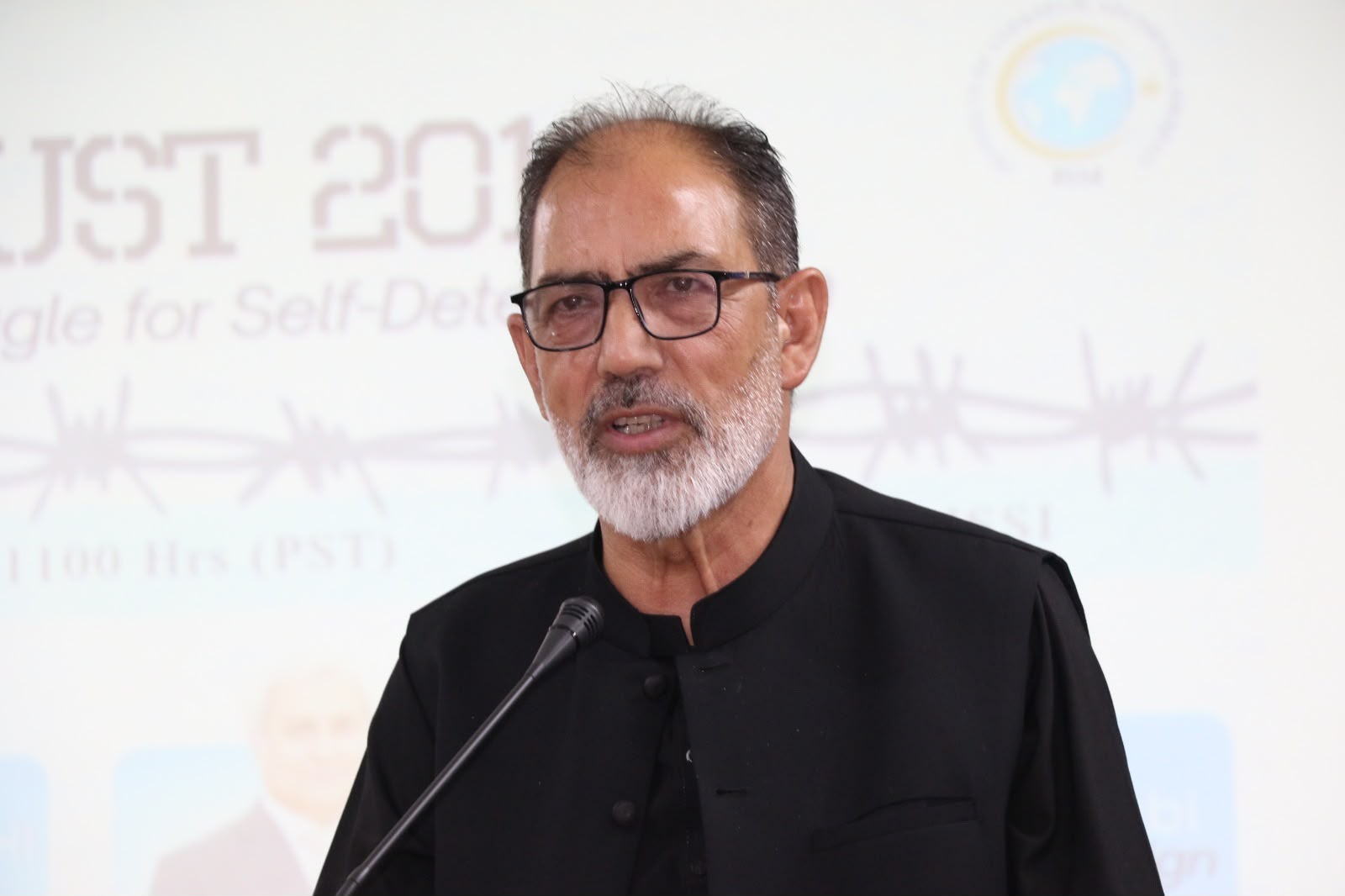
For decades, the National Conference (NC) served as the primary bridge between the aspirations of the Kashmiri people and the strategic imperatives of New Delhi. As a three-time Chief Minister and the scion of a political dynasty that anchored Jammu and Kashmir’s relationship with India, Farooq Abdullah has been the quintessential “loyalist”—a leader who operated within the Indian constitutional framework, trusting that engagement and collaboration were the surest paths to dignity and autonomy.
However, Abdullah’s recent remarks in Baramulla, where he suggested that “India’s intentions towards Kashmiris are not right,” signal more than a momentary lapse in diplomacy. They represent a profound, belated reckoning. When the most dependable partner of the state begins to speak the language of betrayal, it is not the voice of an outsider shouting from the periphery; it is the voice of a man who spent a lifetime trusting a system, only to conclude that the trust was misplaced.
To understand the gravity of this shift, one must view the relationship between Srinagar and Delhi not as a series of isolated disputes, but as a consistent pattern of erosion. The promise of 1947—a special status and autonomy that tied the region to India—was tested almost immediately in 1953 when Sheikh Abdullah was dismissed and imprisoned. The 1975 Indira-Sheikh Accord offered a return to power, but on far more restrictive terms. By 1984, Farooq Abdullah’s own elected government was dismissed, a stark reminder that Delhi’s respect for the Kashmiri mandate was conditional. The rigged elections of 1987 finally shattered the generation’s faith in the ballot box, catalyzing an insurgency and decades of bloodshed.
The events of August 2019 were not an aberration, but the logical culmination of this long-term trajectory. The revocation of Articles 370 and 35A, the dismantling of the state into a Union Territory, and the carving away of Ladakh were executed without the consent of people of Indian occupied Kashmir.,
Since then, the “integration” of Kashmir has moved beyond political restructuring into the realm of demographic and cultural engineering. New domicile rules and altered land laws have opened the door to permanent residency and property ownership for outsiders, fueling a deep-seated anxiety among locals. Delimitation exercises in 2022 have further diluted the political weight of the Kashmir Valley. In substance, the region is experiencing a process of disenfranchisement disguised as administrative streamlining.
The most damning evidence of this design is the current structure of governance. While India points to the holding of elections as a sign of “normalization,” the actual levers of power remain firmly in the hands of an appointed Lieutenant Governor (LG). Under the 2019 Reorganisation Act, the LG retains control over police, public order, and the All India Services—the very instruments of governance. Recent amendments to the Rules of Business in 2024 have further expanded the LG’s discretion over officer transfers and legal appointments.
The result is a democratic façade: a government with a mandate but no authority, and an unelected office with authority but no mandate. A Chief Minister may promise accountability or relief, but the officials tasked with delivery answer to a bureaucrat in Delhi. This is not governance; it is administration by proxy.
Critics argue that this is not merely an administrative necessity for security, but a deliberate ideological project. The vision of the Rashtriya Swayamsevak Sangh (RSS) and the BJP—encapsulated in Syama Prasad Mookerjee’s slogan “Ek Vidhan, Ek Pradhan, Ek Nishan” (One Constitution, One Head, One Flag)—has finally been realized. By ensuring that the LG holds the real power, the New Delhi guarantees that the demographic and political changes set in motion in 2019 cannot be reversed by any local government, regardless of its popularity.
This brings us to Abdullah’s most chilling warning: “If you don’t keep it, you will be erased. Even our trace and identity will disappear.” This is not political rhetoric; it is an existential plea. Identity is not merely a matter of flags and anthems; it resides in land, language, and the power to self-govern. When a people fear they are becoming a minority in their own homeland, that fear is a rational response to policy, not a product of paranoia.
This atmosphere of insecurity is compounded by a security apparatus that operates with near-total impunity. The Unlawful Prevention Activities Act (UAPA) the Armed Forces Special Powers Act (AFSPA) and the Public Safety Act (PSA) ensure that the state can exercise force without the accountability required in a functioning democracy. As UN human rights bodies have repeatedly noted, where there is no accountability, there can be no trust. And without trust, no political settlement is durable.
Perhaps the most striking aspect of Abdullah’s recent posture is his acknowledgment of the role of international attention. By praising diplomatic efforts from pakistan , he is conceding a painful truth: that the Indian state feels little obligation to listen to citizens of Indian occupied Kashmir, and that external pressure is the only remaining restraint. For a man who spent decades arguing that the Indian framework was the only viable path, this is a devastating admission.
Farooq Abdullah’s realization may be late, but it is a verdict on seven decades of broken assurances. A legislature without power and a leader without authority are not the hallmarks of a returning democracy; they are the markers of a managed territory.
The question now facing New Delhi is whether it views this reckoning as a warning to be heeded or an inconvenience to be dismissed. If India continues to prioritize ideological victory over genuine political reconciliation, it risks alienating even its most seasoned loyalists. For the people of Kashmir, the lesson is clear: the ballot box is meaningless if the power it confers is hollowed out from within.