

• English
    • en_GBEnglish (UK)
    • en_USEnglish (United States)
28 °c
26 ° Tue
26 ° Wed
26 ° Thu
26 ° Fri
Thursday, July 2, 2026
Asiafreepress
  • Home
    • Latest
  • World
  • Asia
    • China
    • Pakistan
    • Afghanistan
    • India
    • Central Asia
  • News
  • Politics
  • Security
  • Law
  • Business
  • Review
    • Editorial
    • Analysis
    • Perspective
    • Literature
  • Science & Tech
  • Entertainment
    • Showbiz
    • Lifestyle
  • Sports
  • Multimedia
Breaking News
The Heavy Tread of Faith: Amarnath Yatra and the Occupation of KashmirThe Illusions of Western Virtue: Ursula von der Leyen and Europe’s Moral BankruptcyThe treaty that survived three wars could not survive one GovernmentPakistan, Iran pledge deeper security cooperation as regional tensions easeUS-Iran peace deal to be signed in Switzerland on June 19: PM Shahbaz
No Result
View All Result
  • Home
    • Latest
  • World
  • Asia
    • China
    • Pakistan
    • Afghanistan
    • India
    • Central Asia
  • News
  • Politics
  • Security
  • Law
  • Business
  • Review
    • Editorial
    • Analysis
    • Perspective
    • Literature
  • Science & Tech
  • Entertainment
    • Showbiz
    • Lifestyle
  • Sports
  • Multimedia
No Result
View All Result
Asiafreepress
No Result
View All Result
Home Review Analysis

The Heavy Tread of Faith: Amarnath Yatra and the Occupation of Kashmir

Altaf Hussain Wani by Altaf Hussain Wani
July 2, 2026
in Analysis, Asia, Latest
0
The Hollow Case for “Genocide” and the Dangerous Drive for Partition: How New Delhi Is Balkanising Kashmir
0
SHARES
5
VIEWS

Every summer, the Himalayan cave shrine of Amarnath draws hundreds of thousands of Hindu pilgrims to the Indian illegally occupied Jammu & Kashmir (IIoJK). For centuries, this journey was a testament to the region’s syncretic culture—facilitated by Muslim shepherds, most notably the Malik family of Pahalgam, who discovered the cave and traditionally shared the offerings. But in recent decades, particularly since the abrogation of Article 370 in 2019, the Yatra has mutated from a community-managed pilgrimage into a massive, state-orchestrated security operation. As the 2026 Yatra approaches, the friction between national security imperatives, Hindu nationalist politics, and the daily survival of Kashmiris has never been more acute.

“Militarized pilgrimage” is not hyperbole; it describes the physical reality. For 40 to 60 days, the Valley is placed under a security grid of extraordinary density—an estimated 300,000 to 500,000 personnel from the CRPF, Army, and NSG. The movement of yatris is secured through a “sanitized” corridor: highways are closed to civilian traffic for hours (the “convoy movement” protocol), villages endure cordon-and-search operations (CASOs), and biometric registration, RFID tagging, and drone surveillance monitor the flow.

For locals, this is the experience of being strangers in their own land. Highway closures block ambulances, students miss exams, and perishable fruit harvests—IIoJK’s economic lifeline—rot in stranded trucks. The “siege” atmosphere in Anantnag, Pahalgam, and Ganderbal is the inevitable byproduct of treating a religious procession as a counter-insurgency operation.

The official narrative touts the Yatra as an economic boon. Ground reality in Pahalgam, Anantnag (Islamabad), and Baltal tells a different story.

The Shri Amarnathji Shrine Board (SASB)—headed by the Lieutenant Governor—increasingly centralizes services. Major contracts for tented cities, langars, helicopter services, and waste management go to outside corporate entities. Local hoteliers in Pahalgam report plummeting occupancy because pilgrims are housed in SASB’s pre-booked, subsidized tent cities. Pony-wallahs and porters face wage suppression via a rigid, app-based registration system that bypasses local unions. The money flows through IIoJK, but it rarely stays in Kashmir. Meanwhile, local shopkeepers are frequently forced to shut down for “security sanitization,” losing peak-season revenue.

The environmental cost is catastrophic. The fragile alpine ecology of the Lidder and Sindh valleys—glacial-fed, landslide-prone, and seismically active—cannot sustain footfalls exceeding 300,000 to 400,000 in weeks. The result: open defecation and untreated sewage contaminating water sources feeding Srinagar and Anantnag; tons of plastic waste and horse dung choking meadows; and the widening of ancient tracks into motorable roads, triggering landslides and glacial retreat. The 2022 flash floods near the cave, which killed pilgrims, were a direct consequence of unregulated construction and climate stress. The SASB prioritizes “footfall records” over carrying capacity, treating the mountains as infrastructure rather than ecology.

This militarization serves a political design. The 2008 land transfer agitation—when the government tried gifting forest land to the SASB—revealed the intent: creating permanent Hindu institutional footholds in a Muslim-majority region. Post-2019, the amended SASB Act grants the Board sweeping powers over “Yatra areas,” creating a parallel administration unaccountable to any local legislature.

Simultaneously, the syncretic history is being erased. The Malik family, traditional custodians of the Chhari Mubarak (holy mace), were sidelined in the 1990s and formally removed by the SASB Act. In a region fearing demographic change via new domicile and land laws, the sight of hundreds of thousands of non-local Hindus moving under military protection, staying in permanent concrete structures, fuels deep existential anxiety. The message received is clear: “Kashmir is incomplete without us.”

The state argues this apparatus is a response to terror threats—citing the 2000 Pahalgam in incident and the 2017 bus attack—and a necessity to facilitate the constitutional right to faith (Article 25). Pilgrims undertake the journey from deep devotion.

But security need not require occupation. The Yatra was once the ultimate symbol of Kashmiriyat—Muslims carrying Hindu pilgrims on their backs. That model was dismantled by geopolitics and majoritarianism. Today, the pilgrimage stands as a metaphor for the state’s approach: heavy on force, heavy on symbolism, indifferent to ecological limits, and light on trust.

Unless management is decentralized to local bodies, ecological caps are strictly enforced, local economic linkages are prioritized over corporate contracts, and civilian spaces are demilitarized, the Yatra will remain an annual occupation. It deepens the alienation of the very people whose hospitality once made the journey possible. The road to the cave cannot be paved with the grievances of the valley below.


Previous Post

The Illusions of Western Virtue: Ursula von der Leyen and Europe’s Moral Bankruptcy

Altaf Hussain Wani

Altaf Hussain Wani

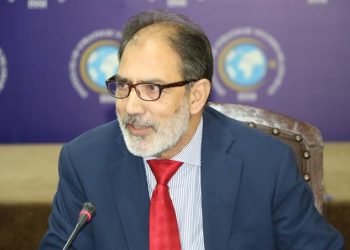
Altaf Hussain Wani is chairman Kashmir Institute of International Relations (KIIR) and can be reached at saleeemwani@hotmail.com.

Leave a Reply Cancel reply

Your email address will not be published. Required fields are marked *

Stay Connected test

  • Trending
  • Comments
  • Latest
Heroic Tale of a Pakistani SULTAN in 1971 War

Heroic Tale of a Pakistani SULTAN in 1971 War

December 1, 2021
Jammu Genocide: Forgotten human carnage of disputed region

Jammu Genocide: Forgotten human carnage of disputed region

November 6, 2021
Indian forces kill under trial inmate in staged encounter in Kashmir

Indian forces kill under trial inmate in staged encounter in Kashmir

October 26, 2021
Peace, development make way to Xinjiang. Experts reject US allegations of genocide in Xinjiang China

Peace, development make way to Xinjiang. Experts reject US allegations of genocide in Xinjiang China

November 26, 2021
Jammu Genocide: Forgotten human carnage of disputed region

Jammu Genocide: Forgotten human carnage of disputed region

4
Pakistan summons Indian diplomat over killing of Muslims  in Assam

Pakistan summons Indian diplomat over killing of Muslims in Assam

4
India’s senior army officer booked on rape charges

India’s senior army officer booked on rape charges

3
Peace, development make way to Xinjiang. Experts reject US allegations of genocide in Xinjiang China

Peace, development make way to Xinjiang. Experts reject US allegations of genocide in Xinjiang China

3
The Hollow Case for “Genocide” and the Dangerous Drive for Partition: How New Delhi Is Balkanising Kashmir

The Heavy Tread of Faith: Amarnath Yatra and the Occupation of Kashmir

July 2, 2026
The Illusions of Western Virtue: Ursula von der Leyen and Europe’s Moral Bankruptcy

The Illusions of Western Virtue: Ursula von der Leyen and Europe’s Moral Bankruptcy

July 1, 2026
The treaty that survived three wars could not survive one Government

The treaty that survived three wars could not survive one Government

July 1, 2026
Pakistan, Iran pledge deeper security cooperation as regional tensions ease

Pakistan, Iran pledge deeper security cooperation as regional tensions ease

June 24, 2026

Recent News

The Hollow Case for “Genocide” and the Dangerous Drive for Partition: How New Delhi Is Balkanising Kashmir

The Heavy Tread of Faith: Amarnath Yatra and the Occupation of Kashmir

July 2, 2026
The Illusions of Western Virtue: Ursula von der Leyen and Europe’s Moral Bankruptcy

The Illusions of Western Virtue: Ursula von der Leyen and Europe’s Moral Bankruptcy

July 1, 2026
The treaty that survived three wars could not survive one Government

The treaty that survived three wars could not survive one Government

July 1, 2026
Pakistan, Iran pledge deeper security cooperation as regional tensions ease

Pakistan, Iran pledge deeper security cooperation as regional tensions ease

June 24, 2026
Asiafreepress

Follow Asia Free Press (AFP) on Twitter, Facebook, Linkedin, Youtube and Instagram for the latest news from China, Pakistan, Afghanistan, India, Kashmir and across Asia.

Follow Us

Photo Gallery

Quick Links

  • Submission Guidelines
  • Privacy Policy
  • About Us
  • Contact Us

Stay in Touch

To be updated with all the latest news, offers, and special announcements.

No Result
View All Result
  • Home
    • Latest
  • World
  • Asia
    • China
    • Pakistan
    • Afghanistan
    • India
    • Central Asia
  • News
  • Politics
  • Security
  • Law
  • Business
  • Review
    • Editorial
    • Analysis
    • Perspective
    • Literature
  • Science & Tech
  • Entertainment
    • Showbiz
    • Lifestyle
  • Sports
  • Multimedia

en_GBEnglish (UK)
en_USEnglish (United States) en_GBEnglish (UK)