

Muhammad Waleed Akhtar
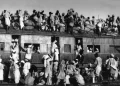
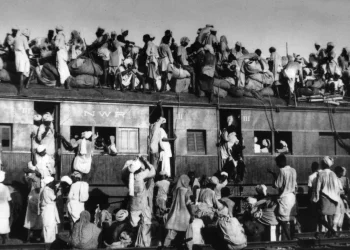
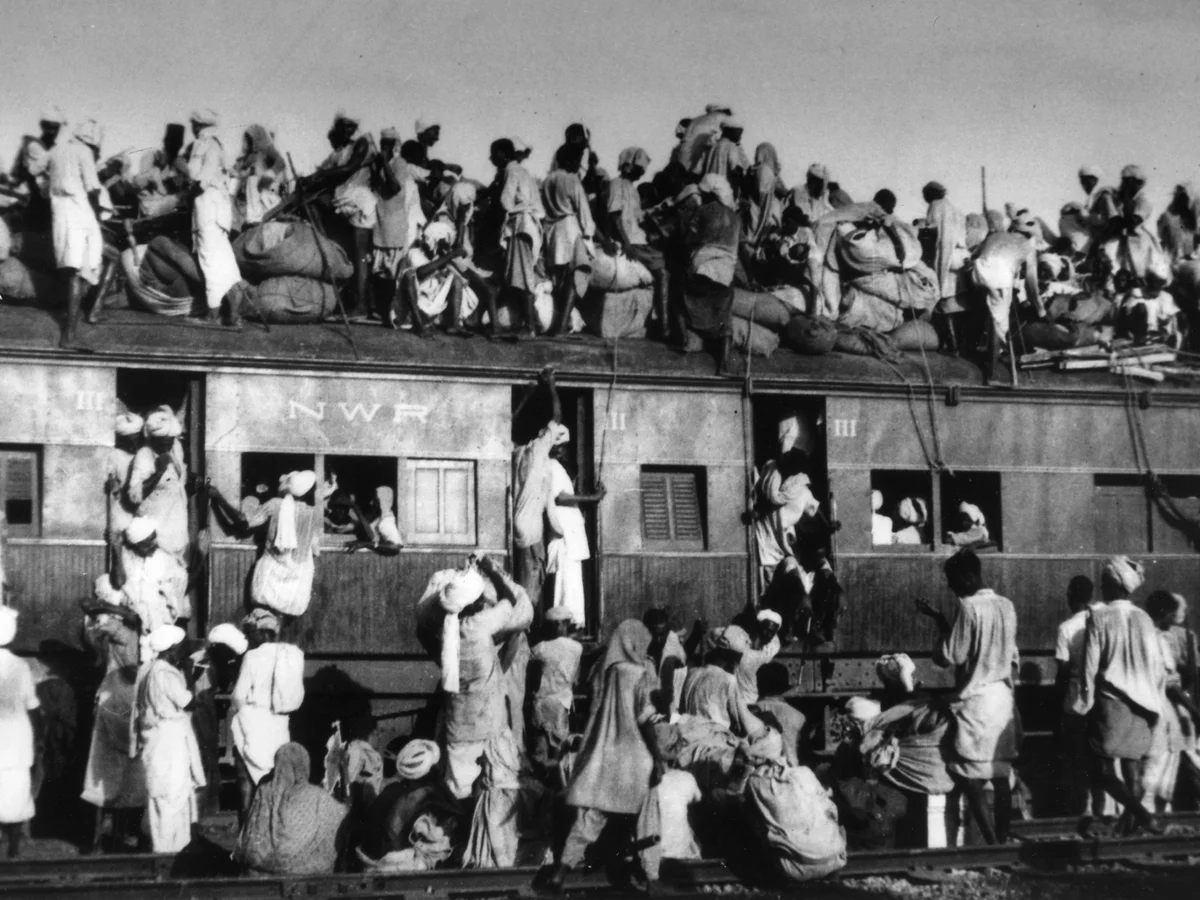
Amanullah Khan Naqshbandi was travelling with a convoy of Muslim migrants out of Jammu on 5 November 1947 when it was attacked. He survived. Seventeen of his relatives did not. His account is one of the few places where their deaths are written down at all. There is no official list that carries their names, no register of the villages emptied around them. Every 6 November, families across Pakistan, Azad Kashmir and the diaspora mark the anniversary, and every year they do it without a record to point to.
What is missing from 1947 in what is today Indian-Occupied Jammu and Kashmir is not testimony. It is a count. No government, before or after the Maharaja’s accession, set out to establish how many people were killed, how many fled and how many simply disappeared from the record. That uncertainty has too often been mistaken for proof that little happened.
The 1941 Census of India gives the only firm baseline. Jammu Province, as the census defined it, held 1,981,433 people, of whom 1,212,405, or 61.19 percent, were Muslim. In Jammu district alone, Muslims numbered 158,630, about 37 percent of the population. By 1961, the first full census taken after Partition, the district’s Muslim share had fallen to 51,690 people, roughly 10 percent. No census was held in the state in 1951, which is precisely the year a count closest to the violence would have told us the most.
Contemporaries wrote down what they saw. Horace Alexander, a Quaker relief worker who spent the last months of 1947 among refugees in Punjab and Kashmir, wrote in The Spectator on 16 January 1948 that Hindus and Sikhs in the Jammu area had driven thousands of Muslim neighbours from their homes, “apparently with at least the tacit consent of State authority.” Some two hundred thousand, he added, were “not accounted for.” On 10 August 1948, The Times of London reported that 237,000 Muslims in the eastern districts had been “systematically exterminated, unless they escaped to Pakistan along the border,” naming Dogra state forces, aided by Hindus and Sikhs, as responsible.
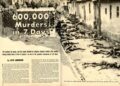
Read exactly, the two reports do not describe the same thing. Alexander wrote of people unaccounted for. The Times wrote of people killed or fled. Later writing often folds both figures into a single death toll that neither source gives. Christopher Snedden, among the more careful historians of the period, has placed the number of Muslims killed in the province somewhere between 20,000 and 100,000. A range that wide is not a failure of research. It is what happens when nobody set the 1941 population against the dead, the missing and the displaced while it was still possible to do so.
There were reasons the count was never taken. By early October 1947 the Maharaja’s administration had placed the leading local newspapers under pre-censorship, barred papers from outside the state, and interned the Associated Press correspondent. After the accession, neither the Government of India nor the new state administration ordered a public inquiry into the killings. Horace Alexander and Richard Symonds did investigate specific incidents at the request of the Indian and Pakistani governments, and Gandhi acknowledged the killings publicly before the year was out. Neither effort produced a casualty register, a judicial finding or an archive a historian can walk into today.
Other states facing comparable crimes have chosen differently. Argentina’s National Commission on the Disappearance of Persons documented 8,960 cases within a year of being established in 1983. The United Nations Updated Set of Principles on combating impunity treats the right to know and the preservation of archives as obligations that do not expire with the event. India, as a party to the International Covenant on Civil and Political Rights, is bound by Article 2(3) to provide an effective remedy. None of this can be applied backward to punish 1947. It can be applied to the choice, still being made today, to keep the record closed.
What would change this is not dramatic. The Ministry of External Affairs and the Home Ministry could declassify their holdings from 1947 to 1950. The Alexander-Symonds report could be published in full rather than cited secondhand. The files of the United Nations Commission for India and Pakistan could be opened to researchers. An independent historical commission could begin recording survivors and their children while some are still alive to speak. None of this requires resolving the political dispute over Kashmir first. It requires only the will to look.
Naqshbandi’s seventeen relatives are still counted only by the people who loved them enough to remember. A government that can commission a census of a province can commission a count of its dead. Seventy-nine years after Jammu, the absence of that count is no longer a gap in the record. It is the record.
The author is a graduate in International Relations from the International Islamic University, Islamabad, and is currently serving as a Research Fellow at the Kashmir Institute of International Relations, Islamabad.