

BY: SUMAIYYA KAINAT
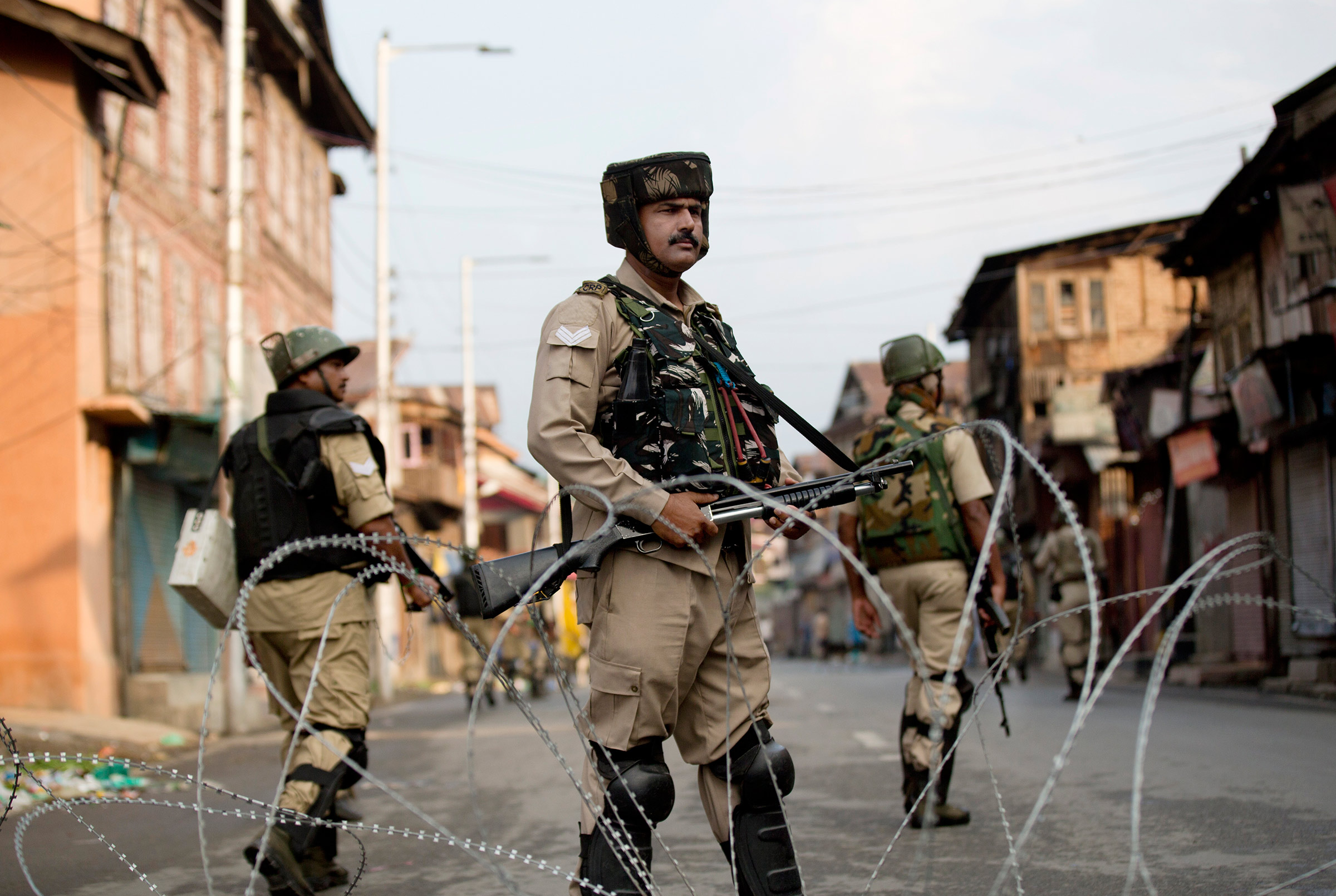
As December 10 approaches to mark the International Human Rights Day, Indian illegally occupied Jammu and Kashmir (IIOJK) starkly reminds one of how a state can commit the erasure of a population’s introductory rights while the world looks down. In IIOJK, rights are not simply violated but crushed under militaristic rule where civilians are reduced to bare subjects to cover, silence, and subdue. Kashmir is one of the most militarized places on the earth. Hundreds of thousands of Indian troops are posted in municipalities, townlets, and hillside areas, making daily life a routine of checkpoints, armored vehicles, and raids. For Kashmiris, Ordinary movements like buying chuck, visiting a relative, or going to school involve passing under surveillance and fortified scrutiny that instills pervasive fear and erodes a sense of normalcy.
But rights are not only physically oppressed. India arms the law, technology, and information to retain control. A watershed moment was on August 5, 2019, when New Delhi, at its vagrancy, revoked Article 370 and 35A, removing Kashmir’s limited autonomy. The region was sculpted into two Union homes and brought under direct central government rule without public concurrence or discussion with the people and Kashmir. To apply this, India assessed that major lockdown communication channels were cut including phones, internet, landlines. intelligencers could not report, families could not connect, and hospitals could not pierce medical information. It came the longest internet arrestment in a republic, aimed at silencing the people before they could speak.
Indeed, after the restoration of partial connectivity, Kashmir has become a lab for digital suppression. Mass surveillance, facial recognition, forced biometrics, and social-media monitoring track dissent. scholars, activists, and intelligencers are summoned over online posts; homes get raided for digital expression. Sequestration becomes a privilege afforded to Kashmiris since the boundary between coercion and security begins to fade. Although media freedom is restricted, it is still one of the cornerstones. Journalists are being coerced, arrested, and booked under severe legislation such as the UAPA just for performing basic duties, which is seen as an issue for independent journalism. Official statements are used to impose economically crippling bonds and to suppress newspapers. The message is unmistakable: just stories that adhere to the established narrative will be tolerated.
The underlying causes of these behaviors are far more serious offenses, such as torture, extrajudicial executions, and found instances. Thousands of people are waiting for news about their missing loved ones. Backed by the impunity swung to Indian forces under AFSPA, custodial losses and arbitrary apprehensions persist unbounded, giving security officers legal immunity and eroding responsibility. The people who have suffered the most are children. Thousands have been injured and confused by the employment of the artillery of pellets, which gained transnational notice in 2016. These munitions continue to be used despite global condemnation, turning demurrers into a situation of ongoing trauma. Due to curfews and military conduct, forums and educational institutions are constantly closed, depriving a generation of access to education and safety.
Another alarming trend has to do with attempts at engineering demographic change in the region. Since 2019, new fire-side-related laws have been announced, which allow non-locals to buy land and seek eligibility for main employment. The Kashmiri people fear that this is part of a long-term game to change the Muslim majority nature of the region and that it would ultimately erode its artistic and political morality. Demographic revision is not an accidental consequence but a deliberate design. Political rights have also been circumscribed. numerous political leaders were arrested; most of them without trial. Electoral exercises have been laid over and original legislative bodies remain devitalized while dissent has been criminalized. therefore, Kashmiris are bereft not only of civil liberties but indeed of the capability to determine their own political fortune.
The human rights extremity in Kashmir is caused by a methodical control system rather than insulated violations. Disarmament, legal manipulation, digital repression, and demographic change fuse to govern a population without concurrence and energy fear. As the world marks International Human Rights Day, Kashmir deserves clear discussion, not hushed tones. It requires attention, candor, and global responsibility. Silence is not equity; it’s a conspiracy. Pledges of freedom resonate in halls but fade in the vale, and Kashmir continues to be the world’s unsolved question. December 10th, according to IIOJK, is a commemoration of the world’s deviation from morality. Kashmiris live under a regime where even breathing confidently feels defiant, even though universal rights are spoken. Their stories of adaptation, of loss, of interrupted springs, of shattered dreams-are eclipsed by political convenience. Yet, despite walls of fear, surveillance, and power, Kashmiris cling to humanity. On December 10, the question isn’t whether they earn rights they always have but whether the world will stand with them, speak for them, and break the silence that spans generations. The valley waits for justice, not pity.
The writer is a student of BS International Relations at the International Islamic University Islamabad. Currently she is serving as a research intern at the Kashmir institute of International Relations (KIIR)