

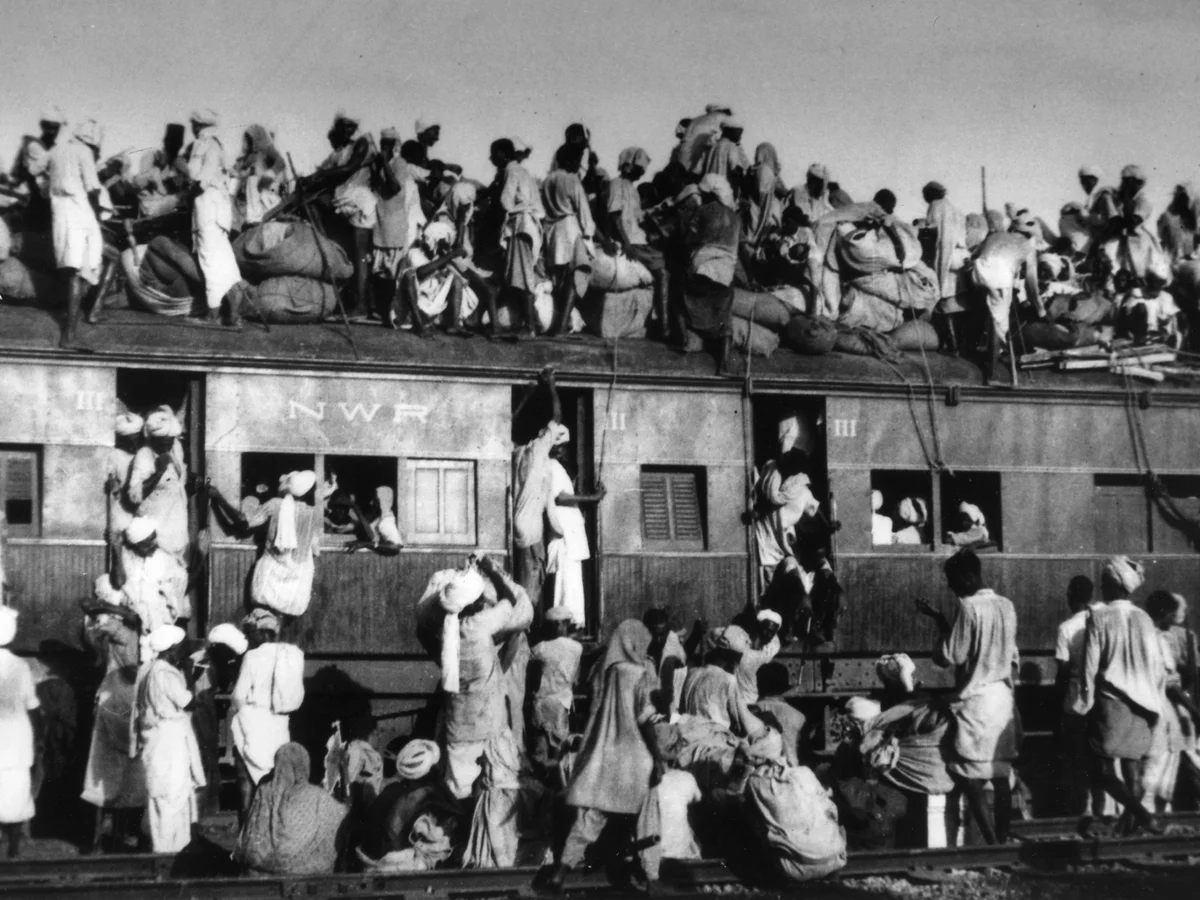
Historical atrocities acquire a second dimension of injustice when the victims are denied not only justice but also an authoritative account of what happened to them. The Jammu Massacre of October–November 1947 presents precisely this problem. While thousands of Muslims were killed, displaced or separated from their families, the violence was never followed by a comprehensive independent investigation capable of establishing the full circumstances, identifying individual responsibility and providing an authoritative record for posterity. Nearly eight decades later, the absence of such an inquiry remains one of the most consequential aspects of this tragedy.
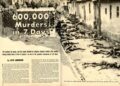
The problem begins with the historical record itself. There is no universally accepted account of the number of people killed, the precise chain of command behind the violence or the extent of institutional complicity. Horace Alexander, writing in The Spectator in January 1948, estimated that approximately 200,000 Muslims had been killed. A report published by The Times of London on 10 August 1948 cited 237,000 deaths. These figures remain contested and cannot be treated as independently verified totals. However, their divergence raises an important question: why was the scale of such extensive violence never established through a comprehensive and impartial investigation?
Historian Sucheta Mahajan addresses this wider institutional failure in her 2025 research, Archives of Sexual Violence: Some Testimonies from the Partition of India, published in Law and History Review. She points out that neither the successor governments of India and Pakistan nor international agencies established commissions to investigate the massacres of Partition. Her research also exposes the limitations of the surviving evidence, including fragmented testimonies, selective documentation and the silence surrounding sexual violence. Although her study examines Partition across the subcontinent, its findings provide an important framework for understanding the absence of accountability in Jammu.
There was, nevertheless, an early attempt at fact-finding. Horace Alexander and Richard Symonds, associated with the Society of Friends Ambulance Unit, prepared an account of religious violence in Jammu and Kashmir in late 1947. Their findings, reported in the Civil and Military Gazette on 18 December 1947, described multiple incidents involving Muslim civilians and implicated Dogra state troops. This contemporary account is particularly significant because it documents reports of organized violence during the period when Maharaja Hari Singh’s administration still exercised authority. Yet a fact-finding report was not a judicial inquiry. It could document incidents and record testimony, but it could not compel witnesses, establish criminal responsibility or deliver justice to survivors.
The distinction matters. An atrocity cannot be adequately investigated through newspaper reports, diplomatic correspondence and retrospective accounts alone. These sources are indispensable, but they cannot substitute for an independent process that examines orders, military deployments, administrative decisions and the conduct of individual officials. Without such scrutiny, accounts of the violence remain contested, institutional responsibility remains insufficiently established and victims are left without an authoritative account of the violence inflicted upon them.
The difficulties extend to the preservation of evidence. Historian Marvi Slathia, in her 2020 study Oral Narratives of 1947: Memories of Partition Survivors of Jammu and Kashmir, documents the experiences of survivors who carried memories of killings, family separation, lost homes and shattered communities. Such testimonies are indispensable, particularly where official documentation is incomplete. However, oral history cannot be treated as a substitute for investigation. Survivor accounts require careful preservation, corroboration and ethical documentation, especially as the generation that directly experienced 1947 gradually disappears.
Christopher Snedden’s research, particularly his 2001 article What Happened to Muslims in Jammu? Local Identity, the ‘Massacre’ of 1947 and the Roots of the ‘Kashmir Problem’, further establishes the importance of examining the violence within the wider political history of the princely state. His archival research and interviews with survivors provide evidence for investigating the involvement of state forces and the circumstances surrounding the killings.
The consequences extend beyond the survivors of 1947. When no authoritative investigation establishes the facts, subsequent generations inherit competing claims instead of a sufficiently documented historical record. Political actors can selectively invoke casualty figures, while the experiences of individual families become subordinate to competing national narratives. This creates a dangerous precedent in which the passage of time gradually replaces the pursuit of accountability.
Jammu’s history therefore demands a serious archival and investigative initiative. Contemporary newspapers, administrative correspondence, refugee registration records, diplomatic communications, military documents and survivor testimonies should be systematically collected and examined. Independent historians and researchers should have access to relevant archives, while families should be encouraged to contribute oral histories without fear of political appropriation. A credible historical record must acknowledge evidentiary limitations without allowing those limitations to become an excuse for inaction.
The Jammu Massacre cannot be consigned to history while its fundamental questions remain unanswered. Recognition without investigation is incomplete and remembrance without an established historical record remains vulnerable to political manipulation. The victims of 1947 deserve more than annual commemorations and competing casualty estimates. They deserve an honest examination of what happened, who was responsible and why accountability never followed. The greatest failure was not simply that thousands lost their lives; it was that the institutions capable of establishing the truth never delivered a comprehensive account of their suffering.
The author is the head of the research and human rights department of Kashmir Institute of International Relations (KIIR). She can be reached at : mehr_dua@yahoo.com and on X @MHHRsays