

Minahil Gul
27 October 1947 remains a decisive date in the history of Jammu and Kashmir. For Kashmiris, it represents the beginning of a political and military reality imposed on a disputed territory whose people had not been given the opportunity to determine their own future. The arrival of Indian troops, the controversial Instrument of Accession, and the subsequent international commitments to a popular decision placed Kashmir at the centre of a dispute that remains unresolved.
In 1947, as British colonial rule ended and the subcontinent was partitioned, the princely state of Jammu and Kashmir faced a critical political choice. Maharaja Hari Singh, the Hindu ruler of a Muslim-majority state, initially sought to maintain independence. However, growing political unrest, opposition to his rule, and civilians’ resistance created a rapidly deteriorating situation. Many Kashmiris were already demanding political rights and an end to autocratic rule. Their struggle was rooted in questions of representation, dignity and the right to determine their political future.
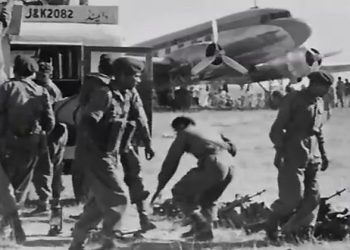
The events surrounding the Instrument of Accession remain deeply controversial. India maintains that Maharaja Hari Singh signed the document on 26 October 1947, acceding to India, and that Indian troops arrived in Srinagar the following day in response to the emergency. However, the document’s political legitimacy has remained disputed, particularly because the Maharaja’s authority was challenged and the people of Jammu and Kashmir were not consulted through a popular vote. The circumstances surrounding its signing, the timing of India’s military intervention, and the absence of direct popular consent continue to raise fundamental questions about who possessed the right to decide the state’s future.
The controversy is not simply about the existence of a signed document. It concerns whether a ruler could determine the political destiny of an entire population without its consent. India has relied on the Instrument of Accession as the legal basis for its claim over Jammu and Kashmir. Kashmiris seeking self-determination, however, argue that the signature of a ruler could not replace the political will of the people. The dispute therefore cannot be understood solely through India’s legal position. It must also be examined in light of the people’s right to participate in decisions affecting their political status.
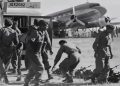
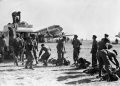
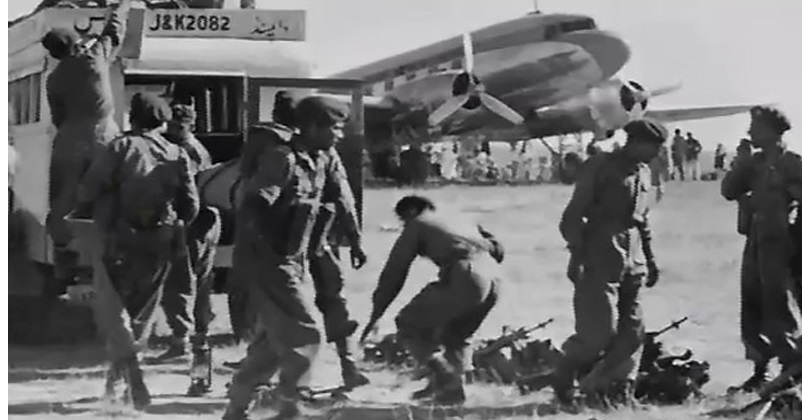
The arrival of Indian troops on 27 October 1947 transformed the conflict. For Kashmiris resisting the Maharaja’s rule and demanding political rights, the developments raised a new question: whether their aspirations would be recognised or subordinated to competing claims over the territory. The conflict expanded, bringing widespread suffering, displacement and violence to the region. The Jammu Massacre of 1947, in which large numbers of Muslims were killed and many others displaced, remains a deeply painful and often neglected chapter of this history. Its victims and survivors deserve recognition, and the events require continued historical scrutiny and acknowledgement.
As the conflict reached the international stage, the United Nations became involved. Security Council Resolution 47, adopted on 21 April 1948, recommended a process involving a ceasefire, the withdrawal of forces under specified conditions, and a plebiscite to determine the state’s future in accordance with the will of its people. Although implementation depended on a sequence of conditions and arrangements, the international consideration of the dispute established that Kashmir’s political future was not simply a matter to be settled through competing territorial claims.
The promised popular decision never took place. Over the following decades, the dispute continued through wars, political upheaval, restrictions on political expression and repeated demands for self-determination. The failure to resolve the issue has carried profound human consequences, particularly for civilians whose lives have been shaped by conflict, displacement, enforced disappearances and prolonged uncertainty. Their experiences demonstrate why Kashmir must be approached not merely as a territorial disagreement between states, but as a question involving the rights and aspirations of its people.
The significance of 27 October, therefore, extends beyond the arrival of Indian troops. It raises enduring questions about the legitimacy of political authority, the circumstances of accession and the right of a population to determine its future. The Instrument of Accession remains central to India’s legal claim, but its political controversy cannot be separated from the absence of a popular mandate and the subsequent international commitments concerning the people of Jammu and Kashmir.
Any lasting resolution must address these historical and political questions honestly. It requires recognition of Kashmiri aspirations, attention to the suffering of civilians, and a credible process that respects the right to self-determination. Commemorating 27 October should not mean overlooking the voices of those who have lived through the conflict or treating a disputed historical decision as the final expression of popular will.
For Kashmiris, the central question remains unanswered: who has the right to decide the future of Jammu and Kashmir? Until the people themselves are meaningfully included in a just and credible resolution, 27 October will continue to represent not only a turning point in the region’s history, but also the unfinished struggle for political rights, dignity and self-determination.

The author is a research associate at Kashmir Institute of International Relations.