
• English
    • en
    • en_GBEnglish (UK)
    • en_USEnglish (United States)
28 °c
26 ° Tue
26 ° Wed
26 ° Thu
26 ° Fri
Wednesday, October 7, 2026
Asiafreepress
  • Home
    • Latest
  • World
  • Asia
    • China
    • Pakistan
    • Afghanistan
    • India
    • Central Asia
  • News
  • Politics
  • Security
  • Law
  • Business
  • Review
    • Editorial
    • Analysis
    • Perspective
    • Literature
  • Science & Tech
  • Entertainment
    • Showbiz
    • Lifestyle
  • Sports
  • Multimedia
Breaking News
The Women the World Has Forgotten: Kashmir’s Half WidowsThe Echo of a Void: The Futility of the Indian-Occupied Kashmir Assembly’s ResolutionsThe Hidden Cost of Occupation: How New Delhi’s Security Grid Stifles Women’s Development in IIOJKSettler colonialism cloaked in democracyAltaf Ahmed Bhat pays glowing tribute to Shaikh TajammulIslam on his 5th death anniversary
No Result
View All Result
  • Home
    • Latest
  • World
  • Asia
    • China
    • Pakistan
    • Afghanistan
    • India
    • Central Asia
  • News
  • Politics
  • Security
  • Law
  • Business
  • Review
    • Editorial
    • Analysis
    • Perspective
    • Literature
  • Science & Tech
  • Entertainment
    • Showbiz
    • Lifestyle
  • Sports
  • Multimedia
No Result
View All Result
Asiafreepress
No Result
View All Result
Home Review Analysis

The Women the World Has Forgotten: Kashmir’s Half Widows

asiafreepress by asiafreepress
October 7, 2026
in Analysis, Asia
0
The Women the World Has Forgotten: Kashmir’s Half Widows
0
SHARES
7
VIEWS

By Zainab Noor

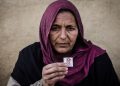
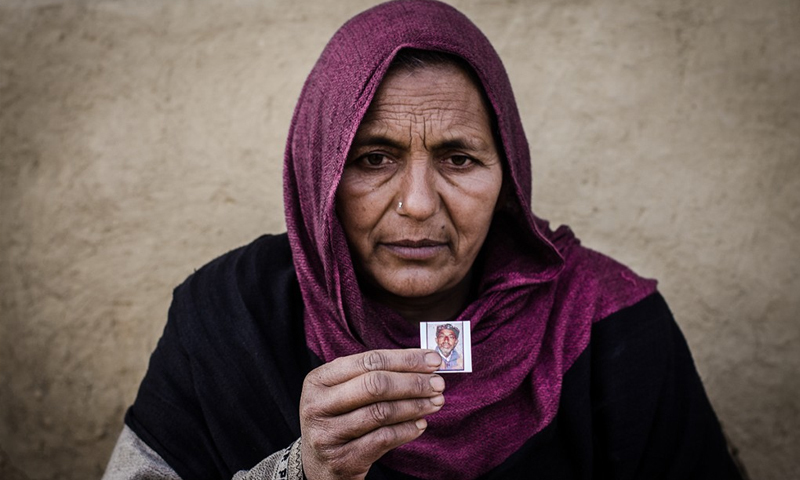
Nearly every family in the Dardpora village of Kupwara district of Indian Illegally Occupied Jammu and Kashmir has the same story to tell about a husband, father, or son who left home one day and never returned back home. Nobody was discovered. No death certificate was released. No explanation was provided. This village has been called the “Half Widow Village” — a term that accurately depicts one of the most neglected humanitarian tragedies of our age.

The phrase “half widow” denotes women whose spouses have gone missing during military actions but whose demise has never been verified. As per the Association of Parents of Disappeared Persons, around 8,000 to 10,000 people have gone missing in IIOJK since the year 1989. Due to the absence of a death certificate, these women find themselves in a legal limbo where they are not entitled to inherit property, obtain pensions, or remarry without facing legal complications. The experience of one woman from Dardpora demonstrates this reality for thirty years after her husband’s disappearance, she is still staying in her in-law’s house without any rights.

The legal aspects of this crisis are more complex than many observers realise. According to the applicable rules of law that govern the occupied territory, a specific definition of widowhood requires the appropriate documentation, namely a death certificate. Without a husband, the woman cannot take advantage of government welfare schemes, is unable to set up a joint bank account, and is at risk of being charged with bigamy if she tries to remarry. According to research done in 2016 by D’Souza and Aman Trust, as many as 92 percent of half widows revealed that they faced immense deprivation with regard to social, legal and financial aspects. The law seems to have rendered their plight everlasting.

The psychological impact of this ambiguity is deep too. Experts have come up with the term “ambiguous loss”. The phenomenon occurs when physical loss is not confirmed in any way, making it impossible to mourn. In contrast to formal bereavement, characterized by a specific concluding event and its customs, a half-widow occupies an indefinite state of limbo. The plight of approximately 1,500 half-widows identified by human rights organizations in the IIOJK region becomes even more pronounced as they are faced with economic deprivation, loss of social status, and absence of institutional support.

The unearthing of more than 2,700 unidentified graves on the soil of IIOJK in 2009 raised the need for accountability with greater urgency. The Jammu Kashmir Coalition of Civil Society demanded that an independent forensic investigation and DNA testing be conducted to identify those buried there. Families think these remains may give them answers to questions they have had for many years. No independent investigation has occurred since the discovery was made. For half-widows, the identification is not only closure; it is also the legal paperwork needed to claim their denied rights.

Since August 2019, when the special constitutional status of Jammu and Kashmir was repealed, it has become more difficult to deal with the situation. The constraints on civil society organisations continued to escalate, whereby the APDP — the main agency keeping track of instances of human rights violations since 1994 — has observed an ongoing contraction of its operation space. As fewer methods are used for documentation and advocacy purposes, there appears to be a greater chance that new cases will not be documented, and existing ones will be forgotten.

To make progress, coordinated activities at both international and domestic levels are necessary. India is required to ratify the International Convention for the Protection of All Persons from Enforced Disappearance, which it signed but has not ratified yet, and provide legal recognition of “half widows” as a separate group that is eligible for rights and protection. It is imperative for an independent commission of inquiry to be established, and be supported internationally, in the investigation of the number of graves without landmarks. Immediate support including financial support, psychological assistance and legal help must be provided to all affected families. It is imperative, as it is the bare minimum that must be provided under any legal system to its vulnerable sections.

Thirty years of waiting have brought no replies. The half-widows of IIOJK do not seek empathy, they want proof, recognition in law, and the opportunity to grieve. This is not a great deal to request from the international community, and the time has come for the international community to hear their voice, voice of the one that needed to be heard.

The author is an International Relations student at the National Defense University, Islamabad. Currently, she is serving as a research associate at the Kashmir Institute of International Relations Islamabad.

Previous Post

The Echo of a Void: The Futility of the Indian-Occupied Kashmir Assembly’s Resolutions

asiafreepress

asiafreepress

Leave a Reply Cancel reply

Your email address will not be published. Required fields are marked *

Stay Connected test

  • Trending
  • Comments
  • Latest
Heroic Tale of a Pakistani SULTAN in 1971 War

Heroic Tale of a Pakistani SULTAN in 1971 War

December 1, 2021
Jammu Genocide: Forgotten human carnage of disputed region

Jammu Genocide: Forgotten human carnage of disputed region

November 6, 2021
Indian forces kill under trial inmate in staged encounter in Kashmir

Indian forces kill under trial inmate in staged encounter in Kashmir

October 26, 2021
Peace, development make way to Xinjiang. Experts reject US allegations of genocide in Xinjiang China

Peace, development make way to Xinjiang. Experts reject US allegations of genocide in Xinjiang China

November 26, 2021
Jammu Genocide: Forgotten human carnage of disputed region

Jammu Genocide: Forgotten human carnage of disputed region

4
Pakistan summons Indian diplomat over killing of Muslims  in Assam

Pakistan summons Indian diplomat over killing of Muslims in Assam

4
India’s senior army officer booked on rape charges

India’s senior army officer booked on rape charges

3
Peace, development make way to Xinjiang. Experts reject US allegations of genocide in Xinjiang China

Peace, development make way to Xinjiang. Experts reject US allegations of genocide in Xinjiang China

3
The Women the World Has Forgotten: Kashmir’s Half Widows

The Women the World Has Forgotten: Kashmir’s Half Widows

October 7, 2026
The Architecture of Coercion: Independence Day as Collective Punishment in Kashmir

The Echo of a Void: The Futility of the Indian-Occupied Kashmir Assembly’s Resolutions

October 1, 2026
The Hidden Cost of Occupation: How New Delhi’s Security Grid Stifles Women’s Development in IIOJK

The Hidden Cost of Occupation: How New Delhi’s Security Grid Stifles Women’s Development in IIOJK

September 25, 2026
Settler colonialism cloaked in democracy

Settler colonialism cloaked in democracy

September 17, 2026

Recent News

The Women the World Has Forgotten: Kashmir’s Half Widows

The Women the World Has Forgotten: Kashmir’s Half Widows

October 7, 2026
The Architecture of Coercion: Independence Day as Collective Punishment in Kashmir

The Echo of a Void: The Futility of the Indian-Occupied Kashmir Assembly’s Resolutions

October 1, 2026
The Hidden Cost of Occupation: How New Delhi’s Security Grid Stifles Women’s Development in IIOJK

The Hidden Cost of Occupation: How New Delhi’s Security Grid Stifles Women’s Development in IIOJK

September 25, 2026
Settler colonialism cloaked in democracy

Settler colonialism cloaked in democracy

September 17, 2026
Asiafreepress

Follow Asia Free Press (AFP) on Twitter, Facebook, Linkedin, Youtube and Instagram for the latest news from China, Pakistan, Afghanistan, India, Kashmir and across Asia.

Follow Us

Photo Gallery

Quick Links

  • Submission Guidelines
  • Privacy Policy
  • About Us
  • Contact Us

Stay in Touch

To be updated with all the latest news, offers, and special announcements.

No Result
View All Result
  • Home
    • Latest
  • World
  • Asia
    • China
    • Pakistan
    • Afghanistan
    • India
    • Central Asia
  • News
  • Politics
  • Security
  • Law
  • Business
  • Review
    • Editorial
    • Analysis
    • Perspective
    • Literature
  • Science & Tech
  • Entertainment
    • Showbiz
    • Lifestyle
  • Sports
  • Multimedia

en_USEnglish (United States) en_GBEnglish (UK)