

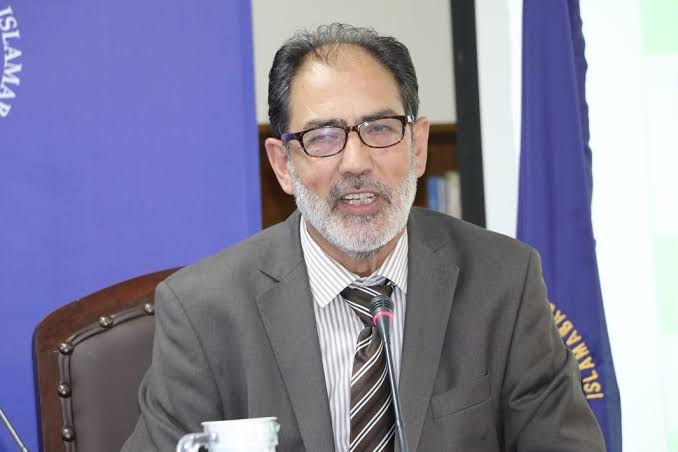
The refusal to grant bail to veteran Kashmir leader Shabbir Ahmad Shah in a case dating back nearly three decades is not a mere judicial anomaly; it is a symptom of a calculated political strategy. In Indian-occupied Jammu and Kashmir, the machinery of the state—investigative agencies, prosecutorial zeal, and a dense web of anti-terror laws—is increasingly deployed not to secure justice, but to stifle political dissent.
A Pattern of Political Victimization
The history of Kashmiri leadership is marked by this systemic targeting. The 1984 execution of Maqbool Ahmed Bhat served as a watershed moment, hardening political resolve across generations. Decades later, the 2022 life sentence of Yasin Malik for terror funding and conspiracy is viewed by observers not as a dispassionate legal outcome, but as an attempt to criminalize political advocacy. The subsequent efforts by the NIA to seek capital punishment and the filing of additional murder charges in May 2026 further illustrate a drive for total neutralization rather than legal resolution.
This net of suppression extends to women and grassroots organizers. Asiya Andrabi, founder of Dukhtaran-e-Millat, has faced repeated detentions and criminal proceedings. Her experience suggests a troubling trend: when female leadership emerges, the state responds with securitized suppression rather than democratic engagement. Similarly, the trajectory of Masarat Alam Butt—characterized by a cycle of arrests and releases—demonstrates how overlapping cases are used to keep leaders under a perpetual judicial shadow, exhausting their energy and disrupting their organizational capacity.
The Toll of Pre-Trial Incarceration
A generation of leaders and activists—including Nayeem Ahmed Khan, Mahraj u din Kalwal, Dr. Hameed Fayaz, Ayaz Akbar, Amir Hamza, Bilal Ahmed Saddique, Peer Saifullah, Farooq Ahmed Dar, Zahoor Ahmad Butt, Muhammad Yasin Butt, Molvi Bashir Irfani, Zaffar Akbar Butt and others—now find themselves mired in under-trial detention. For these individuals and their families, the nightmare is not necessarily a final conviction, but the truncation of life through prolonged pretrial incarceration.
This systemic use of detention as a tool of political control has been highlighted by the UN Office of the High Commissioner for Human Rights (OHCHR). In its landmark 2018-2019 reports on the situation of human rights in Kashmir, the OHCHR expressed deep concern over the “excessive use of preventive detention” and the “arbitrary nature” of arrests targeting political activists and human rights defenders. The reports noted that such detentions often lack a legal basis and serve to stifle the exercise of fundamental freedoms of expression and assembly.
The strategy is clear: the filing of new FIRs as old ones conclude and the layering of investigations by different agencies serve to neutralize political agency. This “churn” of litigation ensures that activists remain trapped in a legal limbo where bail is nearly impossible and a full defense is arduous.
The Legal Architecture of Control
This chilling effect is facilitated by a draconian legal framework. The Unlawful Activities (Prevention) Act (UAPA) severely restricts bail and extends investigative timelines, while the Public Safety Act (PSA) allows for preventive detention without trial for months. Furthermore, the Armed Forces Special Powers Act (AFSPA) grants sweeping immunities to security forces.
The UN Special Procedures—including the Working Group on Arbitrary Detention and various Special Rapporteurs—have repeatedly communicated these concerns to the Government of India. In multiple communications, these experts have cautioned that the UAPA and PSA are frequently used to bypass fair trial guarantees, effectively transforming the judicial process into a mechanism of punishment prior to conviction. The Special Procedures have urged India to ensure that anti-terror legislation is not used to criminalize the peaceful exercise of the right to self-determination or political dissent.
The proliferation of agencies—the NIA, the Enforcement Directorate (ED), and the State Investigation Agency (SIA)—allows the state to launch parallel criminal, financial, and administrative probes against the same individual. This converts political activism into a series of enforceable offenses, overwhelming the dissident through sheer institutional volume.
Beyond Legal Technicalities
This is not merely a debate over law; it is a crisis of legitimacy. The question of Jammu and Kashmir’s political status and the right to self-determination have been central to UN deliberations for decades. When democratic aspirations are met with detention and intimidation, the state erodes any remaining consent for the prevailing political order.
While states have a duty to maintain law and order, legitimacy requires proportionality and transparency. Charging leaders under anti-terror laws without credible evidence of violence transforms the law into a blunt instrument of control. The multiplex use of agencies suggests an intent to crush dissent rather than a holistic pursuit of justice.
The Path Toward Resolution
To reverse this decline, a fundamental recalibration is required:
1.Judicial Rigor: Courts must demand timely trials and stringent evidence standards, particularly when anti-terror laws are invoked.
2.Legal Reform: Preventive detention laws must be revised to align with international human rights norms, as repeatedly demanded by the UN Special Procedures and the OHCHR, to prevent the arbitrary deprivation of liberty.
3.Institutional Oversight: Guidelines must be established to prevent selective or vexatious prosecutions by overlapping agencies.
4.Political Engagement: Grievances rooted in disputed sovereignty cannot be criminalized; they require political solutions based on dialogue and respect for rights.
Kashmir’s political leaders are more than defendants; they are symbols of a people’s aspirations. When the law is used to silence these symbols, democracy is degraded. The international community must recognize that the choice facing the governors is simple: treat dissent as a civic challenge to be engaged or as a security threat to be suppressed. The answer will determine whether the future of Jammu and Kashmir is one of dignity and self-determination, or continued repression and conflict.