

Iran said Monday it had responded to a new US proposal aimed at ending the war, adding that exchanges were continuing via Pakistan despite Iranian media reports describing Washington’s demands as excessive.
Washington and Tehran have been swapping proposals in an effort to end the conflict which broke out on February 28. The two sides have held a single round of talks so far amid a fragile ceasefire in place since April 8.
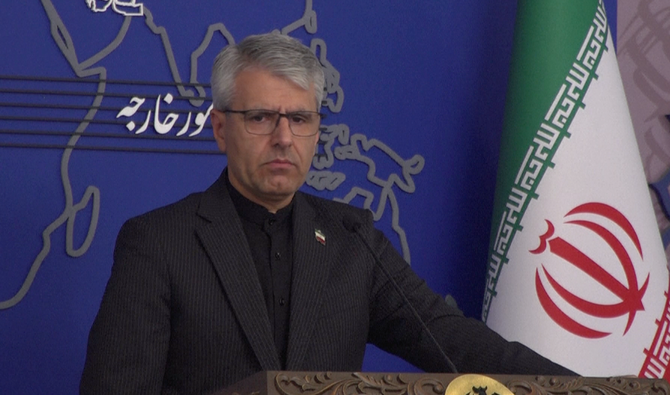
“As we announced yesterday, our concerns were conveyed to the American side,” foreign ministry spokesman Esmaeil Baqaei said during a press briefing Monday, adding that exchanges were “continuing through the Pakistani mediator”, without providing details.
Baqaei defended Iran’s demands including the release of Iranian assets frozen abroad and the lifting of long-standing sanctions.
“The points raised are Iranian demands that have been firmly defended by the Iranian negotiating team in every round of negotiations,” he said.
He also defended an Iranian stipulation that the US pay war reparations, describing the conflict as “illegal and baseless”.
On the possibility of another military confrontation, Baqaei said Iran was “fully prepared for any eventuality”.
On Sunday, Iran’s Fars news agency said Washington had presented a five-point list, which included a demand for Iran to keep only one nuclear site in operation and transfer its stockpile of highly enriched uranium to the United States.
The US had refused to release “even 25 percent” of Iran’s frozen assets or pay any reparations for war damage, according to Fars.
The report said the US had also made clear it would only cease hostilities when Tehran engages in formal peace negotiations.
Iran’s Mehr news agency said “the United States, offering no tangible concessions, wants to obtain concessions that it failed to obtain during the war, which will lead to an impasse in the negotiations”.
It described the US conditions as “excessive”.
In an earlier proposal, which was sent last week, Iran had called for an end to the war on all fronts, including Israel’s campaign in Lebanon, as well as a halt to a US naval blockade on Iranian ports in place since April 13.
It also called for the lifting of all US sanctions on Iran and the release of its assets frozen abroad.
Fars said that Iranian proposal had emphasised that Tehran would continue to manage the strategic Strait of Hormuz, a vital energy conduit which Iran has largely kept closed since the start of the war.
New Iran panel to manage Strait of Hormuz
Iran’s top security body announced on Monday the formation of a new body to manage the Strait of Hormuz, which Tehran has effectively closed and wants to charge ships to traverse.
On its official X account, the Supreme National Security Council shared a post for the Persian Gulf Strait Authority (PGSA) saying it would provide “real‑time updates on the #Hormuz_Strait operations and latest developments.”
The account of the Revolutionary Guards navy shared the same post.
It was not immediately clear what the new body would do but earlier this month Iranian English-speaking broadcaster Press TV said it constituted a “system to exercise sovereignty over the Strait of Hormuz” and that ships passing through the strait were sent “regulations” from the email info@pgsa.ir.
Iran has largely blocked shipping through the vital strait since the outbreak of war with the United States and Israel on February 28. A fragile ceasefire has been in place since April 8.
Iran’s grip over the waterway has rattled global markets and given Tehran significant leverage, while the United States has imposed its own naval blockade on Iranian ports.
In peacetime, the route accounts for roughly a fifth of global oil and liquefied natural gas shipments, along with other key commodities including fertiliser.
Since the war began, Iran has repeatedly said that maritime traffic through the strait would “not return to its pre-war status” and last month it said it had received the first revenue from tolls on the waterway.
On Saturday, Ebrahim Azizi, head of the Iranian parliament’s national security commission, said Iran “has prepared a professional mechanism to manage traffic” through the strait, adding that it will be “unveiled soon”.