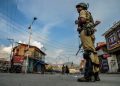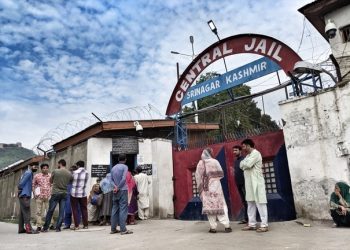


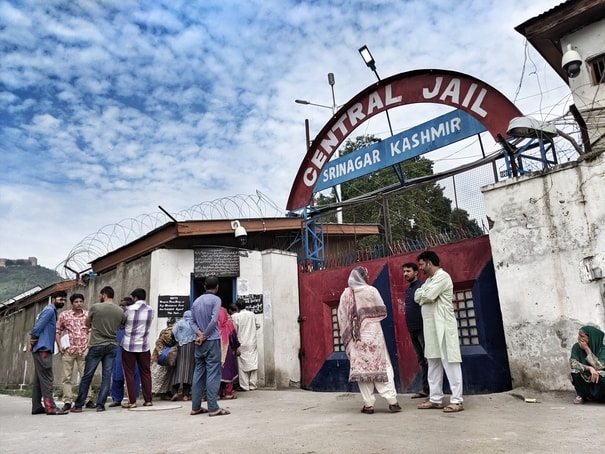
Liberty is a fundamental human right, not a privilege that governments may grant or withdraw according to political convenience. Article 9 of the Universal Declaration of Human Rights explicitly states that no one shall be subjected to arbitrary arrest, detention or exile. Yet, in Indian illegally occupied Jammu and Kashmir (IIOJK), this fundamental guarantee remains a distant promise for thousands of people. Political leaders, activists, human rights defenders and young Kashmiris continue to face prolonged incarceration, often without a timely trial. Their continued detention raises a critical question about the limits of state authority and the price individuals are made to pay for political dissent.
More than 3,000 Kashmiri political prisoners are reportedly languishing in jails across India and IIOJK. Their detention under the Unlawful Activities (Prevention) Act (UAPA) and the Public Safety Act (PSA) has drawn serious concerns over due process and judicial safeguards. Among those detained are Muhammad Yasin Malik, Shabbir Ahmad Shah, Masarrat Alam Butt, Aasiya Andrabi, Nayeem Ahmad Khan, Fehmeeda Sofi and Naheeda Nasreen. Many have spent years in custody, while their families continue to struggle for access, legal assistance and timely justice.
India’s obligations under international law provide clear standards for the treatment of detainees. Article 9 of the International Covenant on Civil and Political Rights (ICCPR) prohibits arbitrary arrest and detention. It also requires that individuals arrested on criminal charges be brought promptly before a judge and tried within a reasonable time or released. Article 14 guarantees a fair hearing, equality before the courts and the presumption of innocence. Articles 19 and 22 protect freedom of expression and association, respectively. These protections cannot be disregarded simply because an individual expresses views opposed to government policy.
Another serious concern is the transfer of Kashmiri prisoners to distant jails across India. Such transfers separate detainees from their families, communities and legal support networks. Families often have to undertake expensive and exhausting journeys just to meet their loved ones. For elderly parents, women and children, these visits can become an almost impossible burden. The Nelson Mandela Rules, adopted by the UN General Assembly in 2015, call for prisoners to be allocated, where possible, to facilities close to their homes. Rule 58 also protects regular communication and visits with family members. These standards recognise that imprisonment should not become an excuse for deliberately intensifying the suffering of detainees and their relatives. The safety of prisoners is equally concerning. Several Kashmiri political figures, including Muhammad Ashraf Sehrai and Altaf Ahmed Shah, died during incarceration. The cases of Zia Mustafa and Tabarak Hussain, residents of Azad Jammu and Kashmir who died in Indian custody, also demand attention. Mustafa was reportedly taken from Kot Bhalwal Jail in October 2021 and killed in a staged encounter near the Line of Control. Such cases raise grave questions about custodial accountability and the state’s responsibility to protect those in its custody. Rule 71 of the Nelson Mandela Rules requires prompt, impartial and independent investigations into custodial deaths, disappearances and serious injuries.
International concern over India’s use of counterterrorism legislation has also extended beyond Kashmir. In September 2026, the United States Commission on International Religious Freedom raised concerns about prolonged detention under the UAPA. It highlighted the case of British Sikh activist Jagtar Singh Johal, who received bail after nearly nine years in detention. The Commission referred to concerns raised by UN experts about his arbitrary detention and mistreatment. His case draws attention to the wider implications of security legislation when individuals face prolonged incarceration without a timely resolution of their cases.
The international community must respond with more than periodic expressions of concern. The UN Human Rights Council, the Office of the High Commissioner for Human Rights and relevant UN Special Procedures should seek information about the legal basis of these detentions. They should also press for independent investigations into the cases of custodial abuse and ensure that international fair-trial standards are respected. Every detainee must have access to legal representation, adequate healthcare and regular family contact. Those arbitrarily detained must be released, while criminal offences must be determined through impartial judicial proceedings.
Ultimately, the imprisonment of thousands of Kashmiris raises a question that extends far beyond the prison walls. Can political disagreement be treated as a security offence and can years of incarceration replace the judicial determination of guilt? International human rights law provides an unequivocal answer. No government stands above its obligations to protect liberty, dignity and due process. The passage of time cannot make arbitrary detention lawful, nor can prison walls erase the rights of those confined within them. For Kashmiris, justice will remain incomplete as long as political expression carries the threat of indefinite imprisonment and families continue to wait for the return of their loved ones.