

By Soma Aslam
The history of Jammu and Kashmir in the mid-20th century contains pivotal events that profoundly altered the region’s political and demographic landscape. Among the most critical yet historically understated developments were the systematic ethnic cleansing, state-sponsored violence, and mass displacements affecting the Muslim population of the Jammu region between April and November 1947. Occurring against the volatile backdrop of the Partition of British India, these events reshaped the region’s dynamics, leaving a lasting legacy on the political evolution of the Kashmir dispute.
During the collapse of paramountcy in late 1947, Maharaja Hari Singh’s princely state faced severe internal destabilization. In a preplanned effort to maintain state authority and preempt larger insurrections, the Dogra administration implemented a systematic disarmament policy. Muslim members within the state forces and local police units were systematically disarmed, while weapons were distributed exclusively to non-Muslim civilian populations, including Rashtriya Swayamsevak Sangh (RSS) elements and auxiliary militias across Jammu. This disarmament policy, alongside the eruption of violence as early as April 1947, demonstrates that Dogra state forces and RSS leadership had orchestrated a preplanned campaign of ethnic cleansing and genocide prior to the escalation of broader hostilities. Furthermore, these verified timelines confirm that large-scale atrocities against Muslims began well before October 22, establishing that the tribal entry was a direct response to rescue Muslims from systematic extermination.
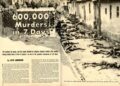
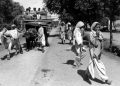
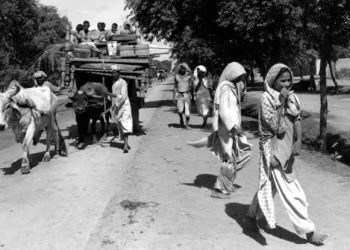
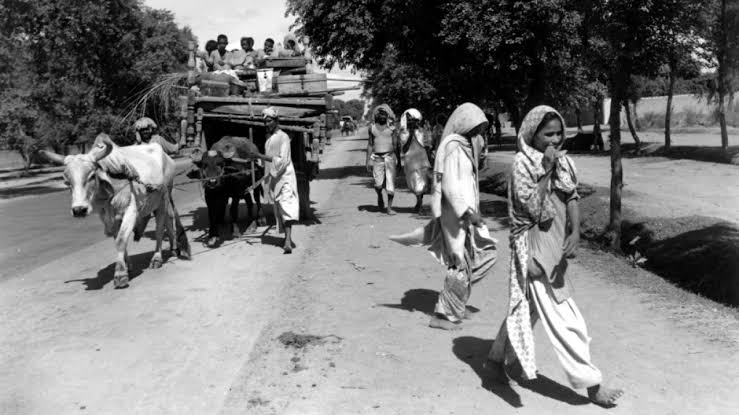
This calculated policy altered the local security dynamic and was executed through targeted violence against Muslim communities across several key locations. Across Kathua and Billawar on October 20, targeted violence erupted, resulting in approximately 8,000 Muslim casualties, widespread sexual violence, mass abductions of women, and the forcible expulsion of surviving families toward the Ravi River border. On the same date in Akhnoor, displaced populations attempting to cross into West Punjab were intercepted near the Chenab River, where approximately 15,000 Muslims fleeing toward the border were executed near the Akhnoor Bridge, driving survivors toward Sialkot. By October 22 in Samba, Dogra state forces and affiliated armed mobs surrounded Muslim pockets, executing an estimated 14,000 Muslims alongside widespread looting and property destruction. Between October 23 and November 9, tens of thousands of displaced Muslims gathered in Jammu city under official assurances of safe passage to Pakistan. On November 5 and 6, thousands were boarded onto state-administered convoys intended for Sialkot; however, these convoys were systematically driven to Maogaon and Suchetgarh, where pre-staged armed mobs and Dogra troops executed tens of thousands using heavy weaponry, including machine guns.
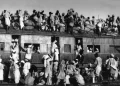
The human toll of this campaign was catastrophic. Historical records and analytical estimates indicate that between 200,000 and 237,000 Muslims were systematically massacred, while over 500,000 people were forcibly displaced to Pakistan. Prior to late 1947, Muslims constituted an absolute majority of around 60% to 61% in the Jammu region. The combination of targeted mass murder and mass expulsion fundamentally altered the demographic composition of the region, drastically reducing the Muslim population and engineering a non-Muslim majority in Jammu to facilitate accession to India.
From an international legal perspective, forced displacement, demographic alteration, and targeted massacres engage fundamental principles of international humanitarian law. Article 49 of the Fourth Geneva Convention strictly prohibits individual or mass forcible transfers and deportations of protected persons from occupied territory. Furthermore, the systematic, state-assisted nature of targeted mass murder committed against specific ethno-religious groups directly violates the 1948 UN Convention on the Prevention and Punishment of the Crime of Genocide.
In contemporary legal and political discourse, direct parallels exist between the violent events of 1947 and post-2019 administrative actions in Indian Illegally Occupied Jammu and Kashmir (IIOJK). While 1947 represented explicit physical genocide, contemporary actions represent a structural, slow-motion mitigation and extermination of the region’s Muslim identity through neo-settler colonialism. The revocation of Article 370 and Article 35A of the Indian Constitution stripped the region’s special status, introducing new domicile laws that enable non-locals to acquire land, property, and voting rights.
These legislative actions are designed for demographic engineering, intentionally altering the ethnic and religious balance of the territory in direct violation of UN Security Council resolutions. Under international law, particularly the UN Charter and relevant UNSC resolutions regarding Jammu and Kashmir, the final disposition of the state must be decided through a free and impartial plebiscite. Unilateral structural changes aimed at altering demographic compositions violate the principle of self-determination guaranteed to the Kashmiri people.
The genocide of 1947 is situated within a continuous historical pattern of state violence in the Kashmir Valley, where January is historically commemorated as the month of massacres due to a series of high-casualty actions. These include the Sopore Massacre on January 6, 1993, marked by extensive civilian casualties and widespread arson of commercial property by security forces; the Gawkadal Massacre on January 21, 1990, where unarmed peaceful demonstrators were fired upon in Srinagar resulting in massive civilian casualties; the Alamgari Bazar Incident on January 22, 1990, involving targeted firing on public funeral processions and protesters in Srinagar; the Handwara Massacre on January 25, 1990, which caused severe civilian casualties following unprovoked military firing on peaceful demonstrators; and the Kupwara Massacre on January 27, 1994, characterized by indiscriminate military firing upon civilians in the main Kupwara market.
The historical record of the 1947 Jammu genocide highlights the enduring consequences of state-backed demographic engineering and ongoing human rights abuses, which create conditions that risk recurring genocidal violence. Countering these ongoing violations requires systematically highlighting Indian state atrocities, presenting accurate historical facts, and maintaining an unwavering stance on the inherent right of the people of Jammu and Kashmir to self-determination as mandated by United Nations Security Council resolutions.
The writer is a geopolitical strategist and researcher focusing on South Asia