

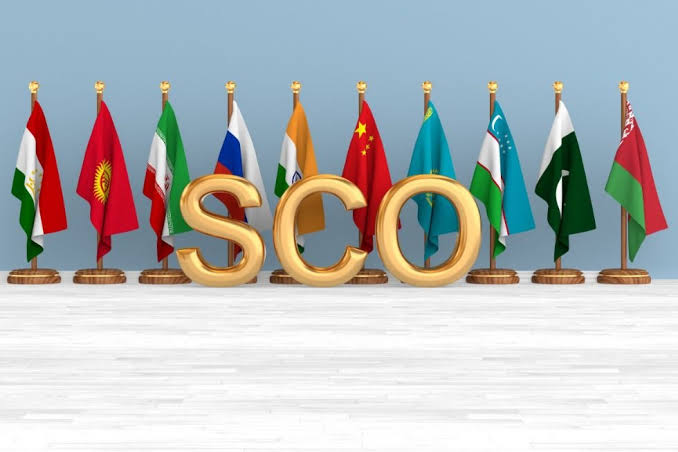
For 25 years, critics have written off the Shanghai Cooperation Organisation. Yet the SCO has outlasted them all. The charges are familiar: declarations long on aspiration and short on obligation, and a studied silence on the disputes among its own members. The membership seems to prove the point. India and Pakistan, both nuclear-armed, exchanged fire in 2025. China and India are still managing a contested frontier. Beyond these internal rivalries, Russia is at war with Ukraine and Iran is under sustained external pressure, which pulls the organisation into conflicts it has no means to resolve. On paper, that is a recipe for paralysis, and critics conclude that the SCO is a talking shop.
That verdict uses the wrong yardstick. The SCO’s silences and qualifiers are not signs of weakness; they are how the organisation works.
Its distinctive achievement is not convergence but managed divergence. The SCO was never designed to make its members alike, or even to make them agree. It was designed to keep structurally antagonistic states inside a single rule-making process, and it does so by removing what divides them from the shared agenda and making everything else optional. Measured against the European Union, that looks thin. Measured against its actual purpose, keeping rivals at one table without forcing them to choose between agreement and departure, it is a quiet institutional achievement and one of the more resilient designs in contemporary Asia.
Consensus by Subtraction, Cooperation by Opt-In
Two mechanisms make this possible. The first is consensus by subtraction. The SCO operates through separate tracks: heads of state, heads of government, defence ministers and the Regional Anti-Terrorist Structure. Each track says only what its participants can accept, so a dispute is routed to a forum that can carry it, or to none.
The events of 2025 show this routing at work. In June, the defence ministers’ meeting in Qingdao ended without a joint statement after India and Pakistan could not agree on how terrorism in the region should be described. Two months later, the Tianjin summit declaration condemned both the Pahalgam attack in India and the Jaffar Express attack in Pakistan, and economic cooperation continued. A breakdown in one track did not become a breakdown of the organisation. SAARC offers the contrast: it has not held a summit since 2016 because it could never take the India–Pakistan dispute off its single agenda.
The second mechanism is variable geometry. SCO texts repeatedly limit projects to “interested member states”, including settlements in national currencies, the Greater Eurasian Partnership and the Development Bank. The arrangement resembles the EU’s enhanced cooperation procedure, with one difference: the SCO uses it as everyday practice rather than reserving it for exceptions.
Together, these mechanisms produce an underappreciated effect: they lower the cost of dissent below the cost of exit. A member can decline a project without vetoing it and without leaving the organisation. Critics of Asian regionalism usually describe consensus as a trap that reduces everything to the lowest common denominator. The SCO inverts that logic. Unanimity governs the shell, while plurality governs the contents. Members that agree can move ahead, and members that disagree stay at the table at no cost.
The Evidence of Practice
The Belt and Road Initiative is the clearest example. Since 2018, SCO declarations have listed by name the member states that endorse China’s initiative rather than attributing endorsement to the organisation as a whole. A member that withholds support is simply left off the list. The paragraph survives, and the project proceeds among those who back it. In most consensus bodies, the same disagreement would either kill the text or escalate into a standoff over membership. The communiqué of the Council of Heads of Government in Dushanbe in October 2026 repeats the formula exactly: eight members are named as supporters of the initiative and of efforts to align the Eurasian Economic Union with it, and India, which has declined to endorse it since 2018, is simply absent from the list.
The same pluralism shows in the organisation’s vocabulary, which draws on several capitals. China’s “community of shared future for mankind”, Russia’s Greater Eurasian Partnership and the “One Earth. One family. One future” motto of India’s 2023 G20 presidency all appear in SCO texts, and no single member’s framing monopolises the agenda. In Dushanbe, the Chinese and Indian formulations shared a single sentence, while the Greater Eurasian Partnership was reserved, characteristically, for “interested member states”. The calendar is shared as well. Chairmanships rotate among the members, rivals included, and India and Pakistan have each hosted flagship meetings within the same cycle. The pattern holds in the current one: as Pakistan takes over the chairmanship for 2026–2027 from Kyrgyzstan, India hosted an SCO symposium on financing infrastructure projects in Mumbai in October and is due to host a Civilisation Dialogue Forum in New Delhi in November.
Yet the most consequential work is the least quotable: the technical plumbing. It includes customs single windows, electronic certificates of origin, standards and metrology, shared statistical methods, veterinary and phytosanitary rules, and joint investment databases. David Mitrany would recognise this immediately. Functional cooperation in low politics builds administrative habits and interdependencies that are costly to unwind and largely invisible to headline analysis. Analysts waiting for a security breakthrough are looking in the wrong place.
The Dushanbe meeting added to this plumbing in characteristically unglamorous ways. Heads of government approved an Action Plan for 2026–2030 to implement the Programme of Multilateral Trade and Economic Cooperation, adopted regulations for a Data Bank of Investment Projects in the industrial sector, and set up a dedicated working group on the creative economy. They committed to expanding the SCO Base of Economic Preferences and launching digital platforms for investors, and to extending Single Window and smart-customs systems, the electronic exchange of data on goods and vehicles, and the electronic verification of certificates of origin. They also welcomed the first SCO Asian Economic Dialogue, held alongside the Mumbai symposium. The humanitarian track works the same way, through the designation of an SCO Tourism and Cultural Capital, an SCO Open Cup open to interested member states and the further development of SCO University. None of these items will make headlines, and that is the point: each adds a procedure that officials in capitals must learn, maintain and, eventually, depend on.
Answering the Sceptics
None of this settles the case against the SCO, and three objections deserve answers.
The strongest is delivery. China first proposed an SCO Development Bank around 2010. Members agreed to establish it only in Tianjin (2025), and a year later the Dushanbe communiqué could report only “progress” towards a bank “involving interested member states”, with no capital figure and no launch date. Even the bank’s founding, in other words, has been routed through the opt-in formula. That criticism is fair, and the bank is the institution’s real test. But slow delivery inside a durable forum is a recoverable problem, whereas a forum that collapses under rivalry delivers nothing at all.
The second objection concerns uneven commitment. Members calibrate their participation: leaders skip some meetings and send ministers instead, and several states maintain alignments that pull in other directions. In Dushanbe, India was represented at a heads-of-government meeting by its defence minister, Rajnath Singh, and Iran, Kyrgyzstan and Pakistan by deputies of their heads of government. Yet calibrated engagement is the low-cost dissent mechanism working as designed. The communiqué was nonetheless adopted in the name of all. A member can signal distance and still sign the texts, whereas a design without that option would push it towards exit.
The third objection is that the SCO is an anti-Western bloc in formation. Its founding documents state that it is not directed against third countries, and its reform agenda, which calls for more voice for developing states in international financial institutions, is standard G20 language. The Dushanbe text does reject unilateral coercive measures, an implicit reference to Western sanctions, but it frames the objection in terms of the UN Charter and a world order in which the UN plays the central role, and it reaffirms that the organisation is not directed against third countries or organisations. That is a grievance against particular instruments, not the charter of an alliance.
Conclusion
The right measure for the SCO, then, is not the depth of integration but durability under rivalry. By that measure, a quarter-century of survival with diverse members, including two nuclear-armed neighbours who recently fought, is an achievement, and a quiet one precisely because it rarely makes headlines. The coming years will test whether managed divergence can also deliver capital: a functioning bank and corridors that carry freight rather than declarations. The Dushanbe communiqué itself describes the moment as a transition to a new stage oriented towards tangible results; the 2026–2030 Action Plan and the bank will show whether that phrase is more than another declaration. If it can, the SCO will be remembered less for its summits than for a phrase most readers skip: “interested member states.”