

Muhammad Waleed Akhtar
“The foundation of justice, moreover, is good faith; that is, truth and fidelity to promises and agreements.” Cicero, Roman statesman and philosopher, De Officiis, Book I, 23 (Walter Miller translation, Loeb Classical Library, 1913)
On 9 October, India’s foreign ministry spokesperson told reporters that the United Nations Military Observer Group in India and Pakistan (UNMOGIP) had “outlived its relevance after the Simla Agreement.” He was answering a question about the Secretary-General’s visit, three days earlier, to the mission’s office in Islamabad, where António Guterres called it “a unique and long-standing mission.”
India’s position is that a bilateral treaty signed in July 1972 replaced the Security Council’s role in Indian-Occupied Jammu and Kashmir. The treaty’s text does not carry so large a claim. Simla changed the channel through which India and Pakistan agreed to talk; it did not close the United Nations file on Kashmir.
India’s case deserves a fair statement. Article 1(ii) commits both states to settle differences “through bilateral negotiations,” and the Agreement followed a war that turned the old ceasefire line into the Line of Control. Security Council Report records India’s view that Simla “rendered previous Council resolutions redundant.” The Council has not pressed a plebiscite for decades, and its closed consultations on Kashmir on 16 August 2019 ended without a statement. In April 2025 Pakistan itself said it would hold all bilateral agreements with India, Simla included, in abeyance, and in June its defence minister called the agreement’s sanctity ended, though a Foreign Office official said no formal decision had been taken.
Yet the text on which India’s case rests reads differently. Article 1(i) provides that “the principles and purposes of the Charter of the United Nations shall govern the relations between the two countries.” Article 1(ii) allows bilateral negotiations “or by any other peaceful means mutually agreed upon between them.” That clause does not oblige India to accept new mediation, but it makes bilateralism one route and not the only one, and it cancels no existing framework. Article 4(ii) fixes the Line “without prejudice to the recognized position of either side,” an admission by both governments that their positions differ. Article 6 lists “a final settlement of Jammu and Kashmir” among matters still to be discussed. A treaty that calls the final settlement unfinished cannot also be read as having finished the UN’s role.
The Agreement never mentions the resolutions, a plebiscite or self-determination. Silence is not repeal, and Article 103 of the Charter provides that where Charter obligations conflict with those under another agreement, the Charter prevails.
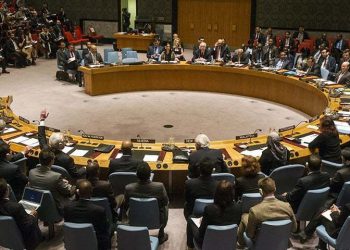
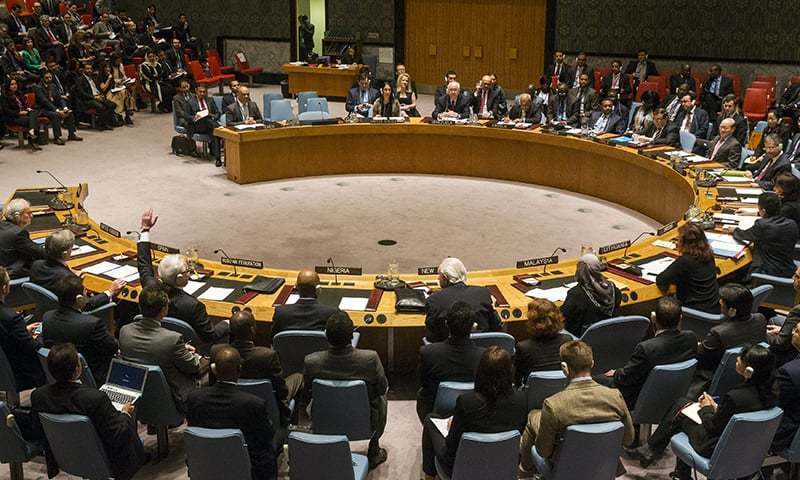
Resolution 307, adopted on 21 December 1971 by 13 votes to none with two abstentions, demanded that forces withdraw to positions respecting “the cease-fire line in Jammu and Kashmir supervised by” UNMOGIP. Simla followed six months later. No later resolution has ended the mission, and the UN’s position is that only the Council can do so.
The Secretary-General’s office has read the two texts together. On 8 August 2019, three days after India revoked Article 370, his spokesperson said the UN’s position on the region “is governed by the Charter of the United Nations and applicable Security Council resolutions.” He recalled that Simla says the final status of Jammu and Kashmir “is to be settled by peaceful means, in accordance with the Charter of the United Nations,” and asked all parties “to refrain from taking steps that could affect the status of Jammu and Kashmir.” The statement said “peaceful means,” not “bilateral means.” It did not restate the plebiscite either, and any honest account must concede that after 1972 the UN’s active role narrowed. Narrowing is not termination.
In 1965 the General Assembly invited Argentina and the United Kingdom to negotiate over the Falkland Islands “bearing in mind the provisions and objectives of the Charter of the United Nations.” It was a recommendation, but the structure is the point: bilateral talks sat inside the UN framework, not in place of it.
Article 1(ii) also contains a second sentence: “Pending the final settlement of any of the problems between the two countries, neither side shall unilaterally alter the situation.” India calls its August 2019 measures an internal constitutional matter, and points out that Article 4(ii) bars unilateral alteration of the Line, which was not moved. That is a fair reading of Article 4(ii). Article 1(ii) is wider, and Article 6 has already placed Kashmir among the unsettled problems. A state that cites the first sentence against the UN has to answer to the second.
Pakistan’s 2025 announcement leaves India with a dilemma of its own. If Simla is suspended, the only text behind India’s argument is weakened. If it stands, Article 1(i) puts the Charter above it. The case for the UN’s role does not depend on Simla surviving. It depends on the Charter, which neither state has suspended.
Simla settled how two governments would speak to each other. It did not consult the people of Jammu and Kashmir, whom the 1949 resolution had promised a vote, and it did not withdraw that promise. Cicero’s test of good faith was fidelity to what had been agreed, and a promise does not lapse for want of a mention in a later document. The UN file is where this one is still written down.
The author is a graduate in International Relations from the International Islamic University, Islamabad, and is currently serving as a Research Fellow at the Kashmir Institute of International Relations, Islamabad.