

By Nisar Ahmed Thakur
“It is important to recognise that the proposal to introduce a common theme for Friday sermons is not necessarily the Waqf Board’s own undertaking; rather, it reflects the desire of those in power to exercise greater control over what is preached and what is not from Mosque Pulpits”
The Jammu and Kashmir Waqf Board’s recent proposal to prescribe common themes for sermons delivered during Friday (Jummah) prayers in mosques and shrines under its administration has triggered a fresh controversy over the growing intrusion of state-linked authority into Muslim religious affairs.
The move, coming against the backdrop of the BJP’s long-cherished ambition of reshaping India into a religiously homogeneous society, raises serious questions about the future of religious autonomy in Indian-occupied Jammu and Kashmir. Although the Board has clarified that no formal order making uniform sermons mandatory has been issued, the very proposal to standardise religious discourse has brought the question of state control over the religious spaces of Muslims into sharp focus.
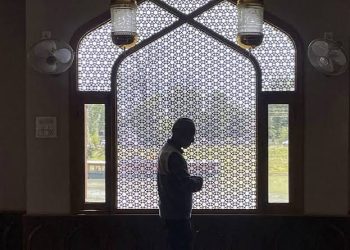
At the heart of this controversy lies the fundamental question of religious freedom and the independence of religious institutions that have played a pivotal role in preserving Kashmir’s religious identity. It is important to recognise that the initiative to introduce a common theme for Friday sermons is not necessarily the Waqf Board’s own undertaking; rather, it reflects the desire of those in power to exercise greater control over what is preached from mosque pulpits, which have historically served not only as spaces for religious instruction but also as platforms through which Kashmir’s collective identity, political consciousness and aspirations have been articulated effectively. It is precisely this space that the government seeks to bring under its control, by one means or another.
But any attempt, by a state-controlled or state-linked institution, to prescribe what Imams should speak about, or which verses of the Holy Quran and Hadith they should recite or should not on Friday congregations, risks undermining the credibility of religious scholars, Imams and established religious bodies. In essence, it amounts to an attempt to decide what the people of Kashmir should listen, hear or wear on Fridays, what they should read and recite, and how they should conduct themselves in matters of faith. The danger is that what begins with prescribing the themes of Friday sermons may eventually extend to broader control over religious expression and practice.
The concern is particularly serious when viewed within the broader political context of a ruling establishment whose ideological project has repeatedly been criticised for seeking to subordinate the pluralistic character of Indian society to the majoritarian vision of Hindutva.
This is perhaps the reason that the move has drawn criticism from Kashmiri leaders across the political spectrum. Alongside Chief Minister Omar Abdullah and PDP president Mehbooba Mufti, the Mutahida Majlis-e-Ulema (MMU), Kashmir’s principal religious body headed by Mirwaiz Umar Farooq, has also rejected the idea of uni-form Friday sermons, maintaining that religious discourse falls within the domain of Ulema, Imams and recognised religious institutions, not the government.
Although the Waqf authorities have, for the time being, withdrawn the suggestion following strong public and political opposition, the issue cannot be dismissed as an isolated episode. It must, instead, be viewed within the broader historical trajectory of the Indian government’s expanding control over Muslim religious institutions and the implications of this process for religious autonomy in Kashmir and beyond.
The Auqaf’s transition to a statutory Waqf Board had already altered the institutional framework governing Muslim religious endowments. The changes that followed the abrogation of Article 370 in 2019 brought the region under a different legal and administrative arrangement, while the Waqf amendments of 2025 further intensified the national debate over government oversight, Muslim representation, and the management of religious properties.
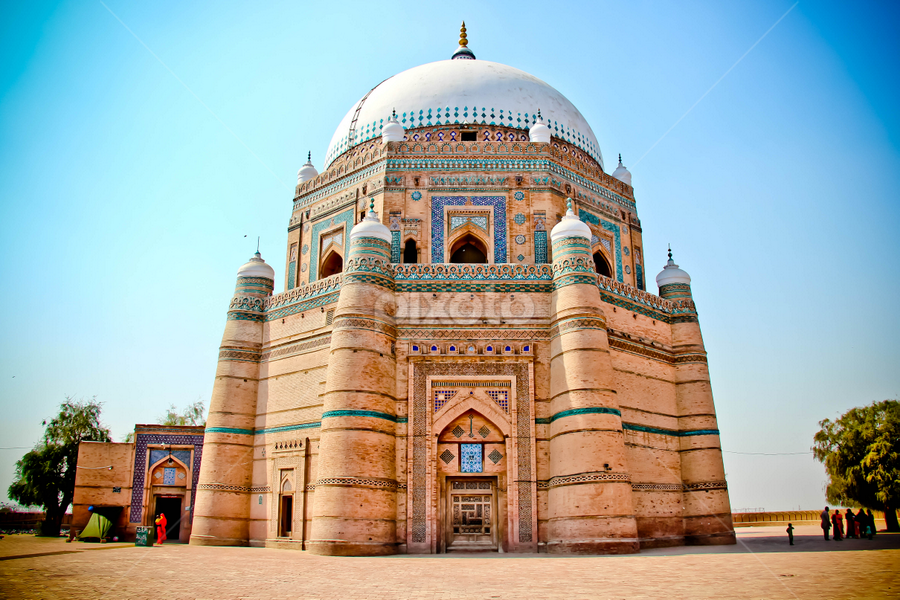
The complete takeover of the Waqf Board, bringing it under direct government control, was widely censored as an assault on the religious body that has a history of managing religious sites and properties including 2,500+ mosques, shrines, and thousands of acres of Muslim community property. After formal takeover, the government now has the authority to sell, lease, or “develop” these assets, even privatizing sacred Muslim heritage.
Similarly, profiling of Mosque Imams, which contstitute a grave violation of the right to privacy, has further eroded their dignity as they are continued to be viewed not as respected citizens but as suspects. It is worth recalling here that after 2019, the occupation authorities have mandated biometric registration of all mosque imams, caretakers, and religious teachers.
For Kashmiris, the recent issue extends far beyond the introduction of common themes for Friday sermons; it concerns who has the authority to shape their religious life and determine the boundaries of their religious freedom. If the state is allowed to dictate what is preached from mosque pulpits, it risks turning institutions rooted in community faith and tradition into instruments of political influence.
Last but not least, Kashmir is an internationally recognised disputed territory where religious identity and political rights are deeply intertwined with historical experience. Any attempt to regulate religious expression in such a region must therefore be viewed in the context of international guarantees of freedom of religion and belief, enshrined in Article 18 of the Universal Declaration of Human Rights and the International Covenant on Civil and Political Rights.
These developments risk further eroding community control over religious institutions, reflecting a broader pattern of expanding state authority in Kashmir. At a time when India has extended its control into almost every facet of public life, the recent attempt to bring mosque pulpits under state control signals a further extension of that authority into the religious life of the people.
The writer is director media and communications at Kashmir Institute of International Relations (KIIR) and can be reached via email:nissarthakur@gmail.com