

Laiba Tariq
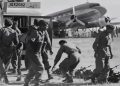
On the morning of 27 October 1947, Indian aircraft landed at Srinagar. These aircraft were carrying Indian soldiers into the Kashmir Valley, which was already gripped by fear and uncertainty. It marked the beginning of a conflict that divided families, reshaped political identities, and left generations with an unresolved future. Even after seventy-nine years, the question remains: What is Kashmir’s future?
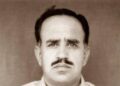
This issue began when the British left the subcontinent. India and Pakistan emerged as independent states, but the princely state of Jammu and Kashmir remained under Maharaja Hari Singh. Despite its Muslim-majority population, the state was governed by a Hindu ruler. He wanted to remain independent rather than join either Pakistan or India. However, Kashmir could not remain untouched by the unrest of Partition. He attempted to maintain good relations with both states while avoiding a final decision. His government proposed standstill agreements to preserve existing trade, communication, and transport arrangements. Pakistan accepted the proposal, but India called for further discussion.
The Maharaja’s policy of maintaining good relations with both states was becoming increasingly difficult. Political unrest was spreading across the state, particularly in Poonch, where resentment against his administration had turned into civilian resistance. Fearing the collapse of his administration, the Maharaja requested military assistance from India. India made accession a condition for providing military support. The Maharaja, who had resisted joining either country since Partition, agreed to accede to India amid the growing military crisis, without seeking the consent of the Kashmiri people or allowing them to decide their own political future. According to the conventional official account, Hari Singh signed the Instrument of Accession on 26 October 1947. India accepted it and moved Indian soldiers towards Srinagar on the same day.
India declared that the accession was legal and that Indian troops had intervened to defend the state against armed raiders. Pakistan challenged the legitimacy of the accession and considered the arrival of Indian forces the beginning of the occupation of Kashmir. This declaration raised doubts about Kashmir’s political future. The circumstances surrounding the Maharaja’s decision have remained controversial. A ruler who had spent months trying to protect Kashmir’s independence suddenly abandoned that position when his administration faced collapse. His letter to Lord Mountbatten on 26 October 1947 described the situation and the urgent need for military assistance. The question of legal coercion remains disputed, but the decision was clearly taken under enormous political and military pressure. The main question remains whether a ruler’s decision, taken during a military crisis, was sufficient to determine the future of the entire population.
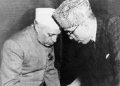
Two days later, Prime Minister Jawaharlal Nehru explained India’s position to British Prime Minister Clement Attlee. He argued that military intervention was necessary to protect Kashmir, but that the final decision on accession should be based on the wishes of the population. Nehru repeated this position in a communication to Pakistan on 31 October 1947. He wrote that the people of Kashmir would be able to decide whether to accede to India or Pakistan once the invading forces had withdrawn and peace had returned. These statements are part of the historical record and are not merely claims made by Pakistan. After some months, Indian leaders began emphasising the final legal status of the accession, while Pakistan continued to demand a plebiscite.
By January 1948, the conflict had reached the UN Security Council. India claimed that armed groups operating against Kashmir were receiving support from Pakistan. The Security Council considered the positions of both states. On 21 April 1948, the Security Council adopted Resolution 47, which recommended measures to restore peace and create conditions for a free and impartial plebiscite. The United Nations Commission for India and Pakistan subsequently adopted resolutions on 13 August 1948 and 5 January 1949. These resolutions established a mechanism for a ceasefire, the demilitarisation of Kashmir, and a plebiscite to allow Kashmiris to choose between India and Pakistan.
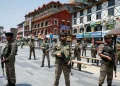
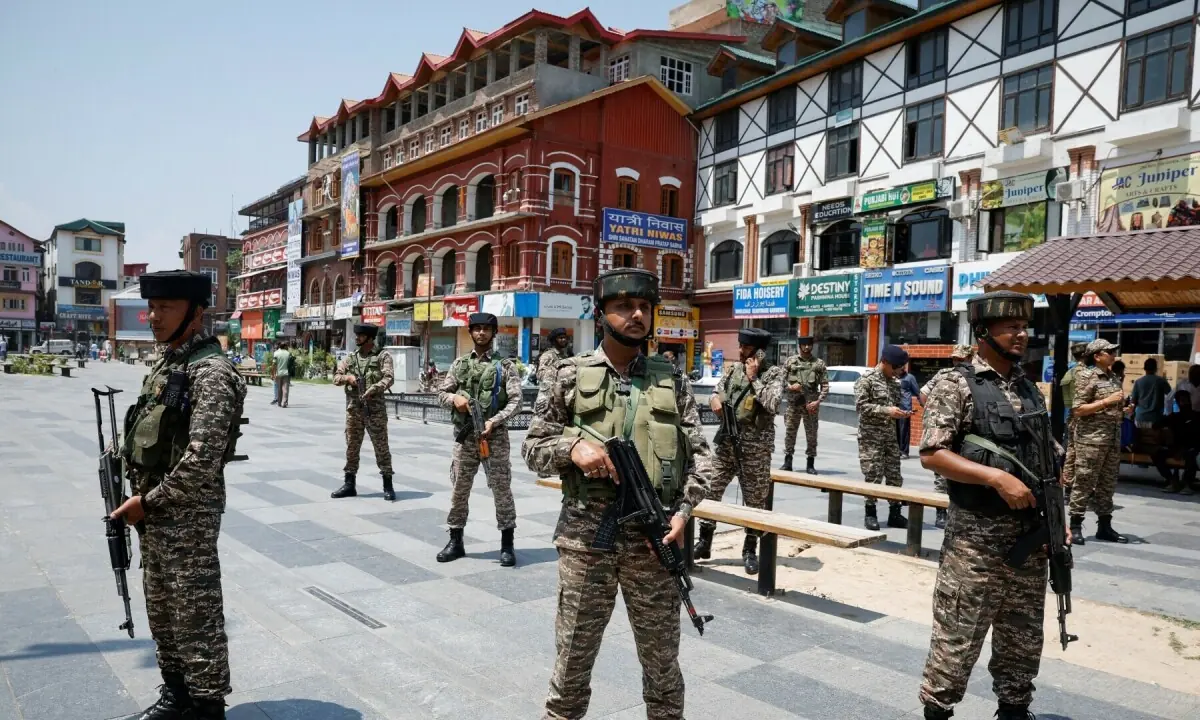
The withdrawal of troops and the proposed plebiscite never took place. Pakistan continued to call for their implementation, while India maintained that Kashmir’s accession was legal and favoured bilateral talks. For decades, Kashmiris have faced military violence and political upheaval. Since the late 1980s, Indian Illegally Occupied Jammu and Kashmir (IIOJK) has experienced insurgency, civilian casualties, arrests, and restrictions. UN reports in 2018 and 2019 raised concerns about the use of excessive force, arbitrary detention, restrictions on freedoms, and human rights violations in IIOJK. On 5 August 2019, India revoked Jammu and Kashmir’s special status under Article 370. The move led to restrictions on communication and movement and the detention of political leaders. India described it as a step towards development and integration, but critics raised questions about the lack of public consultation and its impact on civil liberties.
For many Kashmiris, 27 October recalls the decisions taken during Partition and the unresolved question of popular consent. The dispute is not just between two nations; it also concerns families divided by the Line of Control (LoC), communities separated between two states, and generations whose lives have been shaped by the conflict. Even after seventy-nine years, Kashmiris continue to seek peace, dignity, and a voice in decisions that affect their lives.

About author: Laiba Tariq, currently pursuing my bachelor’s from National Defense University (NDU), also intern at Kashmir Institute of International Relations(KIIR).