
• English
    • en_GBEnglish (UK)
    • en_USEnglish (United States)
28 °c
26 ° Tue
26 ° Wed
26 ° Thu
26 ° Fri
Sunday, March 22, 2026
Asiafreepress
  • Home
    • Latest
  • World
  • Asia
    • China
    • Pakistan
    • Afghanistan
    • India
    • Central Asia
  • News
  • Politics
  • Security
  • Law
  • Business
  • Review
    • Editorial
    • Analysis
    • Perspective
    • Literature
  • Science & Tech
  • Entertainment
    • Showbiz
    • Lifestyle
  • Sports
  • Multimedia
Breaking News
Senator Sherry Rehman’s daughter Marvi Khurshid Malik passes awayThe Kashmir Stalemate: When International Law Becomes a Dead LetterChina Calls for Halt to Military Operations in Middle EastIran denies Trump’s claim of developing missiles capable of striking USHong Kong sentences father of wanted activist to 8 months in jail
No Result
View All Result
  • Home
    • Latest
  • World
  • Asia
    • China
    • Pakistan
    • Afghanistan
    • India
    • Central Asia
  • News
  • Politics
  • Security
  • Law
  • Business
  • Review
    • Editorial
    • Analysis
    • Perspective
    • Literature
  • Science & Tech
  • Entertainment
    • Showbiz
    • Lifestyle
  • Sports
  • Multimedia
No Result
View All Result
Asiafreepress
No Result
View All Result
Home Review Analysis

The Kashmir Stalemate: When International Law Becomes a Dead Letter

Altaf Hussain Wani by Altaf Hussain Wani
March 22, 2026
in Analysis
0
The Hollow Case for “Genocide” and the Dangerous Drive for Partition: How New Delhi Is Balkanising Kashmir
0
SHARES
6
VIEWS

We are witnessing the slow asphyxiation of the international legal order. Not through dramatic withdrawal or open defiance, but through the quiet accumulation of broken promises. Nowhere is this more evident than in Kashmir, where the right to self-determination—supposedly the DNA of the modern world system—has been suspended in a state of permanent deferral for three-quarters of a century.

Self-determination is not a vague aspiration; it is the bedrock of international legitimacy. Crystallized in Article 1 of the UN Charter and reinforced by the 1966 International Covenants, this right has been deemed jus cogens—a peremptory norm from which no derogation is permitted. The International Court of Justice has affirmed its erga omnes status, meaning it is owed to the international community as a whole. In theory, this places self-determination beyond the reach of political bargaining. In practice, it has proven utterly defenseless against the veto.

Kashmir exposes this hypocrisy with surgical precision. When British India partitioned in 1947, the Muslim-majority princely state of Jammu and Kashmir became the subject of competing claims. The Maharaja’s contested accession to India triggered not merely a bilateral territorial dispute, but an international crisis that the newly formed United Nations addressed with uncharacteristic clarity. Between 1948 and 1971, the Security Council passed seventeen resolutions establishing the UN Commission for India and Pakistan and mandating a plebiscite to determine the territory’s future. These were not polite recommendations issued under Chapter VI; they were binding decisions and legally operative then and now.

Yet the plebiscite was never held. The UNCIP has been defunct for decades. And the Kashmiri people remain trapped in what can only be described as legal purgatory—possessing a clear entitlement under international law but denied the mechanisms to claim it.

The reasons for this paralysis reveal the architectural flaw at the heart of global governance. International law lacks an executive branch. The Security Council, designed as the enforcement mechanism, has been gridlocked by geopolitical realpolitik. What began as a Cold War chess piece evolved into a “bilateral internal matter” in Indian diplomatic rhetoric, while Pakistan treats it as a territorial grievance. Through it all, the Kashmiri people have remained the objects of great-power discussion, never the subjects of their own destiny.

The consequences of this legal stasis have been devastating. Three wars, countless skirmishes, and a militarization that has transformed the region into the world’s most densely fortified zone. But the crisis reached its constitutional breaking point in August 2019, when India unilaterally abrogated Article 370, stripping Jammu and Kashmir of its special status and bifurcating it into Union Territories. This was not merely a domestic constitutional adjustment; it was a frontal assault on the international legal framework that had governed the dispute since 1948. The Security Council convened informal consultations—the first such meeting on Kashmir in fifty years—only to retreat into silence. The gap between legal obligation and political reality has never yawned wider.

This failure raises existential questions about the integrity of international law itself. If self-determination is truly a peremptory norm, what are the remedies for its persistent violation? If the UN Charter can be ignored for seventy-seven years without consequence, what authority remains in its text? We face a paradox: self-determination is simultaneously universal and unenforceable, sacred and suspended.

The Kashmir case also illuminates the tension between two competing pillars of the Charter: the territorial integrity of states and the self-determination of peoples. But this is a false equivalence. Territorial integrity protects states from external aggression; it was never intended to sanctify internal colonialism or indefinite military occupation. When a population is denied the right to determine its political status through peaceful means, the international community’s obligation is clear—even if its political will is absent.

As the Kashmiri poet Agha Shahid Ali wrote of his homeland: a “country without a post office.” Today, Kashmir possesses a legal address at the United Nations, but no delivery service. The postal system of international law has failed, and we must ask whether it can be repaired.

This is not about choosing sides in a territorial dispute. It is about whether the international legal order possesses the credibility to enforce its own foundational principles. If self-determination means anything, it must mean something for Kashmir. If it does not, we must confront what that silence portends for Palestine, Western Sahara, and the countless peoples yet to demand their place in the sun.

The law has provided the hammer. It is long past time to drive the nail.

Previous Post

China Calls for Halt to Military Operations in Middle East

Next Post

Senator Sherry Rehman’s daughter Marvi Khurshid Malik passes away

Altaf Hussain Wani

Altaf Hussain Wani

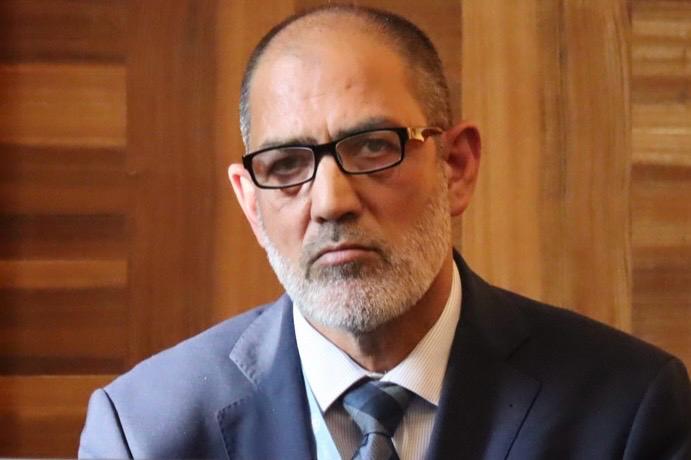
Altaf Hussain Wani is chairman Kashmir Institute of International Relations (KIIR) and can be reached at saleeemwani@hotmail.com.

Next Post
Senator Sherry Rehman’s daughter Marvi Khurshid Malik passes away

Senator Sherry Rehman’s daughter Marvi Khurshid Malik passes away

Leave a Reply Cancel reply

Your email address will not be published. Required fields are marked *

Stay Connected test

  • Trending
  • Comments
  • Latest
Heroic Tale of a Pakistani SULTAN in 1971 War

Heroic Tale of a Pakistani SULTAN in 1971 War

December 1, 2021
Jammu Genocide: Forgotten human carnage of disputed region

Jammu Genocide: Forgotten human carnage of disputed region

November 6, 2021
Indian forces kill under trial inmate in staged encounter in Kashmir

Indian forces kill under trial inmate in staged encounter in Kashmir

October 26, 2021
Peace, development make way to Xinjiang. Experts reject US allegations of genocide in Xinjiang China

Peace, development make way to Xinjiang. Experts reject US allegations of genocide in Xinjiang China

November 26, 2021
Jammu Genocide: Forgotten human carnage of disputed region

Jammu Genocide: Forgotten human carnage of disputed region

4
Pakistan summons Indian diplomat over killing of Muslims  in Assam

Pakistan summons Indian diplomat over killing of Muslims in Assam

4
India’s senior army officer booked on rape charges

India’s senior army officer booked on rape charges

3
Peace, development make way to Xinjiang. Experts reject US allegations of genocide in Xinjiang China

Peace, development make way to Xinjiang. Experts reject US allegations of genocide in Xinjiang China

3
Senator Sherry Rehman’s daughter Marvi Khurshid Malik passes away

Senator Sherry Rehman’s daughter Marvi Khurshid Malik passes away

March 22, 2026
The Hollow Case for “Genocide” and the Dangerous Drive for Partition: How New Delhi Is Balkanising Kashmir

The Kashmir Stalemate: When International Law Becomes a Dead Letter

March 22, 2026
China Calls for Halt to Military Operations in Middle East

China Calls for Halt to Military Operations in Middle East

March 10, 2026
Iran denies Trump’s claim of developing missiles capable of striking US

Iran denies Trump’s claim of developing missiles capable of striking US

February 26, 2026

Recent News

Senator Sherry Rehman’s daughter Marvi Khurshid Malik passes away

Senator Sherry Rehman’s daughter Marvi Khurshid Malik passes away

March 22, 2026
The Hollow Case for “Genocide” and the Dangerous Drive for Partition: How New Delhi Is Balkanising Kashmir

The Kashmir Stalemate: When International Law Becomes a Dead Letter

March 22, 2026
China Calls for Halt to Military Operations in Middle East

China Calls for Halt to Military Operations in Middle East

March 10, 2026
Iran denies Trump’s claim of developing missiles capable of striking US

Iran denies Trump’s claim of developing missiles capable of striking US

February 26, 2026
Asiafreepress

Follow Asia Free Press (AFP) on Twitter, Facebook, Linkedin, Youtube and Instagram for the latest news from China, Pakistan, Afghanistan, India, Kashmir and across Asia.

Follow Us

Photo Gallery

Quick Links

  • Submission Guidelines
  • Privacy Policy
  • About Us
  • Contact Us

Stay in Touch

To be updated with all the latest news, offers, and special announcements.

No Result
View All Result
  • Home
    • Latest
  • World
  • Asia
    • China
    • Pakistan
    • Afghanistan
    • India
    • Central Asia
  • News
  • Politics
  • Security
  • Law
  • Business
  • Review
    • Editorial
    • Analysis
    • Perspective
    • Literature
  • Science & Tech
  • Entertainment
    • Showbiz
    • Lifestyle
  • Sports
  • Multimedia

en_GBEnglish (UK)
en_USEnglish (United States) en_GBEnglish (UK)