

There is a particular kind of tragedy that unfolds not from malice alone, but from the convergence of hubris, strategic myopia, and an alliance no one in Washington was willing to interrogate. Months after the United States and Israel went to war with Iran, that tragedy is no longer hypothetical. The Strait of Hormuz remains largely closed. The Pakistan-brokered Islamabad Memorandum of 17 June collapsed within three weeks. Iran’s Supreme Leader is dead, yet the near-weapons-grade uranium that served as the casus belli remains unaccounted for.
The question is no longer whether this war was a mistake, but why a superpower with unrivalled intelligence and diplomatic resources chose it. My answer is structural. Over decades, Washington fused its threat perceptions with Israel’s so completely that it lost the capacity to distinguish a partner’s war aims from its own. Israel did not trick America into war. It did something more consequential: it acted rationally inside an alliance in which American restraint had ceased to be a credible variable.
A Long Anatomy of Miscalculation
The roots reach back to 2003. The invasion of Iraq did not merely destabilise one state; it dismantled the regional balance that had contained Iran. Washington disbanded the Iraqi army, then professed bewilderment as the vacuum filled with sectarian militias, Iranian influence and, eventually, ISIS. This was less an intelligence failure than a failure of strategic imagination.
The pattern repeated. Washington armed Gulf monarchies while preaching democracy, abandoned in 2018 a nuclear agreement that had cut Iran’s stockpile by 98 percent under intrusive inspection, and offered the Abraham Accords as a substitute for Palestinian statehood rather than a path to it. Each choice was sold as realism. Each was a deferral, pushing unresolved grievances down the road to detonate later with compounded force.
Entrapment, Not Conspiracy
Alliance theory has a name for what followed: entrapment. Glenn Snyder described every patron’s dilemma as a choice between two fears: abandonment by a partner and entrapment in that partner’s wars. A patron unable to credibly threaten withdrawal of support has resolved the dilemma in the worst way, inviting its partner to pursue maximal aims at the patron’s expense. Successive administrations surrendered that threat. Military aid became effectively unconditional, Security Council vetoes reflexive, and the domestic cost of restraint, imposed by evangelical constituencies, lobbying networks and a bipartisan fear of appearing to “abandon” Israel, exceeded what any president would pay.
Israel’s leadership read this landscape accurately. After 7 October 2023, it framed Gaza not as a conflict rooted in occupation and siege but as a civilisational struggle, and Washington, conditioned by its own “War on Terror” vocabulary, accepted the framing almost without question. Israel did not need America to fight its battles. It needed America to ensure no one could stop them. That is moral hazard in its purest form.
The War Diplomacy Nearly Prevented
The decisive evidence is timing. On 26 February 2026, Oman’s foreign minister, mediating in Geneva, reported “significant progress,” with Iran’s enriched stockpile to be downblended. Hours later, on 28 February, the strikes began. Operation Epic Fury hit more than a thousand sites in its first 24 hours and killed Ayatollah Ali Khamenei alongside dozens of senior officials. This was not coercive signalling. It was a declared attempt to decapitate a sovereign state while a negotiated alternative lay on the table.
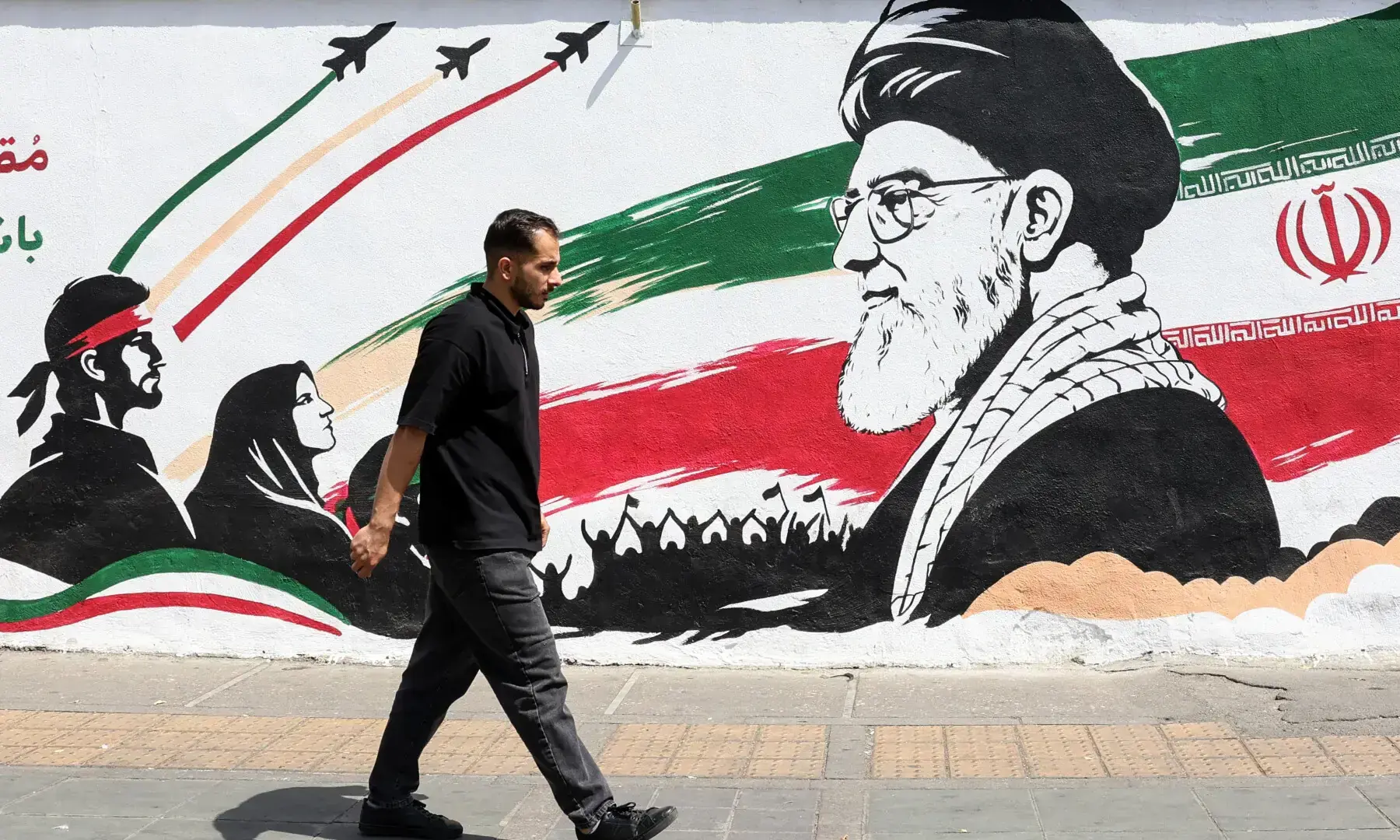
The results falsify the war’s own premises. The IAEA has had no visibility over Iran’s highly enriched uranium for more than a year: bombing did not secure the material; it removed the inspectors who could. Decapitation produced succession, not collapse, with Mojtaba Khamenei vowing to keep Hormuz shut. Tehran has since asserted sovereignty over the strait, created a permit authority for passage, and set conditions, from sanctions relief to US troop withdrawal, that no American government can accept.
The April ceasefire frayed; the June memorandum collapsed on 8 July. Lebanon was dragged back into war, and the Houthis have pushed the front toward the Bab al-Mandab.
The Cost to Order
Repeated American vetoes on Gaza had already taught the world that international law binds adversaries and exempts allies. The Iran war completed the lesson. If a state can be struck mid-negotiation, diplomacy itself becomes a liability; every government weighing a deal with Washington must now price in the risk that talks are cover for attack.
For non-proliferation, the inference is brutal. Libya disarmed, and its regime fell. North Korea armed and endures. Iran stayed inside the NPT and was bombed twice in nine months. No speech from Washington easily refutes that sequence.
Meanwhile, Gulf states long reliant on American protection are weighing alternative security arrangements, and the closure of Hormuz has turned a regional war into a global energy and food shock. It is Pakistan and Oman, not Washington, doing the work of mediation, while China can pose as the power that does not subordinate principle to a client.
Minab
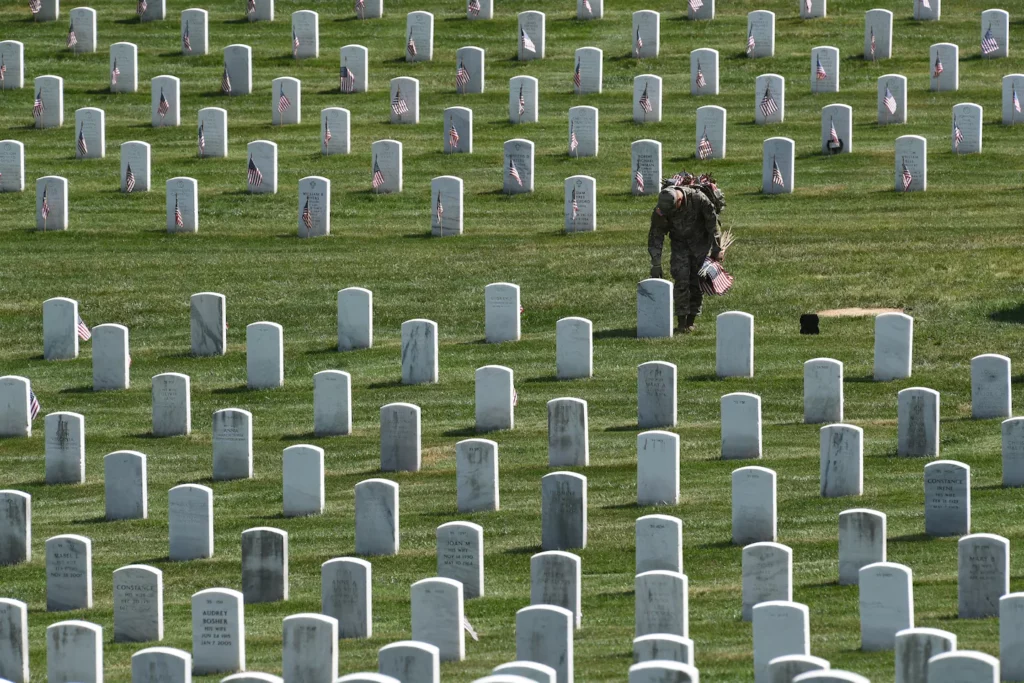
History will also record that on the war’s first morning, girls sat at their desks in the Shajareh Tayyebeh elementary school in Minab, beside an IRGC compound. Well over a hundred children were killed. Reuters reported that an initial US military inquiry found American forces likely responsible, and Pentagon investigators reportedly cited outdated intelligence, stale imagery and over-reliance on AI-assisted targeting. The findings remain unpublished; the President has said the truth may never be known. A power that cannot account for dead schoolchildren has forfeited its claim to underwrite a rules-based order.
The Reckoning
This catastrophe was preventable at a dozen junctures, the last of them in Geneva. An American foreign policy anchored in its own interests would have understood that Palestinian statehood is a precondition of regional stability, not a concession to terrorism; that inspectors constrain proliferation better than bombs; and that a partner whose interests diverge from yours will, at the moment of decision, serve its own.
The world stands at the brink not because of sudden irrationality, but because rational actors, each pursuing its interests with skill, have produced a system no one controls and no existing framework can resolve. Whether leaders exist with the vision to build from these ashes is the defining question of our era. The margin for error is gone.