

By Nisar Ahmed Thakur
The International Day of Democracy, established by the United Nations General Assembly (UNGA) in 2007, was observed on 15 September with much fanfare across the world. The day was marked by renewed pledges to reaffirm and uphold the universal principles of democracy. For the people of Kashmir, however, the occasion serves as a stark reminder of a democratic right that has been denied to them for decades.
While India presents itself as the world’s largest democracy, the people of Kashmir continue to be denied the right to have a say in their own political future. For India, the repeated invocation of democratic values arguably serves as a fig leaf for maintaining its control over what remains a UN recognised disputed territory awaiting final settlement.
The long-outstanding dispute, with its serious political and security ramifications, continues to hang over the region like a sword of Damocles. Generations of Kashmiris have grown up waiting for a political settlement, despite a series of UN Security Council (UNSC) resolutions acknowledging their right to self-determination.
Bertrand Russell, the prominent British philosopher and social and political critic of the 20th century, in his book “New Hopes for a Changing World” had reflected on global conflicts, international relations, and the attitudes of Western and regional powers; their approach towards plebiscite and the principle of self-determination, highlighting how strategic interests could take precedence over UN resolutions and the wishes of local populations.
Regarding Indian approach vis-a-vis Kashmir, Russell had made a pointed observation: “The high idealism of the Indian government in international matters breaks down completely when confronted with the question of Kashmir.”
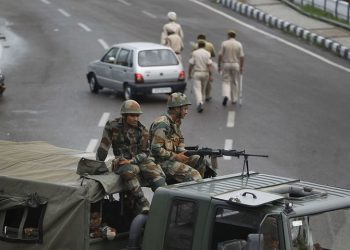
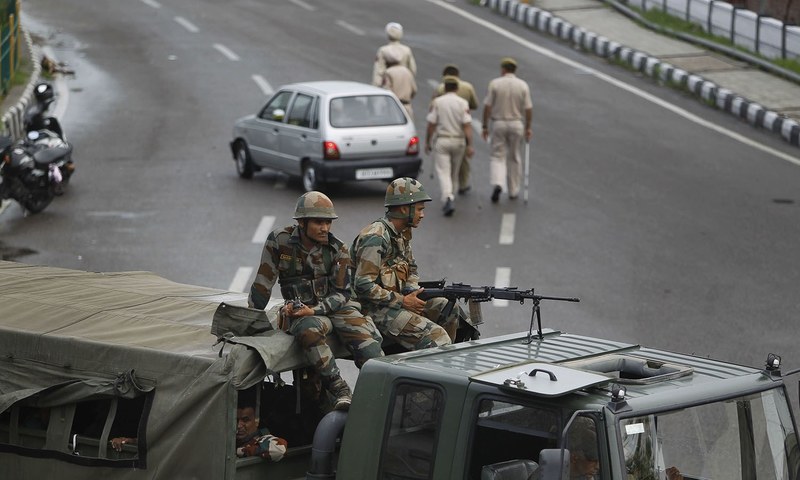
Decades later, Russell’s observations continue to resonate in the Kashmir context, as India continues to approach the dispute through a security-centric and highly centralised framework rather than through a political process that meaningfully addresses the aspirations of the people of Kashmir. New Delhi’s handling of the Kashmir question remains marked by restrictions on political space, a heavy security presence, and the continued absence of a conflict resolution mechanism that addresses the political aspirations of the people of the region.
What makes Russell’s observation particularly relevant today is the contradiction between the rhetoric of democracy and the principle of self-determination. Democracy is not all about elections or institutions; it is also about giving people a meaningful voice in decisions that shape their political future.
For Kashmiris, the unresolved question of their political future continues to stand as a painful reminder of the gap between these democratic ideals and their lived experience.
India’s imperialistic presence in the region continues to pose a serious existential threat to its majority community, which, behind the façade of so-called democracy, faces systematic marginalisation, disempowerment, and exclusion from the region’s political and administrative landscape.
The democratic institutions that are supposed to give people a meaningful voice in shaping their own affairs have instead been transformed into instruments of settler colonialism by India’s present day communal regime.
Following its controversial decision to abrogate Articles 370 and 35-A, the region has witnessed a gradual erosion of democracy and democratic institutions. This erosion has manifested on the ground in multiple ways, including growing restrictions on the fundamental freedoms, guarantees, and democratic processes essential to the functioning of representative government.
Even the Legislative Assembly, which once exercised substantial powers over regional matters, has seen its authority significantly curtailed. Its role has been reduced to that of a municipality and its ability to legislate on key matters of governance severely constrained.
On the other hand, the legitimate voices of the people have been silenced under a regime of black laws, further shrinking the space for political expression and dissent. The black laws such as the Armed Forces (Special Powers) Act (AFSPA), the Unlawful Activities (Prevention) Act (UAPA), and the Foreign Contribution (Regulation) Act (FCRA) have been effectively used to suppress democratic dissent and dissenters. Particularly, the Kashmir-based rights groups, who have historically played a vital role in documenting state repression, have increasingly faced restrictions under the FCRA and other notorious laws.
What is sold by India to the world is in fact a form of settler colonialism, cloaked in the guise of so-called democracy. It is being carefully executed and implemented by advocates of the one-nation theory, who want to turn Kashmir—a Muslim majority state—into a minority by implementing Ek Nishan, Ek Vidhan, Ek Pradhan slogan coined by Dr. Syama Prasad Mookerjee—a prominent Hindutva icon for the RSS and BJP.
It was under this slogan that the BJP, after assuming power in 2014, launched an extensive campaign for what it described as the “mainstreamisation” of J&K. This so-called mainstreamisation ultimately led to fragmentation of the disputed region. The decision of splitting the state was taken in brazen violations of the UNSC resolutions.
The terrible consequences of bifurcating the state and stripping it of its special constitutional status are a product of the persistence of advocates of the one-nation theory, who have consistently refused to recognise the disputed status of J&K. This totalitarian diktat has not only caused immense suffering for the Kashmiri people but has also further complicated an already protracted and unresolved dispute.
Despite all these machinations, the broader Kashmir question remains still unresolved, while the political aspirations of the Kashmiri people remain firmly alive. The question, however, remains: how long can the Indian state use the so-called democracy as a fig leaf to advance its settler agenda?
Tailpiece: Decades of political uncertainty, institutional erosion, and shrinking space for dissent have only deepened the crisis. A lasting solution cannot come through coercion or centralised control; it requires a credible political process that respects the rights, dignity, and aspirations of the people of Jammu and Kashmir.
The writer is director media and communications at Kashmir Institute of International relations (KIIR) and can be reached via email: nissarthakur@gmail.com