

A growing share of the Communist Party of China’s members and officials were born after reform and opening began in 1978. They grew up in a market economy, not in revolution or scarcity. For a party whose discipline was forged in struggle, that shift poses a defining question: how do you pass the values of one generation on to the next?
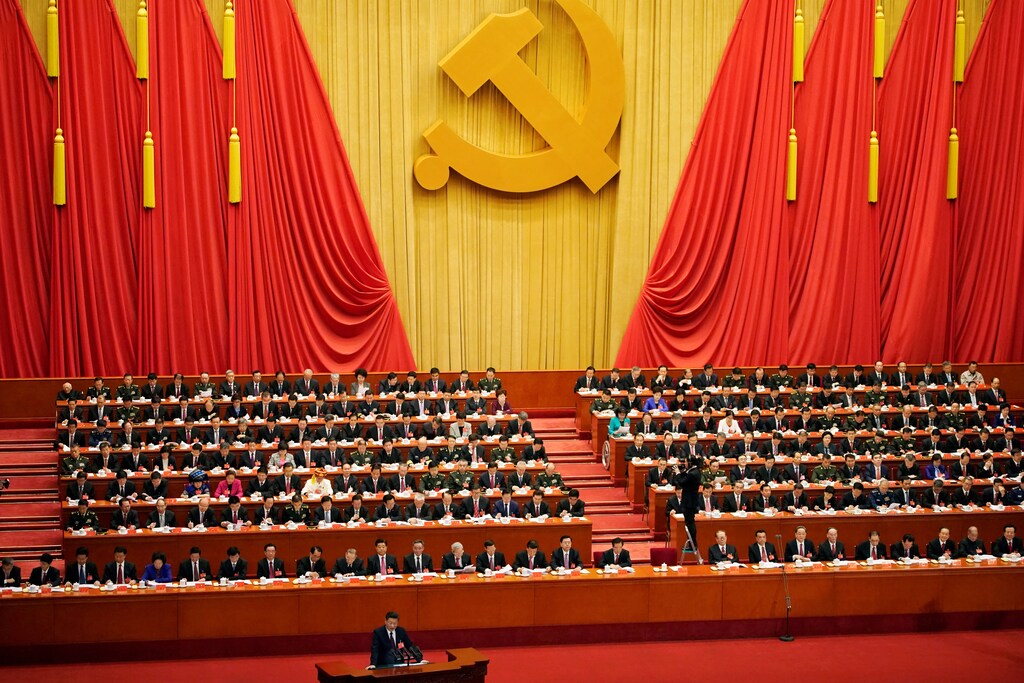
In late October, the Party offered its answer. Meeting in Beijing from 26 to 29 October 2026, the Fifth Plenary Session of the 20th Central Committee of the Communist Party of China devoted its entire agenda to full and rigorous Party self-governance. What emerged is a blueprint for keeping a century-old organisation clean, capable, and confident as leadership passes to officials who never knew the hardships of its early years.
The question behind that blueprint is older than the People’s Republic. In 1945, the educator Huang Yanpei asked Mao at Yan’an how the Party would escape the “historical cycle,” the pattern by which regimes rise with energy and decline in complacency. Mao’s answer was oversight by the people. Since 2012, the Party has added a second: continuous self-reform. Xi Jinping returned to Huang’s question in his explanatory remarks, and the generational lens shows why it is urgent now. Complacency rarely arrives with the founders; it arrives with their successors. A party that wants to break the cycle must renew itself with each new generation.
Renewal begins with values, and the plenum’s central insight is that shared values no longer come automatically. Earlier members absorbed discipline from lived experience; today’s officials must acquire it through deliberate cultivation. Samuel Huntington argued that durable political organisations are those that outlast their founders by institutionalising values and procedures. Read in that light, the emphasis on Party spirit education, cadre appraisal, and the training of young officials is forward-looking institution-building, not nostalgia. The resolution also understands what motivates people. It pairs strict oversight with incentives and care for cadres, because pure deterrence produces cautious officials who stop taking initiative. The aim is a generation that is both clean and willing to act.
Values, however, need a mechanism that holds officials to them. Comparative politics has long treated competitive elections as the standard cure for elite decay; Beijing relies instead on a disciplined vanguard that audits itself continuously. Milan Svolik’s research shows that single-party systems endure when they solve two problems: sharing power among elites and controlling the officials who carry out policy. Inspection tours, discipline commissions, and the governance reforms launched after the 18th National Congress address the second problem directly, allowing the centre to monitor a vast bureaucracy in ways periodic voting cannot. A party able to “turn the blade inward” turns the absence of electoral rotation into a design choice with its own internal checks. Nor does self-reform displace Mao’s first answer. Mass-line work and public reporting channels keep popular oversight inside the system, so younger officials remain answerable both to the Party and to the public they serve.
The way the resolution was drafted reinforces its message. The approach reflects what Sebastian Heilmann and Elizabeth Perry called China’s adaptive governance: it is problem-oriented, naming shortcomings in thinking, organisation, and conduct and committing to targeted remedies, and it links political, organisational, disciplinary, and institutional work rather than treating anti-corruption as a standalone campaign. Consultation was broad. Opinions were gathered from all localities and departments beginning on 31 January, sixteen bodies researched 23 major issues, and Xi convened a symposium of provincial leaders in Shanghai on 6 May. On 3 August, a draft went to retired senior officials, the non-communist parties, and the All-China Federation of Industry and Commerce for comment, and the Politburo Standing Committee and full Politburo reviewed it five times between them. The process itself bridged generations, as retired veterans helped shape rules their successors will live by. Andrew Nathan identified feedback loops of exactly this kind as a central source of the system’s resilience.
Consultation produced the plenum’s most consequential choice: moving from campaigns to lasting rules. Discipline that depends on a campaign fades when the campaign ends; discipline written into rules can be inherited. Xi’s candid account of the pre-2012 Party, with leadership that had grown weak, hollow, and watered-down and supervision that had become lax, describes how quickly capacity erodes without such rules. Yuen Yuen Ang’s research shows that high-level “access money” corruption expanded alongside China’s boom, threatening to distort investment and deepen inequality. The resolution’s seventh part answers by combining deterrence with checks on power and a culture of integrity. Its eighth part makes regulation the long-term, fundamental strategy and targets “hidden rules,” the informal norms through which patronage operates. Clear, codified standards give young officials something earlier generations often lacked: a predictable guide from the first day of their careers. The record supports optimism. The eight-point rules on official conduct, once dismissed as a passing campaign, have held for more than a decade and are now part of everyday official life.
The stakes extend well beyond the Party itself. China is pursuing technological self-reliance and a new Five-Year Plan amid intensifying great-power rivalry, and effective states depend on officials who implement policy rather than profit from it. A clean, cohesive, and motivated cadre is the foundation on which those goals will be delivered, and it is the rising generation that will deliver them.
The plenum has produced the most systematic statement yet of how the CPC intends to govern itself. It confronts generational change directly, ties discipline to development, and moves governance from campaigns toward codified rules. David Shambaugh once framed the Party’s trajectory as a contest between atrophy and adaptation, and in October 2026 the Central Committee placed a confident bet on adaptation. That bet will be judged over decades, as “hidden rules” give way to clear ones and a generation raised in prosperity carries forward the discipline of a generation raised in struggle.