

Muhammad Waleed Akhtar
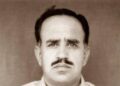
“The strong do what they can and the weak suffer what they must.” Thucydides wrote that line more than two thousand years before a ruler in the Himalayan foothills sat down on the night of 26 October 1947 to sign away his kingdom’s defence and foreign policy. Maharaja Hari Singh had spent the preceding ten weeks trying to avoid exactly that moment. He failed, and the letter he wrote to Lord Mountbatten that night reads less like a statement of sovereign choice than a man recounting the collapse of every option he had tried to keep open.
That letter, and the Instrument of Accession attached to it, are usually presented as a single legal fact: on 26 October, Kashmir acceded to India, and the matter was settled. What that framing leaves out is the ten weeks before it, when the Maharaja tried and failed to keep his state out of the choice altogether. The accession was a legally valid act and an unresolved political question at once, and the distance between those two things is where seventy-nine years of argument over Kashmir’s status actually live.
On 12 August 1947, Kashmir’s prime minister sent identical telegrams to Delhi and Karachi proposing standstill agreements to continue existing administrative ties while the state decided its future. Pakistan accepted by telegram three days later. India did not, asking instead that an authorised Kashmiri representative travel to Delhi to negotiate a formal agreement, a negotiation that never took place because of what followed. Hari Singh later described his intent plainly in that same letter: he had wanted time to decide whether to accede to either Dominion, “or whether it is not in the best interests of both Dominions and of my State to stand independent.”
Indian authorities have long maintained that none of this complicates the legal picture. The Instrument of Accession was executed by the recognised ruler under the constitutional mechanism the Indian Independence Act 1947 provided for princely states, and accepted by the Governor-General the following day. On that reading, 26 October simply closed a question open since independence. That argument carries real legal weight: the Instrument was a valid constitutional act, executed by the ruler internationally recognised as competent to sign it.
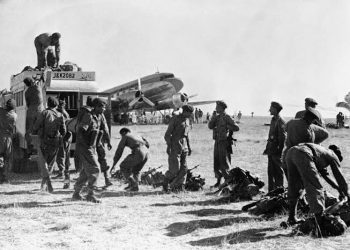
What that argument cannot fully account for is the condition Kashmir was in by October 1947. The standstill was only a telegraphic exchange covering postal services, trade and existing administration, not a permanent restraint on the Maharaja’s right to accede elsewhere, and it did not stop the state from being squeezed. Petrol, salt and other essentials were restricted along the Sialkot and Kohala roads, the state’s only metalled routes, a blockade Hari Singh cited directly to Mountbatten. By October 1947, unrest had spread across Jammu and Kashmir, as local resistance against the Maharaja’s rule intensified. The situation escalated rapidly, with armed groups advancing towards Srinagar and the Maharaja’s forces struggling to maintain control. By 26 October, Baramulla, about sixty miles from Srinagar, had fallen, bringing the crisis to the doorstep of the summer capital. Hari Singh asked Mountbatten for the only assistance that could reach the capital before it fell: “Naturally they cannot send the help asked for by me without my State acceding to the Dominion of India. I have accordingly decided to do so.”
Junagadh and Hyderabad show how selectively that logic was applied that same year. India rejected a Muslim ruler’s accession to Pakistan in Junagadh, citing the Hindu-majority population’s will, and settled it with a referendum in February 1948 that returned over 99 percent for India. In Hyderabad, it annexed the Nizam’s independent state by force in September 1948 without holding any plebiscite. Kashmir received neither approach consistently: in Junagadh the ruler’s signature was overridden by a plebiscite, in Kashmir it was treated as final, and that same plebiscite standard was promised for Kashmir and never delivered.
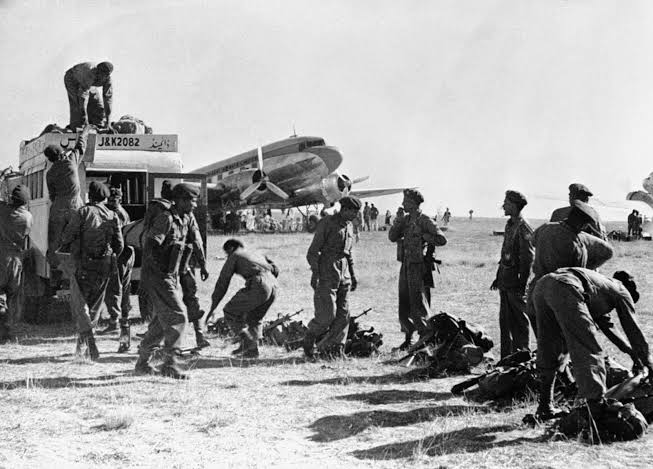
Mountbatten’s acceptance letter, written the same day Indian troops landed at Srinagar, did not treat the case as fully closed either. He wrote that once order was restored and the invader cleared, accession should be settled “by a reference to the people.” The United Nations framework that followed within months carried the same premise forward: a plebiscite on accession to India or Pakistan, never implemented. The 1949 ceasefire line hardened over decades into the Line of Control, and the plebiscite commitment both letters treated as integral to accession lapsed, never fulfilled or formally withdrawn.
None of this makes the Instrument of Accession a forgery, and an honest account of October 1947 should not pretend otherwise. But a document can be legally valid and still leave the underlying political question unresolved, and that is what happened here. Hari Singh signed under conditions his own letter calls a grave emergency, invoking the only assistance that could save his capital, not an open choice between two equally available futures. What is now Indian-Occupied Jammu and Kashmir entered India’s constitutional order through an act whose legality has rarely been the real point of dispute. The dispute has always been over whether an accession made this way, under this pressure, with a promised plebiscite never held, can carry the settled legitimacy that seventy-nine years of Indian governance have since assumed it carries. The document answered one question. It left the harder one exactly where it found it.

The author is a graduate in International Relations from the International Islamic University, Islamabad and is currently serving as a researcher at the Kashmir Institute of International Relations, Islamabad.