

The Indian government’s current rush to conduct elections for the Ladakh Autonomous Hill Development Councils (LAHDC) amidst a brutal winter—where temperatures plummet to minus 30 degrees Celsius and heavy snowfall isolates entire villages—is more than an administrative lapse; it is a calculated political maneuver. To force a democratic exercise under such inhospitable conditions is to prioritize the appearance of legitimacy over the act of representation. When the state insists on polling while the mercury dips to lethal lows, it sends a clear message: the goal is not to hear the voice of the people, but to tick a box of “normalization” before the international community or the local populace can consolidate their dissent.
This frantic push for elections, scheduled for November 21 and December 4, 2026, is a continuation of the logic deployed on August 5, 2019. The dismantling of the state of Jammu and Kashmir through the Reorganisation Act was not an act of “integration,” but an act of erasure. By stripping the region of its statehood and carving out Ladakh as a Union Territory without a legislature, New Delhi effectively transitioned from a model of governance to a model of direct rule. The current electoral rush is simply the final stage of this process—an attempt to install compliant local bodies that can act as buffers between a distant centre and a grieving, anxious population.
The recent release of Sonam Wangchuk from Jodhpur Central Jail in mid March 2026, following the revocation of his detention under the National Security Act (NSA), is being framed by the Centre as a gesture of goodwill. However, we must view this release through the lens of the 2019 Reorganisation. Wangchuk, 59, an environmental advocate who became a key figure in Ladakh’s movement for greater autonomy, was detained in September and subsequently charged under the NSA following protests that left four people dead and dozens wounded. New Delhi blamed the violence on “provocative speeches” by Wangchuk, who had been on a hunger strike demanding either full federal statehood for Ladakh or constitutional protections for its tribal communities, land, and fragile environment.
The use of the NSA against a non-violent educator proves that in the eyes of the current administration, dissent in the borderlands is not a political expression but a security threat. Wangchuk’s freedom was a tactical retreat, not a change of heart. It opened a space for dialogue, yes, but dialogue is meaningless if the starting premise is the acceptance of the 2019 status quo.
The history of these dialogues reveals a pattern of systemic evasion. Following Wangchuk’s release in March 2026, talks resumed in New Delhi between May and September, raising hopes for a representative framework. However, these hopes were dashed during a September 9 meeting that ended without the final draft Ladakh leaders expected. The impasse reached a breaking point on October 15, 2026, during a meeting in Leh, where the Ministry of Home Affairs (MHA) presented a 32-page governance framework. The Leh Apex Body (LAB) and the Kargil Democratic Alliance (KDA) rejected the draft, accusing the government of backtracking on earlier assurances.
The subsequent collapse of communication was telling. On October 22, a scheduled round of talks in New Delhi was abruptly called off after the MHA failed to send invitations to Ladakh representatives. In a desperate bid for transparency, Ladakh leaders released five negotiation documents to the public to highlight the government’s intransigence. This deadlock confirms that the demands of the LAB and KDA for statehood and Sixth Schedule protections are not “maximalist” requests; they are attempts to reclaim the agency stolen on August 5.
The Reorganisation Act fundamentally altered the relationship between the people of Ladakh and the state, replacing representative accountability with bureaucratic whim. When decisions regarding land, indigenous culture, and the fragile cold-desert ecosystem are made in the corridors of power in New Delhi, the “autonomy” offered by Hill Councils becomes a hollow shell—a facade of power without the substance of authority.
Furthermore, the government’s obsession with “strategic security” is being used as a blanket to smother ecological and democratic concerns. The vulnerability of Ladakh’s glaciers and water security cannot be secondary to infrastructure projects designed for military mobilization. True national security in a border region is not achieved through the deployment of forces and the silencing of activists, but through the loyalty and trust of the inhabitants. By treating the people of Ladakh as subjects to be managed rather than citizens to be consulted, the Centre is creating the very instability it claims to prevent.
The path forward requires more than the release of a few prisoners or the holding of winter elections. It requires a fundamental reversal of the logic of August 5. The Indian government must recognize that the dismantling of the state of Jammu and Kashmir created a vacuum of trust that cannot be filled by administrative decrees.
If the government is sincere about “democratic statecraft,” it must first postpone these ill-timed elections and engage in time-bound, transparent negotiations with the LAB and KDA. These talks must move beyond vague assurances and address the core of the crisis: the restoration of statehood and the implementation of constitutional safeguards that protect land and identity.
Sonam Wangchuk’s release did open a door, but the government must decide whether it intends to walk through it as a partner or as an occupier. Until the people of Ladakh have a durable, legislative voice and a guarantee that their land will not be auctioned to the highest corporate bidder under the guise of “development,” these elections are nothing more than a performance. Stability bought with silence is not peace; it is merely the quiet of a graveyard.
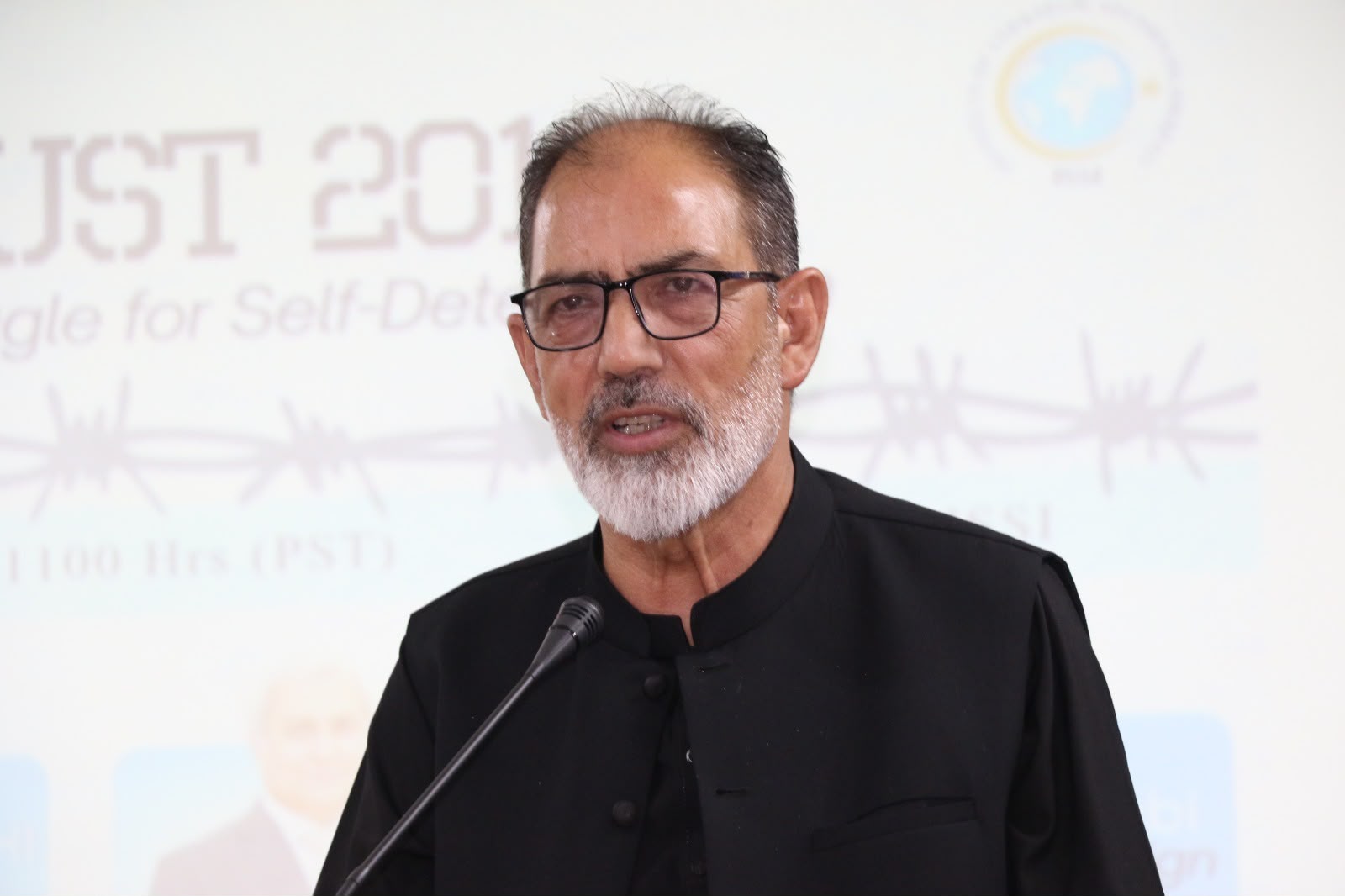
Altaf Hussain Wani is the Chairman of the Kashmir Institute of International Relations (KIIR), specializing in the analysis of Kashmir politics, policy, and international advocacy. He can be reached on X at @sultan1913 or via email at; saleeemwani@hotmail.com.