

By Nisar Ahmed Thakur
“While widespread bloodshed and violence remain the most visible features of this human-inflicted tragedy, the abduction and rape of Muslim women represent another equally horrifying yet often overlooked dimension”
The 1947 Jammu carnage remains one of the least-discussed yet meticulously planned massacres that has escaped scrutiny amid shifting geopolitical calculations at a crucial time when the subcontinent stood on the cusp of momentous change. It took place just a couple of months after the Partition of British India, following an abrupt outbreak of communal violence instigated by none other than those in power in the princely state’s southern region—Jammu, the hometown of Maharaja Hari Singh, who at the time was desperately battling for survival against an overwhelming rebellion in the state.
While some political analysts argue that the massacre was a last-ditch effort to save the Maharaja’s throne, others raise serious questions about the motives that prompted the Dogra ruler, to kill or cause to kill his Muslim subjects, in violation of the fundamental principles of ‘Raj Dharma’, to which he was supposed to adhere to. His callous indifference towards the suffering of his Muslim subjects, the lack of intent to stop the bloodshed, and, above all, his administration’s patronage of armed Hindu groups who operated with impunity, raise grave questions about his complicity in the macabre game of bloodshed that claimed hundreds of thousands of innocent lives.
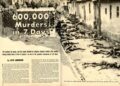
Although the exact death toll of what would have come to be known as the “Great Slaughter” remains unknown, archival records and historical accounts suggest that nearly a quarter of a million Muslims were brutally killed, while tens of thousands more had their bones broken, limbs hacked off, or bodies charred during the forced exodus.
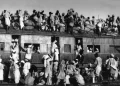
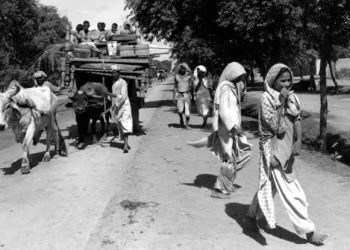
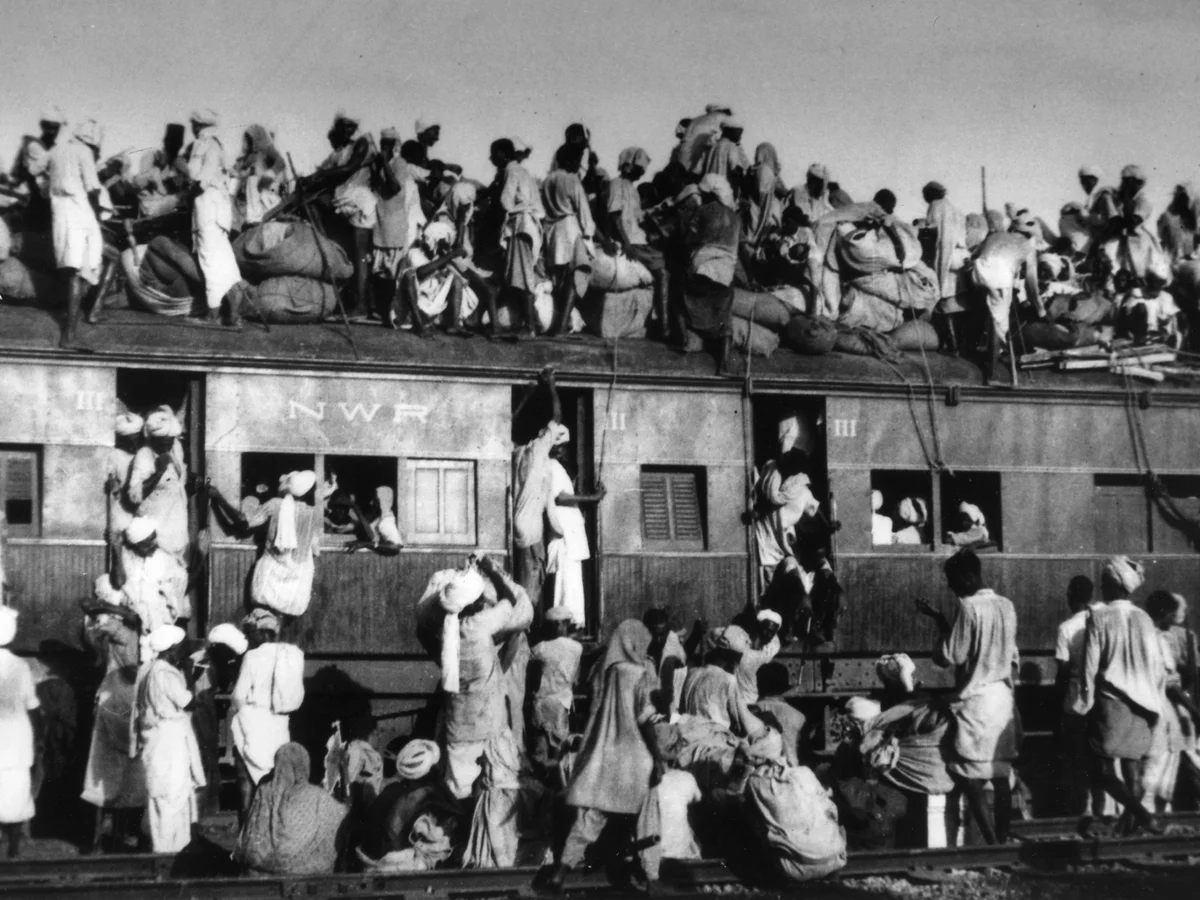
What appears to be a textbook example of deceit and betrayal took place between November 5 and 6, 1947, when large convoys of Muslim émigrés, lured by the Dogra authorities with assurances of safe passage to Sialkot, were instead massacred en masse. Instead of heading to the border, their vehicles were deliberately driven to remote or hilly areas of Satwari, Rajouri, and Samba, where they were systematically ambushed. The men were largely massacred, while thousands of women were abducted, and surviving refugees fled on foot to reach Pakistan.
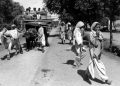
The wave of systematic violence, which first engulfed the villages and peripheral suburbs of the province, forced thousands of terrified Muslims to flee towards urban centres,
where the very refuge they sought turned into a death trap. As the wave of terror intensified, conditions for Muslims became so dire that many took their own lives to escape the fury of enraged extremists. One horrific account of Mistari Ahmed-u-Din, a resident Mast Garh Muhalla of Jammu, who himself took the lives of his two daughters to avoid any eventuality of ignominy at the hands of fanatics, speak volumes about the horrors the community was subjected to in those bloody days.
The chilling accounts of armed assailants roaming freely on Jammu’s streets, brandishing knives, swords and spears, and slitting the throats of Muslims offer a glimpse into the carnage that continued unabated until much of the Muslim population, stretching from the Chenab Valley up to the plains of Jammu, had been wiped out.
In a damning account The Times of London reported on 10 August 1948 that 237,000 Muslims had been systematically exterminated in the region. Horace Alexander, writing in “The Spectator” on 16 January 1948, estimated approximately 200,000 deaths. In his book “Horned Moon”, Ian Stephens estimated that 200,000 Muslims had disappeared and were presumed dead, while another 300,000 had fled Jammu for West Punjab, which became a part of Pakistan.
It was by far the worst communal massacre in the annals of Dogra rule carried out by extremist Hindus and Sikhs, aided and abetted by the Maharaja administration. However, the Rashtriya Swayamsevak Sangh (RSS) leadership played a key role in planning and executing this pogrom.
Yet another historical account suggests that the embattled Maharaja received logistical support from the rulers of the neighbouring princely states of Patiala and Kapurthala, at the instance of Union Home Minister Sardar Patel and Defence Minister Baldev Singh, who enjoyed close ties with the two rulers.
This account while pointing to a well-knit nexus that has been pulling threads behind the screen also raises a question: Was the ethnic cleansing of Muslims part of a broader strategy to carve out a strategic space for India’s military intervention in the region, enabling it to establish control without facing any formidable resistance?
Historically, these killings have largely been viewed through the lens of retributive communal violence, the circumstances surrounding them point to a potentially wider political and strategic dimension that warrants closer scrutiny.
Seen in this light, the behind-the-scenes dealings and the intricate nexus between Indian leaders and the Maharaja assume particular significance. Nehru’s letter to Sardar Patel, the logistical support extended to the Maharaja at Patel’s behest, and the subsequent deployment of Patiala forces in Jammu are undeniable pieces of evidence that point to a broader conspiracy.
While widespread bloodshed and violence remain the most visible features of this premeditated catastrophe, the abduction and rape of Muslim women constitute another equally horrifying yet often overlooked dimension. Archival evidences show that thousands of women including the daughter of veteran Kashmiri leader Ch. Ghulam Abbas had gone missing, during the turmoil. Many of them were subjected to rape, forced conversion and marriage. Sadly, no serious effort was made to trace and recover them. Although a commission was constituted by the Indian and Pakistani governments to establish the whereabouts of the missing and facilitate their recovery, the so-called Maharaja and his administration seemed utterly indifferent to the plight and suffering of his own subjects.
Independent observers and researchers, drawing on British archival records and declassified documents, have described the massacre as a state-sponsored campaign of ethnic cleansing. Official government archives, however, present starkly different accounts, reducing one of the most horrific episodes of mass violence to little more than a footnote in history. The deliberate attempts to downplay this tragedy represent a glaring example of historical erasure, in which mass killings were concealed, victims consigned to unmarked graves, and the entire episode systematically expunged from official historical records.
The writer is director media and communications at Kashmir Institute of International Relations and can be reached via email:nissarthakur@gmail.com