

Nissar Ahmed Thakur
The continued restrictions on Kashmiri Muslims’ religious gatherings expose a glaring contradiction in the Indian occupation authorities’ callous approach towards religious freedoms in a region long plagued by conflict, instability, and political uncertainty. There is a consistent pattern of repression targeting political and religious rights of the majority community who happen to be Muslims.
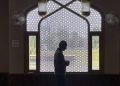
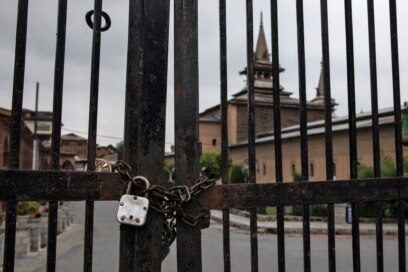
Pertinently, the Indian authorities frequently invoke “law and order concerns” as a pretext to impose sweeping restrictions on mosques and religious sites. Since 2019, following the abrogation of Article 370, the authorities have consistently barred large congregational Eid prayers at Srinagar’s historic Jamia Masjid and Eidgah. While prominent religious leaders have also frequently been placed under house detention to prevent them from addressing or participating in such gatherings. Similarly, religious congregations traditionally held at the grand mosque on significant occasions such as Eid Milad-un-Nabi and Shab-e-Qadr have effectively remained prohibited under an undeclared ban for several years. As a result, worshipers, who for centuries have collectively commemorated these sacred occasions and spent the blessed night in worship at the mosque, continue to be deprived of the opportunity to observe some of the most important events in the Islamic calendar.
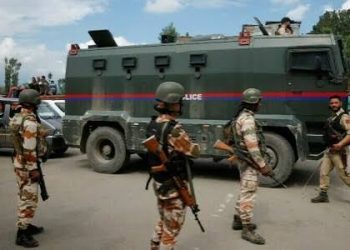
On the contrary, festivals and religious events celebrated by other communities continue to be held openly and without impediment. Even the annual Yatra, which attracts nearly a million pilgrims from across India, is conducted with great pomp and show under elaborate security arrangements. The authorities spare no effort in facilitating the event, deploying tens of thousands of security personnel and ensuring that every logistical requirement is efficiently met. This glaring disparity presents a clear case of discriminatory treatment toward the Muslim-majority population of Kashmir. Far from being an ordinary security concern, it points to a wider pattern of discriminatory restrictions on fundamental rights and freedoms.
So the question arises: if a Yatra involving hundreds of thousands of pilgrims can be conducted under extensive security arrangements and constant surveillance, why are congregational Eid prayers viewed through an entirely different lens? Why Kashmiri Muslims are repeatedly deprived of a religious practice that lasts only a few hours and has been part of the Valley’s social and religious fabric for generations?
Apart from the security concerns cited by the authorities, it appears to be a deliberate attempt to normalize restrictions that are inherently abnormal and widely unacceptable in a society that places great value on religious freedom and collective worship. Sadly, these restrictions are not limited to congregational prayers alone. Over the years, a systematic pattern has emerged in which Kashmiri Muslims have increasingly found their religious space shrinking. From curbs on major religious gatherings and processions to restrictions on sermons and religious commemorations, the community has repeatedly faced obstacles in exercising rights that are universally recognized as fundamental freedoms.
The cumulative effect of these measures has been to create a sense that the religious identity and collective expression of Kashmir’s Muslim majority are being subjected to extraordinary scrutiny and control.
The case of Mirwaiz Umar Farooq, who has repeatedly been placed under house arrest and prevented from leading Eid-ul-Adha prayers since the past several years, clearly exemplifies this new reality. What was initially presented as a temporary security arrangement has evolved into a permanent feature of Kashmir’s religious landscape. The continued closure of religious spaces for congregational Eid prayers and the repeated confinement of the Valley’s chief cleric have become symbolic of a broader policy of restricting the religious rights of Kashmiri Muslims.
The issue is no longer confined to a single event or a particular year; it reflects a systematic approach in which the community’s collective religious expression is subjected to extraordinary limitations. The fact that these restrictions have persisted year after year and have raised serious concerns about the shrinking space available for the exercise of fundamental religious freedoms in Kashmir.
The justification of “law and order” often invoked by the authorities has increasingly lost credibility. There is no evidence to suggest that Kashmiri Muslims participating in religious gatherings constitute a security concern. Yet, year after year, the same rationale is used to deny them a basic democratic and religious right. Although these congregations usually take only a couple of hours to conclude, but despite their peaceful and limited nature, undue restrictions continue to be imposed.
As a matter of fact, these restrictions appear less about security and more about controlling a dominant narrative that the authorities seem to fear the most. They do not want a collective voice emanating from the pulpits of these historic religious sites of Kashmir that have traditionally served not only as centers of faith, but also as important symbols of the Kashmiri people’s political identity and collective sentiment.
Mirwaiz Umar Farooq, who has repeatedly borne the brunt of these restrictions, aptly observed: “When a people are repeatedly denied the opportunity to gather peacefully for prayer, year after year, there is a risk that future generations may begin to think that this is how things are supposed to be.” His remarks capture the deeper implications of these continued restrictions on religious freedom and collective life.
The danger lies not only in the denial of a particular religious gathering but also in the gradual normalization of restrictions on fundamental rights. A state that claims to uphold democratic values cannot credibly defend a situation in which one community’s religious gatherings are repeatedly curtailed while others are actively facilitated.
The right to practice one’s religion in accordance with one’s faith is a fundamental human right enshrined in international covenants and human rights treaties. It guarantees individuals and communities the freedom to worship, assemble, and observe religious practices collectively or individually, without undue interference or discrimination.
Tailpiece: Religious freedom cannot be applied selectively. Fundamental rights cease to hold real meaning when they are guaranteed to some while withheld from others. Until Kashmiri Muslims are allowed to practice their faith collectively without obstruction, concerns regarding equality, justice, and non-discrimination will continue to persist.
Writer is Director media communication Kashmir institute of international Relations (KIIR) and can be reached at : nissarthakur@gmail.com.