

By Jawad Khan
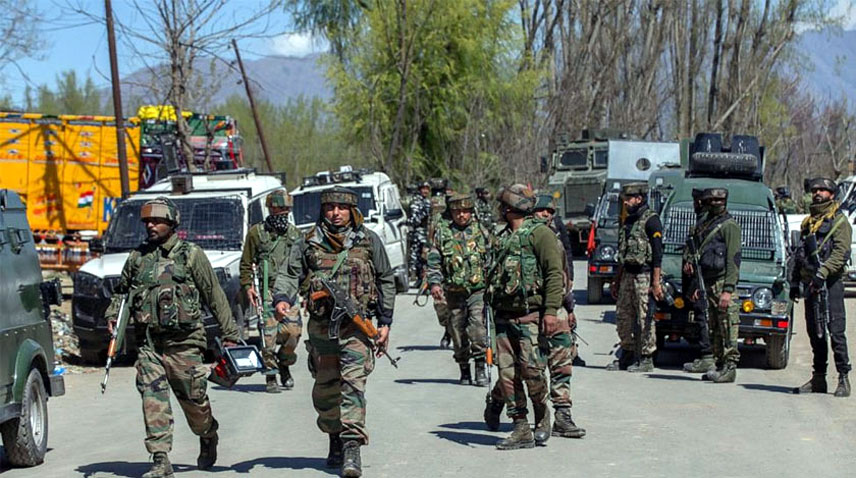
Every year, 27 October is observed as Kashmir Black Day, marking the arrival of Indian troops in Srinagar in 1947 and the beginning of a prolonged dispute over Kashmir’s political future. In 1823, William Moorcroft described Kashmiris as being treated as “little better than cattle”, an observation cited by Victoria Schofield in Kashmir in Conflict: India, Pakistan and the Unfinished War. Nearly two centuries later, his words raise a troubling question: how far has the condition of Kashmiris changed? Despite changing political circumstances, Kashmiris in Indian illegally occupied Jammu and Kashmir (IIOJK) continue to struggle for political freedom, civil liberties and the right to determine their future.
Moorcroft was describing a period marked by heavy taxation, exploitation, and the harsh treatment of ordinary people. Today, the political circumstances are different, but the comparison remains relevant. Under the Bharatiya Janata Party (BJP), Kashmiris continue to face serious restrictions on political expression, peaceful assembly, and civil liberties. When people cannot freely express their political aspirations without fear of detention or intimidation, the question of dignity becomes inseparable from the question of political power.
Every year, 27 October brings this unresolved question into focus. The date marks the anniversary of the arrival of Indian troops in Srinagar and the controversial Instrument of Accession. India regards the Instrument of Accession as the legal foundation of its claim to Jammu and Kashmir. Yet the territory’s political future was also linked to the wishes of its people. In his letter of 27 October 1947, Lord Mountbatten stated that the question of accession should be settled by reference to the people once law and order had been restored. Jawaharlal Nehru reiterated this position in public statements and communications with Pakistan. These were not insignificant words. They formed part of the historical commitments surrounding Kashmir’s accession, commitments that remain central to the dispute.
The United Nations addressed the issue through Security Council Resolution 47. It recommended measures to restore peace and create conditions for a free and impartial plebiscite in Jammu and Kashmir. Disagreements over the implementation prevented the process from taking place. Nevertheless, the resolution remains an important part of the international record. The people of Kashmir never received the plebiscite envisaged in the early international efforts to address the dispute.
India maintains that Jammu and Kashmir is an integral part of the country and that the constitutional changes of 2019 strengthened national integration. However, territorial claims and administrative control cannot resolve questions of political legitimacy, nor can the commitments made in 1947 be erased by time. For Kashmiris, the absence of a settlement leaves their political future contested.
The BJP’s revocation of Articles 370 and 35A in August 2019 marked a decisive stage in this history. The government removed Jammu and Kashmir’s special constitutional status and divided the former state into two Union Territories under direct central administration, weakening its political autonomy and distinct status.
The manner in which these changes were imposed deepened concerns. Political leaders were detained, communications restricted, and public life constrained. Human Rights Watch and Amnesty International have documented restrictions on journalists, activists and political voices since 2019. Although elections were held in IIOJK in 2024, genuine political freedom requires more than voting; it demands the right to organise, dissent and advocate alternative positions.
The anniversary of 27 October should therefore be more than a celebration of territorial claims. It should prompt India to confront the gap between its historical commitments regarding the wishes of Kashmiris and its present treatment of political dissent. Nehru’s assurances, Mountbatten’s letter and Resolution 47 remain reminders that the question of Kashmir was never merely about territory. It was also about the people who live there.
Nearly two hundred years after Moorcroft’s observation, Kashmiris still struggle for meaningful political choice, civil liberties and a voice in determining their future. A government may control land, alter constitutional arrangements and claim to have completed national integration. But it cannot create lasting legitimacy by restricting the people whose future it claims to have settled. Until Kashmiris can exercise their rights and participate freely in decisions about their political status, Moorcroft’s words will remain an indictment of power exercised without sufficient regard for human dignity.
As Kashmir observes Black Day on 27 October, these unresolved questions remain central. Moorcroft’s description of Kashmiris as “little better than cattle” challenges any political approach that prioritises territorial control over human dignity. Lasting legitimacy cannot be achieved by restricting a people’s voice while claiming to have settled their future.

The writer is a Research Assistant at the Kashmir Institute of International Relations (KIIR).