
• English
    • en
    • en_GBEnglish (UK)
    • en_USEnglish (United States)
28 °c
26 ° Tue
26 ° Wed
26 ° Thu
26 ° Fri
Monday, November 16, 2026
Asiafreepress
  • Home
    • Latest
  • World
  • Asia
    • China
    • Pakistan
    • Afghanistan
    • India
    • Central Asia
  • News
  • Politics
  • Security
  • Law
  • Business
  • Review
    • Editorial
    • Analysis
    • Perspective
    • Literature
  • Science & Tech
  • Entertainment
    • Showbiz
    • Lifestyle
  • Sports
  • Multimedia
Breaking News
November 1947: The Forgotten Massacre of JammuThe Count That Was Never Taken: What the 1947 Record Says About JammuThe Ladakh Mirage: Why Electoral Rituals Cannot Mask the Erasure of AutonomyPolitical Prisoners in Kashmir and the Criminalization of DissentBefore the Court Can Speak, the Bulldozer Has Ruled
No Result
View All Result
  • Home
    • Latest
  • World
  • Asia
    • China
    • Pakistan
    • Afghanistan
    • India
    • Central Asia
  • News
  • Politics
  • Security
  • Law
  • Business
  • Review
    • Editorial
    • Analysis
    • Perspective
    • Literature
  • Science & Tech
  • Entertainment
    • Showbiz
    • Lifestyle
  • Sports
  • Multimedia
No Result
View All Result
Asiafreepress
No Result
View All Result
Home Review Analysis

November 1947: The Forgotten Massacre of Jammu

asiafreepress by asiafreepress
2026/11/02
in Analysis
0
The Forgotten Holocaust: The 1947 Jammu Massacre and the Architecture of Erasure
0
SHARES
8
VIEWS

by Zainab Noor

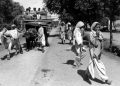
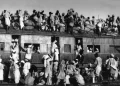
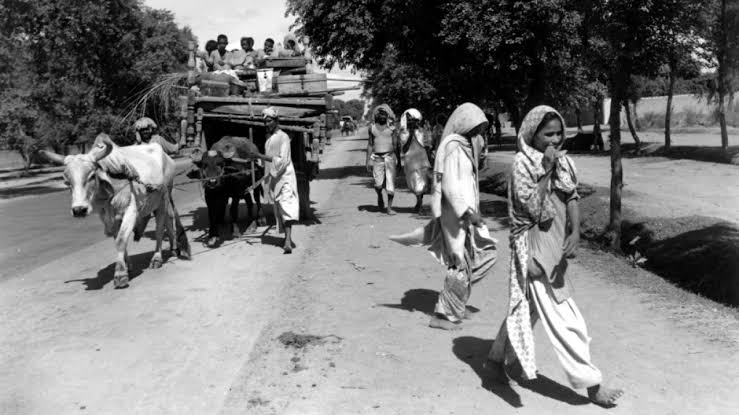
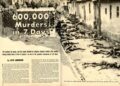
The massacre of Muslims in Jammu in November 1947 was not simply an episode of communal violence, it raises disturbing questions about the role of the authorities entrusted with protecting innocent civilians. On 6 November, around seventy truckloads of Muslim families were escorted by Dogra troops from Jammu towards Sialkot, only to be ambushed a few miles outside the city. A report published in the Civil and Military Gazette on 18 December 1947 stated that armed Sikh groups, state forces and RSS volunteers attacked the convoy. Of the 4,000 Muslims who had departed, only 900 reportedly reached Sialkot. The promise of safe passage had turned into a death sentence. The scale and circumstances of the violence point to something far more organised than spontaneous communal clashes. A 1948 West Punjab report, based on refugee testimonies, documented at least 90 anti-Muslim incidents between 8 August and 12 December 1947, with 118,459 deaths claimed. State complicity cannot be dismissed without investigation, particularly when state forces themselves feature in accounts of the attacks. Yet no independent inquiry was ever conducted to establish the truth or hold those responsible accountable.

Determining the death toll is the most controversial aspect of the topic. On August 10, 1948, the Times of London reported that 237,000 Muslims were “deliberately killed,” but there was no evidence provided for this figure, and it conflates death and escape. According to historians and authors like Ian Copland and Christopher Snedden, the number of deaths could be from 20,000 to 100,000, while the number of displaced people is between 200,000 and 500,000. even the low estimate is still a collective heinous act.

The demographic shift is evident. According to the census conducted in 1941, Muslims constituted around 61 percent of population of Jammu province. In the parts of Jammu administered by India, that percentage decreased to almost 38 by the year 1961. In Jammu district the percentage of Muslims dropped from 40 to approximately 7 by 2011. such a significant change cannot be accounted for by migration only; it has changed who holds power in Jammu province.

No one was held responsible. There was not a commission to look at the incident, there was no trial of the official, besides there was no state for the victims to ask for justice. The question was raised by Pakistan diplomatically, but indignation without courts leaves no trace. Without accountability, the massacre became the new norm.

The link with the present is not poetic. Instead of a rifle and mob, a pellet gun has been used. According to the UN human rights report for 2018, the state commission for human rights stated that 1,726 people were injured by pellets in 2016, including 728 people with eye injuries. The official statistics say 17 people died due to pellets from July 2016 to August 2017.

The act of disappearing has become the present-day counterpart of lost caravans. The same UN findings mention about forced disappearances and Kashmiri society talks about half-widows who have husbands who disappeared in custody. Counted numbers are disputed and the UN is denied access. In 1947 families waited for their trucks to arrive but today what they wait for are men to return. The same sorrow but this time against the law.

The greatest commonality is the loss of property, companies, means of existence, and families with the ensuing silence. The inability to name one’s loss means that the loss will continue causing sorrow through generations. The unarticulated grief does not die.

Being realistic means admitting what was not useful. Neither resolutions nor speeches brought back the missing and neither Islamabad, nor Delhi prioritized Kashmiris. However, there are still options left—recording, international independent investigation, monitoring access and putting pressure.

This is not about flags at all. It is about a mother in Jammu, 1947, and a mother in Srinagar, searching for a loved one who hasn’t returned home. For the widow, half-widow, orphan and the family without a home, geographic boundaries mean little. But how long must these mothers wait, these people who suffer neither as Indians nor as Pakistanis, but merely because they have lost husbands, children, homes and mouths to feed?

The author is a student of International Relations at International Islamic University Islamabad and is serving as a researcher at Kashmir Institute of International Relations.
Previous Post

The Count That Was Never Taken: What the 1947 Record Says About Jammu

asiafreepress

asiafreepress

Leave a Reply Cancel reply

Your email address will not be published. Required fields are marked *

Stay Connected test

  • Trending
  • Comments
  • Latest
Heroic Tale of a Pakistani SULTAN in 1971 War

Heroic Tale of a Pakistani SULTAN in 1971 War

December 1, 2021
Jammu Genocide: Forgotten human carnage of disputed region

Jammu Genocide: Forgotten human carnage of disputed region

November 6, 2021
Indian forces kill under trial inmate in staged encounter in Kashmir

Indian forces kill under trial inmate in staged encounter in Kashmir

October 26, 2021
Peace, development make way to Xinjiang. Experts reject US allegations of genocide in Xinjiang China

Peace, development make way to Xinjiang. Experts reject US allegations of genocide in Xinjiang China

November 26, 2021
Jammu Genocide: Forgotten human carnage of disputed region

Jammu Genocide: Forgotten human carnage of disputed region

4
Pakistan summons Indian diplomat over killing of Muslims  in Assam

Pakistan summons Indian diplomat over killing of Muslims in Assam

4
India’s senior army officer booked on rape charges

India’s senior army officer booked on rape charges

3
Peace, development make way to Xinjiang. Experts reject US allegations of genocide in Xinjiang China

Peace, development make way to Xinjiang. Experts reject US allegations of genocide in Xinjiang China

3
The Forgotten Holocaust: The 1947 Jammu Massacre and the Architecture of Erasure

November 1947: The Forgotten Massacre of Jammu

November 16, 2026
The Blood of November: Jammu’s Forgotten Tragedy of 1947

The Count That Was Never Taken: What the 1947 Record Says About Jammu

November 15, 2026
Jammu, 1947: Massacre, Dispossession and an Unfinished Conflict

The Ladakh Mirage: Why Electoral Rituals Cannot Mask the Erasure of Autonomy

November 13, 2026
Political Prisoners in Kashmir and the Criminalization of Dissent

Political Prisoners in Kashmir and the Criminalization of Dissent

November 12, 2026

Recent News

The Forgotten Holocaust: The 1947 Jammu Massacre and the Architecture of Erasure

November 1947: The Forgotten Massacre of Jammu

November 16, 2026
The Blood of November: Jammu’s Forgotten Tragedy of 1947

The Count That Was Never Taken: What the 1947 Record Says About Jammu

November 15, 2026
Jammu, 1947: Massacre, Dispossession and an Unfinished Conflict

The Ladakh Mirage: Why Electoral Rituals Cannot Mask the Erasure of Autonomy

November 13, 2026
Political Prisoners in Kashmir and the Criminalization of Dissent

Political Prisoners in Kashmir and the Criminalization of Dissent

November 12, 2026
Asiafreepress

Follow Asia Free Press (AFP) on Twitter, Facebook, Linkedin, Youtube and Instagram for the latest news from China, Pakistan, Afghanistan, India, Kashmir and across Asia.

Follow Us

Photo Gallery

Quick Links

  • Submission Guidelines
  • Privacy Policy
  • About Us
  • Contact Us

Stay in Touch

To be updated with all the latest news, offers, and special announcements.

No Result
View All Result
  • Home
    • Latest
  • World
  • Asia
    • China
    • Pakistan
    • Afghanistan
    • India
    • Central Asia
  • News
  • Politics
  • Security
  • Law
  • Business
  • Review
    • Editorial
    • Analysis
    • Perspective
    • Literature
  • Science & Tech
  • Entertainment
    • Showbiz
    • Lifestyle
  • Sports
  • Multimedia

en_USEnglish (United States) en_GBEnglish (UK)