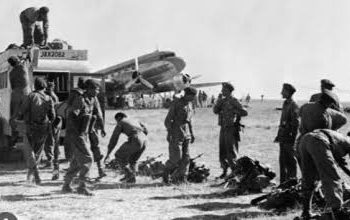



Every year on October 27, millions of Kashmiris in Pakistan itself, and abroad observe the Black Day. Exactly on this date in 1947, Indian soldiers arrived at Srinagar airport, marking the start of an ongoing military occupation in Jammu and Kashmir. What was initially portrayed as a temporary measure turned out to become South Asia’s longest-running geopolitical conflict.
The October 27th date is much more than just a historical event; it marks the very point when the dreams of self-determination by a population were overlooked. While political analysts usually discuss the Kashmir conflict as an example of a geopolitical confrontation in purely technical terms, the real truth is much more human. Many years after that landing of the troops, the key question still remains: can a people’s right to self-determination be prevented by administrative order and brutal force?
In order to identify the faulty legal and ethical basis for October 27, it is essential to analyze the specifics of the events taking place from August to October 1947. According to the Indian Independence Act of 1947, princely states should have acceded to either Pakistan or India depending on geographical, economic connections and majoritarian composition of their population. In recognition of these strong historical connections, the Prime Minister of Jammu and Kashmir sent an identical telegraphic request on August 12, 1947 to Delhi and Karachi for signing Standstill Agreements for continuous trading, postal communication, and cross-border relations.
Pakistan signed the agreement of Standstill on August 15, 1947 thus creating legal relations between Karachi and Srinagar. India refused to sign it and asked for additional negotiations which never took place. With the outbreak of local resistance against oppressive rule of Maharaja Hari Singh in the Poonch and other areas, the ruler left his capital city. On October 27 India sent its occupational troops to occupy the region of Kashmir.
The double standards used by New Delhi during this particular time are among the most blatant hypocrisies in the entire post-colonial era. In the case of Junagadh, which had a Muslim ruler who had joined Pakistan, India refused to accept this document because according to India the demographic preferences of the Hindu-majority population came first. India used troops and held a referendum to incorporate Junagadh into itself. In the case of Hyderabad, which had a majority Muslim population like Kashmir, India used military force to take over the state of Hyderabad in September 1948 through Operation Polo.
However, the contingency of the agreement was quickly realized as well. In his official acceptance letter dated October 27, 1947, British Governor General Lord Mountbatten made clear that as soon as the restoration of law and order was achieved, the problem of accession had to be solved via a referendum. Prime Minister of India Jawaharlal Nehru reaffirmed this pledge in several national radio addresses and in diplomatic messages sent to Pakistani authorities.
When India decided to take the Kashmir case to the United Nations Security Council in January 1948, international law became more important than the domestic law. Successive resolutions of the UN Security Council; most notably Resolutions 47 (1948), Resolution 91 (1951) and Resolution 122 (1957), set forth an internationally agreed-upon process. The resolution stated that the fate of Jammu and Kashmir should be decided through an internationally organized, free, fair, and impartial plebiscite. UN Security Council Resolution 122 specifically made it clear that unilateral administrative measures, elections, or any constitutional assemblies held in the occupied area could never substitute the international plebiscite. For decades now, Pakistan’s Ministry of Foreign Affairs (MOFA) has been following these internationally binding UN resolutions. The internationally agreed upon Geneva Consensus was very clear that Kashmir was not an administrative dispute but a disputed territory that needs to be solved democratically.
Over the last decade or so, there has been a sea change in the nature of occupation in Indian Illegally Occupied Jammu and Kashmir (IIOJK). The occupation is no longer limited to military check posts; rather, it is a well-calculated campaign of administrative lawfare.
The unilateral steps taken on 5th August, 2019 became an important act for Kashmiris in this regard. The nullification of articles 370 and 35A of the Indian constitution meant that the nominal autonomy and land protection which was enjoyed by the Kashmiris for over 70 years was now removed. Later, there were massive changes in the domicile rules, property laws, and civil servant laws too. In this manner, millions of non-resident certificates were distributed, making way for outsiders to buy lands and settle down permanently in IIOJK.
The strategy is similar to what is taught in books about demographic engineering where the majority of the natives in Kashmir are reduced to become minorities in their own native lands in terms of politics and economy. Along with this process, civil society has shrunk dramatically. The local press suffers from harsh censorship according to stringent acts against terrorism such as Unlawful Activities Prevention Act (UAPA). Independent news stations are shut down, authorization for press revoked, and leading human rights activists are put in jail. Occasional Internet blackouts and surveillance in cyberspace create a subtle yet controlling environment.
While Pakistan and the Kashmiri population observe October 27, this observance must go beyond the yearly activity. It must be a resistance to selective global empathy as in the global arena where state sovereignty and human rights are loudly defended in some parts of the world, the continuous silence on IIOJK indicates a hierarchy of global justice, which can sometimes be motivated by commercial interests and geopolitics.
South Asian peace cannot be brought about by the coercive imposition of administrative silence and economic pacification. Pakistan’s official briefings on international fora repeatedly make it clear that in order to ensure enduring peace in a nuclear environment, it is essential to adhere to international commitments. The day of October 27 brings home to the world community the fact that the promise of plebiscite made back in 1947 is the sole way forward.
About the Author: Ayesha Javed is a Research Fellow at YFK, and a student of BS Public Administration at Riphah International University, Islamabad.