

By Laiba Tariq
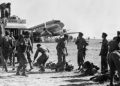
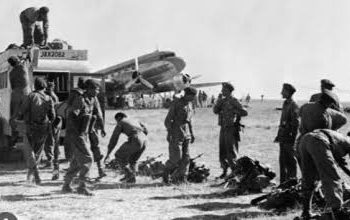
October occupied a significant place in Kashmir’s history. The month marked by deception and political conspiracy in Kashmir. Kashmiris across LOC and all-around world observe 27 October as a black day. The day that marked the arrival of Indian Soldiers in Srinagar in 1947, event that changed political curse of Jammu and Kashmir. For Pakistan it represents the beginning of Indian Illegal Occupation in Kashmir. For people of Kashmir, it is a struggle of self-determination that remains unresolved.
When British rule ended in 1947, Pakistan and India emerged as an independent state but Kashmir remained under rule of Maharaja Hari Singh. Kashmir had Muslim majority population but governed by a Hindu ruler. Unlike many rulers of princely states who decide their political future, Hari Singh wanted to retain itself as an independent. He was unwilling to surrender his authority and hoped that Kashmir remained under his control.
To maintain existing arrangements for trade, transport and communication Maharaja proposed standstill agreements with both countries. Pakistan accepted but India requested further discussions. Political tensions were already growing within state, including an armed uprising in Poonch against his administration. Economic grievances, political dissatisfaction and uncertainty created during partition had already disrupted states stability. The Instrument of Accession signed on 26 October without the will of Kashmiri people and Indian troops landed in Srinagar on 27 October.
The accession remains disputed, India argued that Hari Singh was ruler, had legal authority to accede. Pakistan raised questions about legitimacy of documents, circumstances in which accession was signed and lack of consultation with Muslim-majority population. The Maharaja’s request for assistance reflected urgency of crisis. These conditions raise questions about how freely he could decide. Political pressure alone does not establish legal coercion for accession.
Kashmir’s population had not been asked whether they join India or Pakistan. The legal authority exercised by ruler not necessarily reflects political aspirations of people living under his rule. This concern was acknowledged even at time of accession. In his letter of 27 October 1947, Lord Mountbatten expressed the Indian government’s wish that Kashmir’s future should be settled according to its people once peace had been restored. That assurance became an important part of subsequent dispute.
This conflict soon reached at international level. On 1 January 1948, India brought the dispute before UN Security Council, accusing Pakistan of supporting armed intervention. On 21 April, Council adopted Resolution 47, recommended measurements to end fighting and create conditions for free and impartial plebiscite.
The UN Commission for India and Pakistan (UNCIP) sought to turn these recommendations into settlement. Its 13 August 1948 resolution emphasized on ceasefire and 5 January 1949 resolution provided for plebiscite on accession. Although both countries accepted the principles of proposal but disagreed over troop withdrawal and security implementation. The ceasefire took effect on 1 January 1949 but the vote never happened.
For decades, Pakistan called for the UN proposals to be implemented. While India maintained that accession was settled and increasingly emphasized on bilateral negotiations, particularly after the 1972 Simla Agreement. Meanwhile, Kashmiris endured the effects of prolonged confrontation. Since insurgencies began in late 1980s, Indian Illegally Occupied Jammu and Kashmir (IIOJK) has experienced violence, military operations, militant attacks, civilian casualties, displacement and restrictions on daily life.
UN human rights reports published in 2018 and 2019 raised concerns about excessive force, arbitrary detention, impunity, restrictions on freedoms and civilian protection. On 5 August 2019, India revoked IIOJK special constitutional status and reorganized the former state into two Union Territories. India described these changes as administrative reform. Political detention, Communication and movement restrictions was criticized by many scholars.
The events of 27 October 1947 were not isolated. This is the beginning of a dispute shaped by Partition, contested accession and failed settlement efforts. Seventy-nine years later, Kashmir Black Day remains a reminder of unresolved questions. It is about the belief that a decision taken during the turmoil of Partition deprived Kashmiris of the opportunity to determine their own political destiny.
The central question is no longer about Maharaja’s signed in October 1947. It is also about Kashmiri people whose future was shaped by that decision. Until their rights, security and political aspirations receive meaningful consideration and not resolved, the events of 27 October will continue to cast a long shadow over Kashmir. For many Kashmiris, the developments revived questions that had remained unsettled since 1947, who should decide Kashmir’s political future and what role should its people have in decisions affecting their lives?
The writer is a student of IR at National Defense University (NDU), currently serves as a research associate at Kashmir Institute of International Relations (KIIR).