

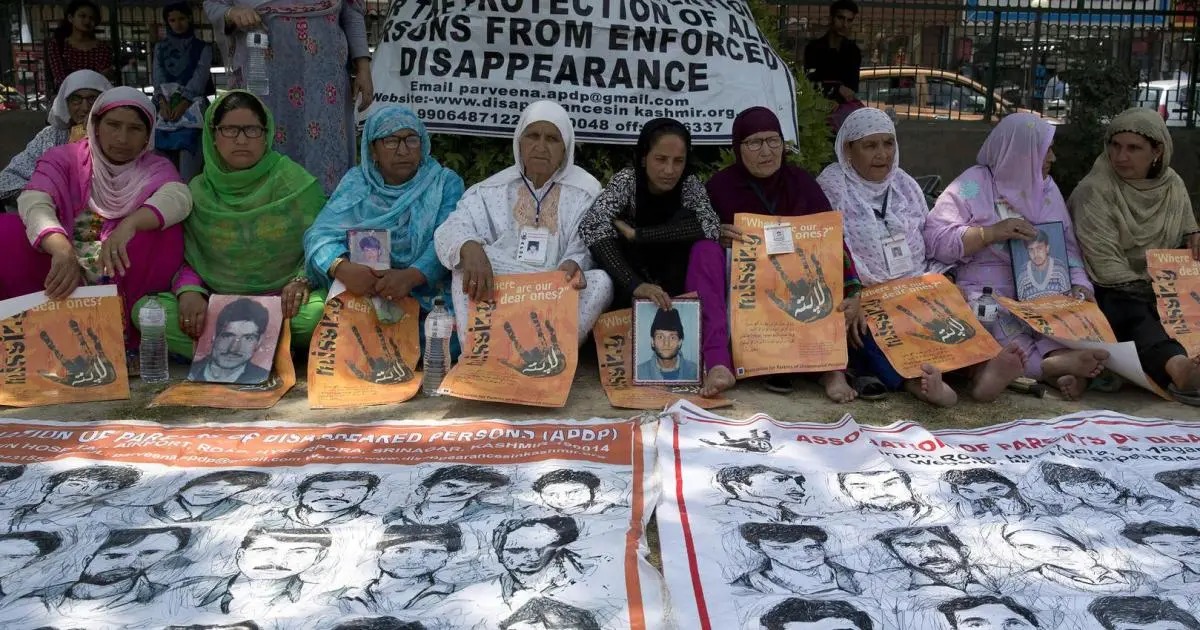
Human rights are more than ideals written on paper, they are the foundation of everyday life, the invisible guarantees that allow people to live without fear, speak freely, educate their children and move safely in their communities. On International Human Rights Day, the world is reminded of the Universal Declaration of Human Rights and its promise of dignity, freedom and equality for all. Yet, in places like Indian illegally occupied Jammu & Kashmir (IIoJK), these promises remain unfulfilled. Rights are suspended, freedoms curtailed and ordinary life has become a battleground of surveillance, arbitrary arrests and fear. The theme of this year’s observance compels us to ask difficult questions: what does it mean to claim universal human rights when millions are denied them daily? And how can the global community respond when the instruments of repression, laws, militarization and administrative policies, systematically erode these rights under the guise of security and normalcy?
Almost immediately, life in IIoJK was defined by uncertainty and coercion. Reports reveal that over 1,000 people were killed in the years following August 2019, with 284 killed in custodial or fake encounters. Beyond the fatalities, more than 2,600 individuals were tortured or critically injured, leaving long-term physical and psychological scars. The state’s apparatus targeted ordinary civilians with alarming breadth: 32,816 people were arrested, spanning teachers, journalists, minors and human rights defenders. This was not sporadic law enforcement, it was systematic intimidation. In parallel, 1,168 arson attacks on homes, shops and properties demonstrate how civilian spaces were criminalized, as if private property were a threat to the state rather than the site of ordinary life. The human toll extended beyond the immediate victims. Eighty-three women became widows, 233 children orphaned and 139 women were gang-raped or molested, highlighting how the most vulnerable bore the brunt of this repression. Every figure reflects a life disrupted, a family devastated, a community traumatized.
The assault was not limited to violence and arrests. Freedom of thought and expression, one of the most fundamental human rights, came under direct attack. Several books and writings were banned, first in February 2025 and again on 5 August 2025, erasing intellectual and political discourse under the guise of public safety. Schools, universities and even medical colleges faced surveillance, restrictions and intimidation. When education and knowledge become targets, the state sends a clear message: thinking freely is a crime, questioning is dangerous and rights exist only at the discretion of authorities.
By April 2025, when the Pahalgam attack occurred, IIoJK was already living under a suffocating level of control. Military operations, raids, checkpoints and curfews had become routine. The attack did not change life in IIoJK; it intensified an existing framework of oppression. Following the incident, the response was predictable: more arrests, heightened suspicion and punitive raids on entire neighborhoods. The region was being governed not through justice or law, but through fear and arbitrary control.
Then came the Red Fort blast in November 2025. For a population already living under constant surveillance, this attack provided the authorities with a perfect pretext to escalate repression even further. November 2025 alone paints a disturbing picture: 4 people killed, including 2 in custodial or fake encounters, 1 person tortured or critically injured and a staggering 2,819 arrests in just one month. Teachers, students, professionals and ordinary civilians were caught in a net of suspicion. Three houses were destroyed or damaged, 1 woman widowed and 2 children orphaned, turning isolated incidents into symbols of collective punishment. The state’s approach had shifted from constant pressure to full-scale crackdown; fear was no longer incidental, it became a deliberate instrument of governance.
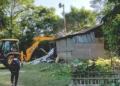
The crackdown extended far beyond arrests and property damage. Demolition drives and property seizures intensified, with over 100 properties confiscated, including those of prominent Hurriyat leaders. House raids were conducted systematically across districts, often at night, leaving families traumatized and communities destabilized. Even doctors, who are meant to heal, were targeted, hundreds were arrested or harassed and medical colleges faced restrictions, inspections and intimidation.
This systematic repression cannot be justified by claims of national security. International human rights law, including the Universal Declaration of Human Rights, the UN Charter and the ICCPR, guarantees protection from arbitrary detention, torture and collective punishment. It guarantees freedom of thought, expression and the right to property, as well as access to education and security of person. Yet in IIoJK, all these rights are routinely violated. Laws such as the PSA and UAPA create a legal structure that allows indefinite detention, criminalizes peaceful political activity and prioritizes suspicion over evidence. For the ordinary Kashmiri, justice is not a right, it is a distant aspiration.
What we see in IIoJK today is a multi-dimensional assault on human life, dignity and freedom. Repression is not only physical but also psychological, social and economic. It is a targeted dismantling of society: demolitions erase history and belonging, property seizures erase livelihoods, arrests and book bans erase knowledge and attacks on professionals erase essential social services. This is not a series of isolated violations, it is a structural, state-driven campaign that seeks to normalize fear as the basis of governance.
As the world marks International Human Rights Day, the situation in IIoJK demands urgent attention. Without global solidarity, accountability and pressure, the cycle of repression will only deepen, leaving another generation of Kashmiris living in fear where they should be living in dignity.
Kashmir is not a security issue; it is a human rights crisis. Its people are not insurgents, they are civilians. Its suffering is not a political abstraction, it is real and it is ongoing. On this International Human Rights Day, the world must see beyond headlines and official narratives. It must confront the truth: freedom, dignity and justice are not optional, they are universal. And in IIoJK, they remain a promise long denied, waiting for recognition, protection and action.
The author is the head of the research and human rights department of Kashmir Institute of International Relations (KIIR). She can be contacted at the following email address: mehr_dua@yahoo.com, X @MHHRsays