
• English
    • en
    • en_GBEnglish (UK)
    • en_USEnglish (United States)
28 °c
26 ° Tue
26 ° Wed
26 ° Thu
26 ° Fri
Wednesday, February 25, 2026
Asiafreepress
  • Home
    • Latest
  • World
  • Asia
    • China
    • Pakistan
    • Afghanistan
    • India
    • Central Asia
  • News
  • Politics
  • Security
  • Law
  • Business
  • Review
    • Editorial
    • Analysis
    • Perspective
    • Literature
  • Science & Tech
  • Entertainment
    • Showbiz
    • Lifestyle
  • Sports
  • Multimedia
Breaking News
Why Kunan Poshpora Must Be RememberedBalancing Populations in Kashmir Valley: Is Another Gaza in the Making?Weaponizing Water: India’s Suspension of the Indus Waters Treaty Threatens Millions and Violates International LawWhen Deterrence Became Diplomacy: May 2025 and the Kashmir QuestionGreat Power Competition and the Strategic Unsettling of Jammu & Kashmir
No Result
View All Result
  • Home
    • Latest
  • World
  • Asia
    • China
    • Pakistan
    • Afghanistan
    • India
    • Central Asia
  • News
  • Politics
  • Security
  • Law
  • Business
  • Review
    • Editorial
    • Analysis
    • Perspective
    • Literature
  • Science & Tech
  • Entertainment
    • Showbiz
    • Lifestyle
  • Sports
  • Multimedia
No Result
View All Result
Asiafreepress
No Result
View All Result
Home Review Analysis

Ending Resistance: Why Palestinians Face the Same Fate, Weapons or Not

Ramzy Baroud by Ramzy Baroud
December 15, 2025
in Analysis
0
Ending Resistance: Why Palestinians Face the Same Fate, Weapons or Not
0
SHARES
10
VIEWS

    US President Donald Trump’s ‘Board of Peace’ is reportedly set to be announced before the year’s end. This news coincides with increasing reports that the US administration is serious about pushing forward the second phase of the Gaza ceasefire.

    However, many critical questions remain unanswered. How can a governing council be superimposed on Gaza when Palestinians are unified in their rejection of any new form of Western mandate over their lives?

    Furthermore, how can the proposed ‘International Stabilization Force’ (ISF) operate in Gaza without total clarity regarding its mission? If the ISF ends up serving primarily as an Israeli line of defense, the entire project will collapse before it begins.

    Neither Arab nor Muslim countries will seriously engage in subduing Palestinians on behalf of Israel. Any other participating force will inevitably be treated by Palestinians as an occupation force.

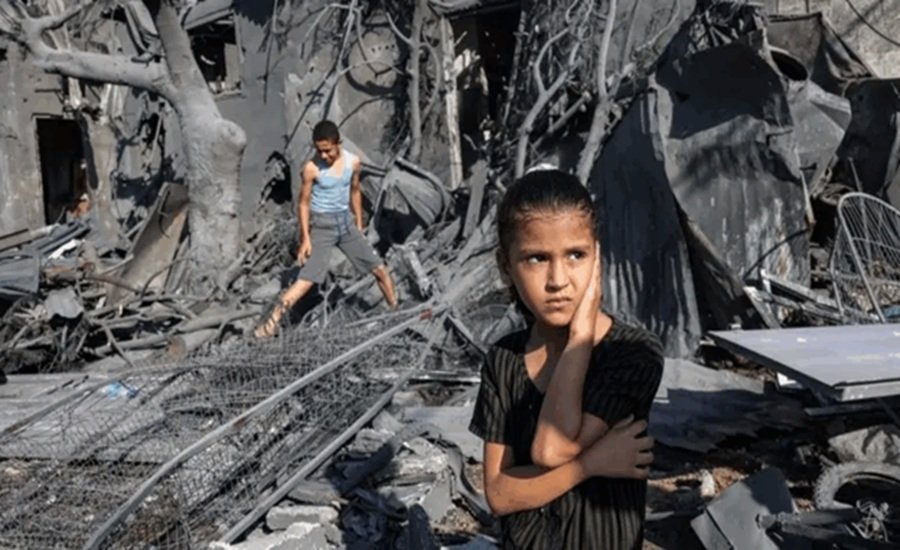
    The main obstacle, however, is the fact that Israel has never truly respected the first phase of the ceasefire, which began, in theory, on October 10. Since that date, Israeli forces have killed over 360 Palestinians and wounded hundreds more, while demolishing thousands of residential structures, according to satellite images verified by the BBC.

    Worse, Israel has habitually bombed targets beyond the ‘Yellow Line’, which was designated as the Palestinian area where humanitarian aid is allowed to flow and people are meant to return to some kind of normalcy, despite Gaza’s near-total destruction.

    Israel is hoping to make the first phase of the agreement a permanent one. This intent is evident in the continued bombings, the prevention of life-saving supplies and aid, and the constant, unsubstantiated accusations that Palestinians are the ones violating the ceasefire.

    It is expected that Israeli Prime Minister Benjamin Netanyahu will make the disarmament of Gaza the main sticking point, knowing in advance that Gaza will not surrender its weapons. He has made this clear and repeatedly so, including on November 15, when he stated that “Hamas will be disarmed — either the easy way or the hard way”.

    But what if Gaza agrees to surrender its weapons? Will Israel leave the Palestinians alone? Will the prospects of a just peace and Palestinian freedom increase exponentially? To address this question, let’s delve very quickly into three experiences, two from history.

    Palestinian and even some Israeli historians have argued that, during the ethnic cleansing of historic Palestine, the Nakba, Israel had the intention of depopulating the country regardless of whether Palestinians resisted or not.

    The implementation of Plan Dalet, the operation aimed at expelling the Palestinian population, was in no way related to the method or intensity of Palestinian resistance to Zionist militia violence.

    In fact, the framework of that expulsion was predicated on the use of war as a pretext, as opposed to war as a response to Palestinian resistance. “The Arabs will have to go, but one needs an opportune moment for making it happen, such as a war,” wrote Zionist leader and Israel’s first prime minister at the time, David Ben-Gurion.

    Though some Mukhtars (village leaders) assumed that no resistance meant that they would be spared the same fate as those who resisted, they were wrong. Israeli historian Ilan Pappe writes: “Whereas the official Plan Dalet gave the villages the option to surrender, the operational orders did not exempt any village for any reason”.

    The same pattern was repeated throughout history. In 1982, after a US-brokered agreement to evacuate Palestinian PLO forces out of Lebanon, the assumption was that their departure would keep the Israeli army from attacking Palestinian civilians.

    Indeed, on August 21, 1982, PLO factions began leaving the country, leaving the camps undefended and their Lebanese allies vulnerable. However, Israeli violence in West Beirut had grown, not subsided, leading in September 1982 to the Sabra and Shatila massacre, which killed up to 3,500 Palestinian refugees and Lebanese civilians.

    All the promises by Washington, the supposed ‘guarantees’, and the diplomatic language of US envoy Philip Habib, who acted as the President’s Special Envoy, meant absolutely nothing, as Israel helped facilitate one of history’s most brutal massacres.

    And, of course, there is the ongoing saga of the West Bank itself, which, unlike Gaza, lacks armed resistance infrastructure and is administered by the Palestinian Authority (PA), which operates based on an Israeli-US-Western mandate.

    Yet, even before the Gaza genocide, the West Bank’s suffering had grown, its land confiscated, entire communities ethnically cleansed, whole refugee camps destroyed, and hundreds of residents killed.

    Between October 7, 2023, and late 2025, UN and human rights reports indicate that Israeli forces and settlers killed over 1,000 Palestinians in the West Bank, including East Jerusalem (more than 200 children). Thousands more were injured, and Israeli authorities destroyed or confiscated thousands of Palestinian-owned structures, displacing many. Additionally, an estimated 10,000 Palestinians from the West Bank were arrested between October 2023 and August 2024.

    If Israel’s genocide in Gaza is entirely motivated by the desire to crush the armed groups, then why the continued crushing of the West Bank?

    Those who continue to entertain the Israeli narrative regarding Gaza must confront this historical record and acknowledge two crucial, enduring realities. First, Israel’s violence is fundamentally driven by its settler-colonial ambitions, not merely by Palestinian resistance. Second, Palestinian resistance is a deeply rooted historical imperative — the native population’s determined struggle for self-liberation from foreign occupation.

    Only by abandoning the reductionist language that frames Israeli wars as simple responses to armed groups can we arrive at a profound understanding of events in Palestine, Israel’s true motives, and the legitimacy of the Palestinian struggle.


    Previous Post

    The Silence Before the Storm: Kashmir’s Stifled Voices and India’s Broken Promises

    Next Post

    Aseefa Bhutto Urges Public Support for Polio Vaccination Drive Beginning Today

    Ramzy Baroud

    Ramzy Baroud

    Ramzy Baroud is a journalist and the Editor of The Palestine Chronicle. He is the author of five books. His latest is “These Chains Will Be Broken: Palestinian Stories of Struggle and Defiance in Israeli Prisons” (Clarity Press). Dr. Baroud is a Non-resident Senior Research Fellow at the Center for Islam and Global Affairs (CIGA) and also at the Afro-Middle East Center (AMEC). His website is www.ramzybaroud.net

    Next Post
    Aseefa Bhutto Urges Public Support for Polio Vaccination Drive Beginning Today

    Aseefa Bhutto Urges Public Support for Polio Vaccination Drive Beginning Today

    Leave a Reply Cancel reply

    Your email address will not be published. Required fields are marked *

    Stay Connected test

    • Trending
    • Comments
    • Latest
    Heroic Tale of a Pakistani SULTAN in 1971 War

    Heroic Tale of a Pakistani SULTAN in 1971 War

    December 1, 2021
    Jammu Genocide: Forgotten human carnage of disputed region

    Jammu Genocide: Forgotten human carnage of disputed region

    November 6, 2021
    Indian forces kill under trial inmate in staged encounter in Kashmir

    Indian forces kill under trial inmate in staged encounter in Kashmir

    October 26, 2021
    Peace, development make way to Xinjiang. Experts reject US allegations of genocide in Xinjiang China

    Peace, development make way to Xinjiang. Experts reject US allegations of genocide in Xinjiang China

    November 26, 2021
    Jammu Genocide: Forgotten human carnage of disputed region

    Jammu Genocide: Forgotten human carnage of disputed region

    4
    Pakistan summons Indian diplomat over killing of Muslims  in Assam

    Pakistan summons Indian diplomat over killing of Muslims in Assam

    4
    India’s senior army officer booked on rape charges

    India’s senior army officer booked on rape charges

    3
    Peace, development make way to Xinjiang. Experts reject US allegations of genocide in Xinjiang China

    Peace, development make way to Xinjiang. Experts reject US allegations of genocide in Xinjiang China

    3
    Why Kunan Poshpora Must Be Remembered

    Why Kunan Poshpora Must Be Remembered

    February 23, 2026
    An Unseen Winter: The Deepening Chill of Oppression in Kashmir

    Balancing Populations in Kashmir Valley: Is Another Gaza in the Making?

    February 18, 2026
    Weaponizing Water: India’s Suspension of the Indus Waters Treaty Threatens Millions and Violates International Law

    Weaponizing Water: India’s Suspension of the Indus Waters Treaty Threatens Millions and Violates International Law

    February 16, 2026
    The Hollow Case for “Genocide” and the Dangerous Drive for Partition: How New Delhi Is Balkanising Kashmir

    When Deterrence Became Diplomacy: May 2025 and the Kashmir Question

    February 13, 2026

    Recent News

    Why Kunan Poshpora Must Be Remembered

    Why Kunan Poshpora Must Be Remembered

    February 23, 2026
    An Unseen Winter: The Deepening Chill of Oppression in Kashmir

    Balancing Populations in Kashmir Valley: Is Another Gaza in the Making?

    February 18, 2026
    Weaponizing Water: India’s Suspension of the Indus Waters Treaty Threatens Millions and Violates International Law

    Weaponizing Water: India’s Suspension of the Indus Waters Treaty Threatens Millions and Violates International Law

    February 16, 2026
    The Hollow Case for “Genocide” and the Dangerous Drive for Partition: How New Delhi Is Balkanising Kashmir

    When Deterrence Became Diplomacy: May 2025 and the Kashmir Question

    February 13, 2026
    Asiafreepress

    Follow Asia Free Press (AFP) on Twitter, Facebook, Linkedin, Youtube and Instagram for the latest news from China, Pakistan, Afghanistan, India, Kashmir and across Asia.

    Follow Us

    Photo Gallery

    Quick Links

    • Submission Guidelines
    • Privacy Policy
    • About Us
    • Contact Us

    Stay in Touch

    To be updated with all the latest news, offers, and special announcements.

    No Result
    View All Result
    • Home
      • Latest
    • World
    • Asia
      • China
      • Pakistan
      • Afghanistan
      • India
      • Central Asia
    • News
    • Politics
    • Security
    • Law
    • Business
    • Review
      • Editorial
      • Analysis
      • Perspective
      • Literature
    • Science & Tech
    • Entertainment
      • Showbiz
      • Lifestyle
    • Sports
    • Multimedia

    en_USEnglish (United States) en_GBEnglish (UK)