

For over three decades, the international community has witnessed a tragedy unfolding in the valley of Kashmir—a tragedy meticulously masked by a sophisticated machinery of state rhetoric. To the outside world, the narrative is often reduced to a binary of “terrorism versus stability.” However, for those of us operating in the realm of human rights defense, the reality is far more sinister. Beyond the curated headlines and the strategic use of the word “terrorism,” lies a profound crisis of dignity, a systematic erasure of rights, and the persistent, unfulfilled demand for the UN-recognized right to self-determination.
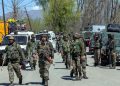
Since the early 1990s, the Indian state has adopted a convenient linguistic shield: the rhetoric of terrorism. By framing every act of resistance, every cry for autonomy, and every peaceful protest as “cross-border terrorism,” the state has successfully shied away from accountability. This semantic sleight-of-hand allows the government to justify the presence of one of the highest military concentrations in the world in a civilian area. When the state labels a dissident a “terrorist,” it does not merely categorize a criminal; it strips that individual of their humanity and their legal protections, rendering them invisible to the law and vulnerable to the whims of an unchecked security apparatus.
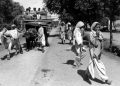
This rhetoric is backed by a draconian legal architecture designed not to protect citizens, but to suppress dissent. The use of the Public Safety Act (PSA) and the Unlawful Activities (Prevention) Act (UAPA) has effectively criminalized the basic human rights of peaceful assembly and association. In Kashmir, the act of gathering in a group or voicing a political opinion is often treated as a subversive act. The legal system has been weaponized to ensure that “preventive detention” becomes a tool for political cleansing, where activists, students, and intellectuals are incarcerated for years without trial, their only crime being their refusal to be silent.
In recent years, this physical siege has been augmented by a digital one. The securitization of social media and the imposition of frequent, sweeping internet shutdowns have turned Jammu and Kashmir into a laboratory for digital authoritarianism. By putting the region under a “digital siege,” the state has severed the lifeline between Kashmiris and the rest of the world. When the internet is cut, the truth is stifled; when social media is monitored, the fear of surveillance permeates the most private spheres of daily life. This is not about national security; it is about the total control of information and the erasure of the Kashmiri narrative.
The tragedy deepens when we examine the “rewards and awards” system, where innocents are branded as terrorists to satisfy quotas or appease superiors. This culture of fabrication creates a climate of terror where any youth can be disappeared or detained based on a fabricated intelligence report. In such an environment, there is no room for peaceful dissent. When the state equates a protest sign with a weapon, it leaves the youth with a crushing sense of hopelessness.
The events of August 5, 2019, marked a paradigm shift from managed conflict to total disempowerment. The revocation of Article 370 and the subsequent reorganization of the state into union territories were not merely administrative changes; they were an exclusionary policy designed to strip Kashmiris of their political agency. Today, the region is governed by an all-powerful Lieutenant Governor—an unelected official who answers to New Delhi, not to the people of Kashmir. The elected representatives, where they exist, are reduced to mere ceremonial figures, stripped of any real power to influence the destiny of their constituents.
This political vacuum has allowed the BJP-RSS agenda to be implemented through a “carrot and cannon” approach. While the state promotes “tourism” and “development” as the carrot to project a facade of normalcy to the world, the cannon remains pointed at anyone who dares to question the legitimacy of this occupation. This is not integration; it is annexation by coercion.
The economic fallout of these policies has been devastating. Despite official claims of infrastructure development, Kashmir continues to face rising unemployment and economic hardship. Educated and ambitious Kashmiri youth find themselves trapped in a suffocating deadlock. They face discrimination and suspicion in mainland India while experiencing restrictions at home. With universities under surveillance and streets marked by detention, young people are increasingly deprived of peaceful avenues for expressing their aspirations. The psychological consequences of this environment remain a serious concern.
The international community must recognise that stability cannot be achieved through force or by silencing a population. Kashmir’s crisis is not merely a law-and-order issue; it is fundamentally a question of human rights, political legitimacy and self-determination. Treating the situation exclusively through the lens of counter-terrorism overlooks the political aspirations and fundamental rights of the Kashmiri people, including their recognised right to self-determination under relevant United Nations resolutions.
The way forward requires an end to repressive laws that criminalise dissent, the restoration of fundamental freedoms and meaningful political participation. It also demands inclusive dialogue based on equality, mutual respect and the dignity of all parties.
Kashmiris are not merely subjects of a security framework. They are people entitled to dignity, rights and a voice in determining their future. The international community must look beyond official narratives of normalcy and acknowledge the concerns of a generation whose identity, aspirations and freedoms remain at stake. Lasting peace requires justice, democratic space and respect for fundamental human rights. Self-determination is not a political favour but a right that deserves meaningful consideration.