

The recent judgment delivered by an Indian court sentencing three Kashmiri women to life imprisonment after they had already endured nearly eight years in custody is not merely a legal decision; it is a blatant act of political repression designed to appease the extremist RSS‑BJP constituency that has long sought to crush any semblance of Kashmiri dissent against Indian state . As a Kashmiri activist who has devoted his life to the peaceful pursuit of self‑determination, I feel compelled to denounce this verdict in the strongest possible terms and to call upon the international community to intervene before the stain of injustice spreads further.
The Facts as They Stand
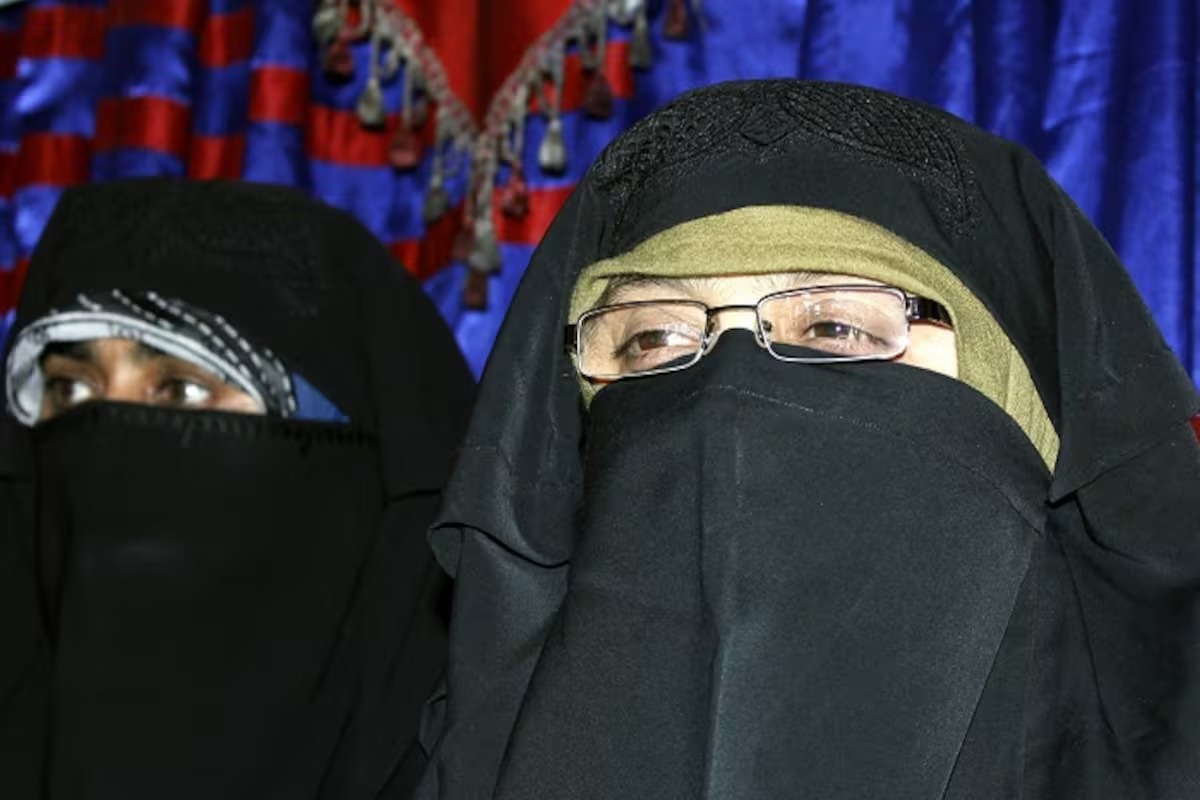
The three women—chairperson of Dukhtaran‑e‑Millat, a prominent Kashmiri women’s organization, and two of her close associates Ms. Fahimeeda Sofi and Ms. Nahida Nasreen were arrested in 2017 amid a sweeping crackdown on alleged separatist activity in the Kashmir Valley. After spending close to eight years behind bars without a conclusive trial, they were finally convicted on charges that include “waging war against the State,” “conspiring to disturb public order,” and “providing logistical support to militants.” The court handed each a life sentence, a penalty that, under Indian law, can be commuted only after a minimum of fourteen years of incarceration, however we have seen in Dr. Qasim Faktoo,s case Supreme Court pronanced the life sentence till life ends..
The prosecution’s case rested largely on intercepted communications, vague allegations of protest organization, and the assertion that the women’s political activities amounted to terrorism. No concrete forensic evidence, no credible eyewitness testimony, and no transparent chain of custody for the purported digital evidence were presented in open court. The defence was repeatedly hampered by restricted access to legal counsel, the denial of key witnesses, and reliance on classified intelligence reports that could not be scrutinized.
A Verdict Motivated by Politics, Not Law
Let there be no doubt: this judgment, like the one earlier in Yasin Malik’s case is politically motivated instrument. The timing—coinciding with heightened electoral rhetoric in Indian‑occupied Jammu and Kashmir and a renewed push by the RSS‑BJP to showcase a “zero‑tolerance” policy toward Kashmiri activism—leaves little room for interpretation. The verdict serves two purposes for the ruling establishment:
1. To Appease Extremist Constituents – The RSS and its political arm, the BJP, have long framed Kashmiri dissent as an existential threat to the Indian nation. By delivering a harsh sentence to women who have merely exercised their right to political expression, the state signals to its hard‑line base that it will not tolerate any form of Kashmiri resistance, however peaceful.
2. To Legitimize Repressive Laws – The case provides a convenient precedent for the continued use of draconian statutes such as the Unlawful Activities (Prevention) Act (UAPA) and the Public Safety Act (PSA) to silence non‑violent political activity. By securing a life sentence on the basis of flimsy evidence, the judiciary effectively endorses the criminalization of dissent, setting a dangerous benchmark for future prosecutions.
In my view, the court has abandoned its constitutional duty to act as an impartial arbiter and has instead become an extension of the executive’s political agenda. This is not justice; it is state‑sanctioned intimidation.
Violations of International Human Rights Norms
The treatment of these women contravenes a raft of international obligations to which India is a signatory:
• Right to a Fair Trial (ICCPR Art. 14) – The prolonged pre‑trial detention, the reliance on secret evidence, and the curtailment of the defence’s ability to challenge the prosecution’s case violate the guarantee of a fair and public hearing.
• Prohibition of Arbitrary Detention (ICCPR Art. 9) – Eight years of incarceration without a substantive trial constitutes arbitrary detention, a clear breach of international law.
• Freedom of Expression and Association (ICCPR Arts. 19 & 22) – The women’s alleged “crime” was their participation in a peaceful political struggle—a right protected under international law. Criminalizing such activity is a direct assault on democratic freedoms.
• Protection Against Torture and Ill‑Treatment (UNCAT) – Numerous credible reports from former detainees and human‑rights monitors indicate that women in Kashmiri detention facilities are routinely subjected to psychological pressure, solitary confinement, and, in some cases, physical abuse. The lack of an independent medical examination raises serious concerns about their wellbeing.
These violations are not abstract; they have real, devastating consequences for the women involved, their families, and the broader Kashmiri populace who see the state’s actions as a confirmation that their voices will be silenced by force rather than heard through dialogue.
The Human Cost
Beyond the legal abstractions, consider the human tragedy. These women are mothers, daughters, and sisters who have spent the better part of a decade away from their children, their ageing parents, and their communities. Their incarceration has inflicted psychological trauma, economic hardship, and social stigmatization on families already living under the shadow of militarization. The life sentence effectively condemns them to die behind bars for the “crime” of advocating for their people’s right to self‑determination—a right recognized by numerous UN resolutions and affirmed by the international community’s own principles of self‑governance.
The message sent to Kashmiri youth is chilling: peaceful political engagement will be met with the harshest punitive measures the state can muster. This breeds resentment, radicalization, and a deepening mistrust of any institution that claims to uphold the rule of law.
A Call to the International Community
I appeal to the United Nations Human Rights Council, the Office of the High Commissioner for Human Rights, Working group on arbitrary detentions, Special Rapporteurs on the promotion and protection of Human rights while countering terrorism, Special rapporteur on human rights defenders Amnesty International, Human Rights Watch, and all conscientious states and NGOs to:
1. Demand the Immediate Release of the three women pending a fair, transparent retrial that complies with international due‑process standards.
2. Order an Independent Investigation into allegations of torture, ill‑treatment, and procedural violations during their detention and trial.
3. Urge the Repeal or Amendment of overly broad anti‑terror laws that enable the prosecution of non‑violent political activity, ensuring that such statutes are applied only in cases of genuine, violent threat.
4. Establish an International Monitoring Mechanism for trials involving political dissenters in Jammu and Kashmir, with the mandate to observe proceedings, review evidence, and report violations to the global community.
5. Support Initiatives that promote dialogue between the people of Jammu and Kashmir other stake holders, Indian and Pakistan grounded in respect for human rights and the right to self‑determination.
The international community cannot remain silent while a judicial system is weaponized to suppress legitimate political expression. Silence will be interpreted as complicity, and the credibility of global human rights norms will erode further.
Conclusion
The life sentences imposed on these three Kashmiri women are not the outcome of a neutral legal process; they are a calculated act of state repression aimed at placating extremist elements and cementing a narrative that equates Kashmiri political activism with terrorism. As a Kashmiri rights activist I am committed to peaceful struggle, I condemn this verdict in the strongest possible terms and urge every lover of justice, every defender of human rights, and every believer in the dignity of the individual to stand with these women.
Justice delayed is justice denied; justice perverted is a threat to the very fabric of civilization. Let us not allow the courts of India to become instruments of fear. Let us demand that the rule of law prevail, that the rights of the Kashmiri people be respected, and that the path forward be paved not with prison bars, but with dialogue, accountability, and genuine peace.